In 2023, Google introduced the biggest update to its search in years:
The “Search Generative Experience” (SGE for short).
It was Google’s answer to Microsoft’s Bing Chat, and at the time it spread a lot of fear and panic in the online marketing scene:
Many SEOs, publishers, and website owners were unsettled and feared losing traffic and revenue.
Today hardly anyone remembers the name SGE. The feature has long been running under a new name and is live in Germany as well.
But did it really turn out as bad as many feared back then?
In this article, I’ll explain what became of SGE, how it actually affects SEO today, and why SEO is still worth it.
- Google renamed SGE to AI Overviews in May 2024. AI Overviews have also been live in Germany since March 2025, and since October 2025 they come with AI Mode. Organic results get pushed down further as a result, but the traffic that gets lost is usually not the most valuable.
- At the same time, AI tools make SEO more efficient than ever: content can be created much faster, which can more than make up for traffic lost to AI Overviews.
- According to SparkToro and Ahrefs, zero-click searches and falling click-through rates on queries with an AI Overview are real, but SEO is still lucrative, because other marketing channels carry similar or bigger uncertainties.
What is SGE?
When Google launched the Search Generative Experience (SGE) in the US in 2023, it was a completely new layout for Google Search: below the search box, a large colored area appeared, which Google called the “snapshot” and which delivered an AI-generated answer to the query right away.
In the snapshot, Google answered search queries directly:
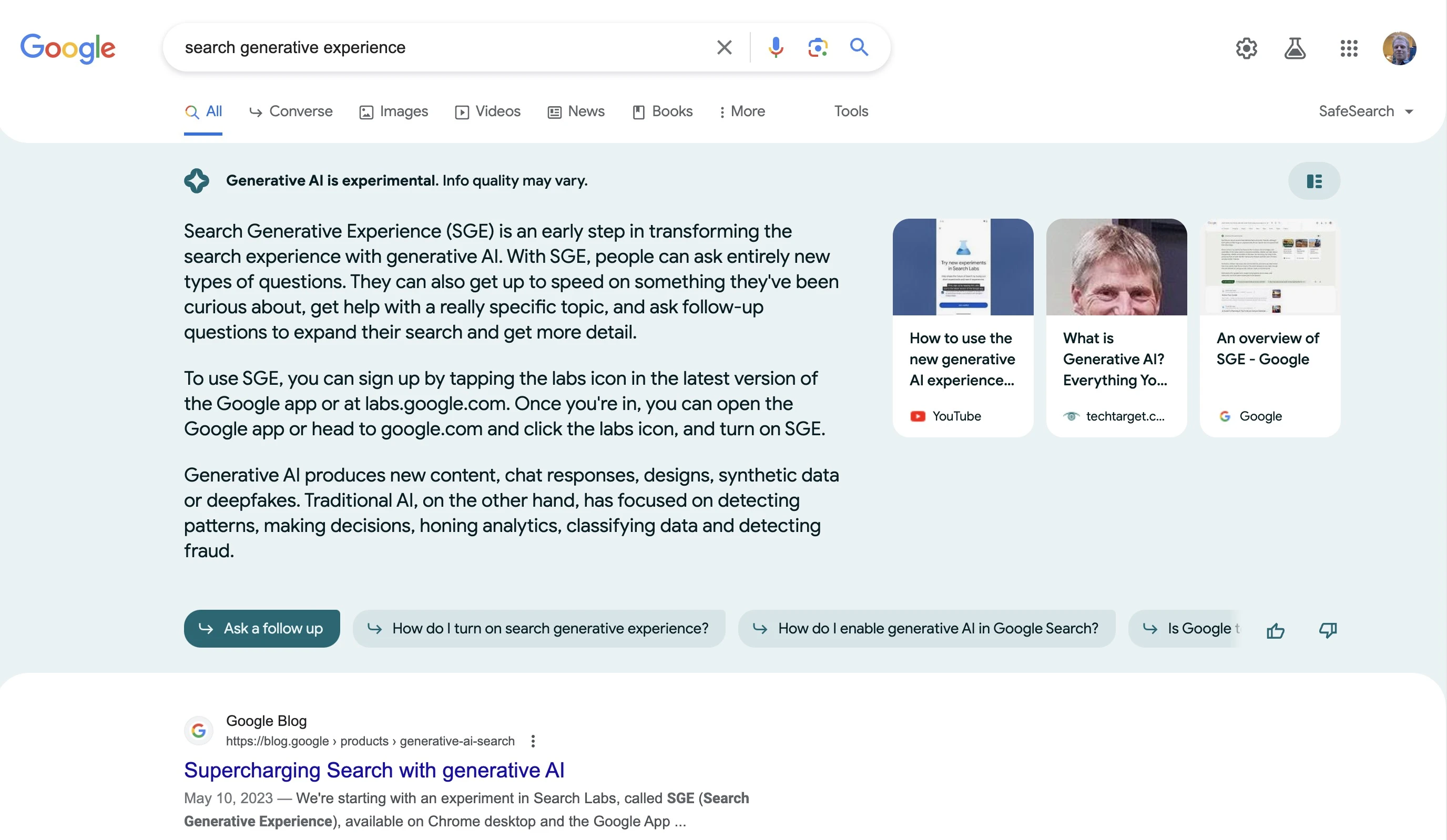
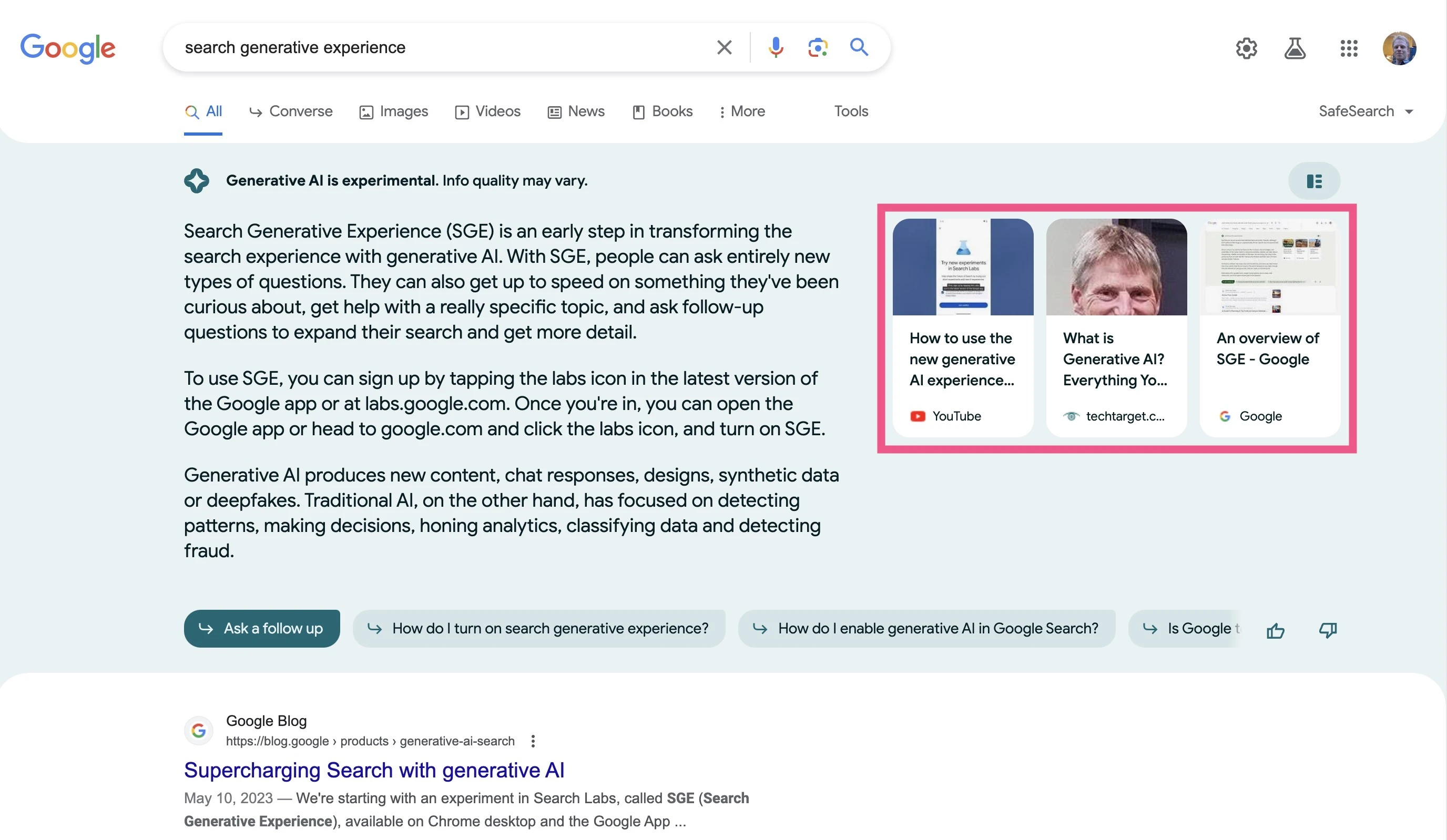
The answer was generated from one or more search results, which appeared to the right of the answer.
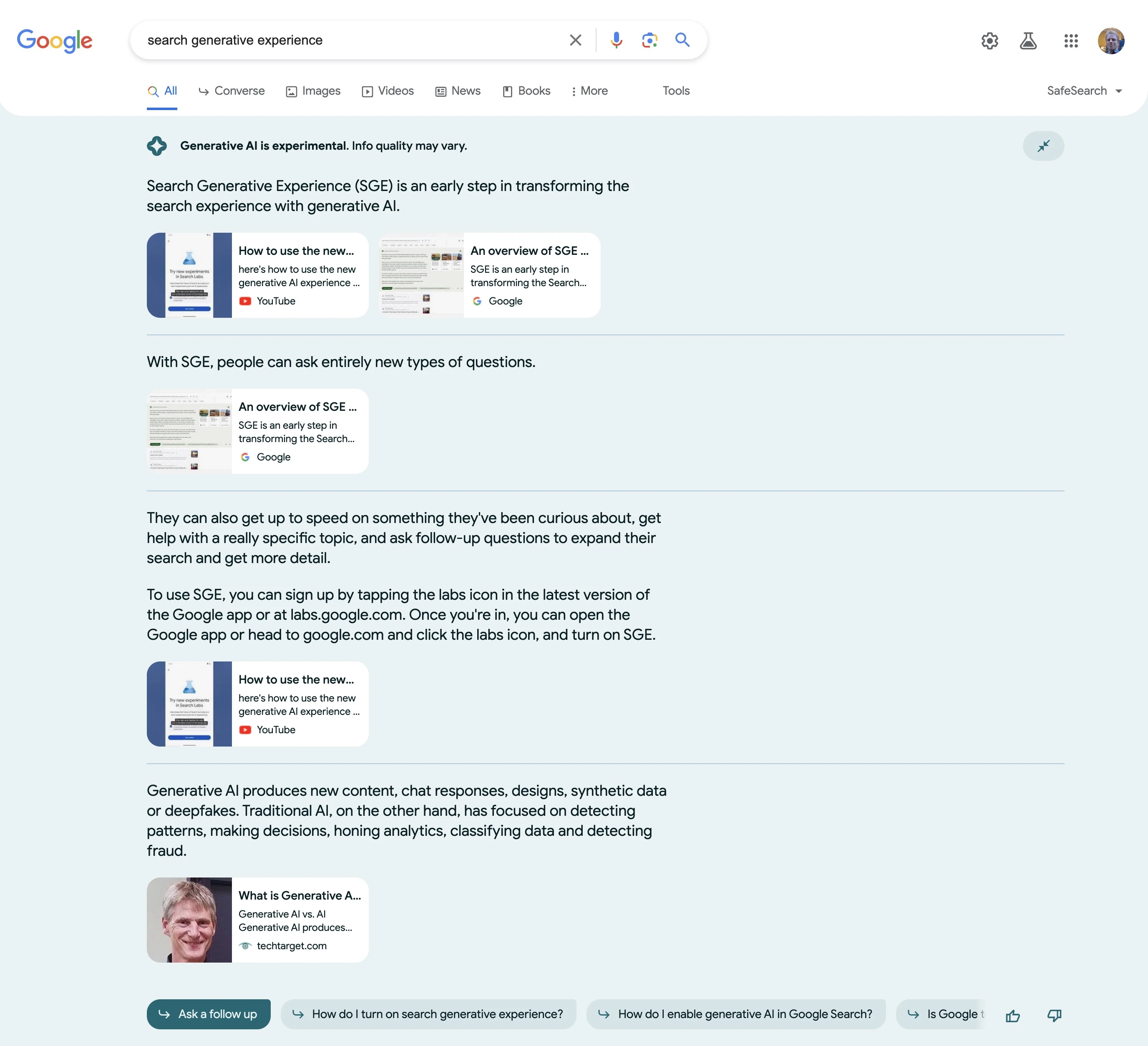
Via the menu icon at the top right of the snapshot, you could see exactly which part of the answer came from which source:
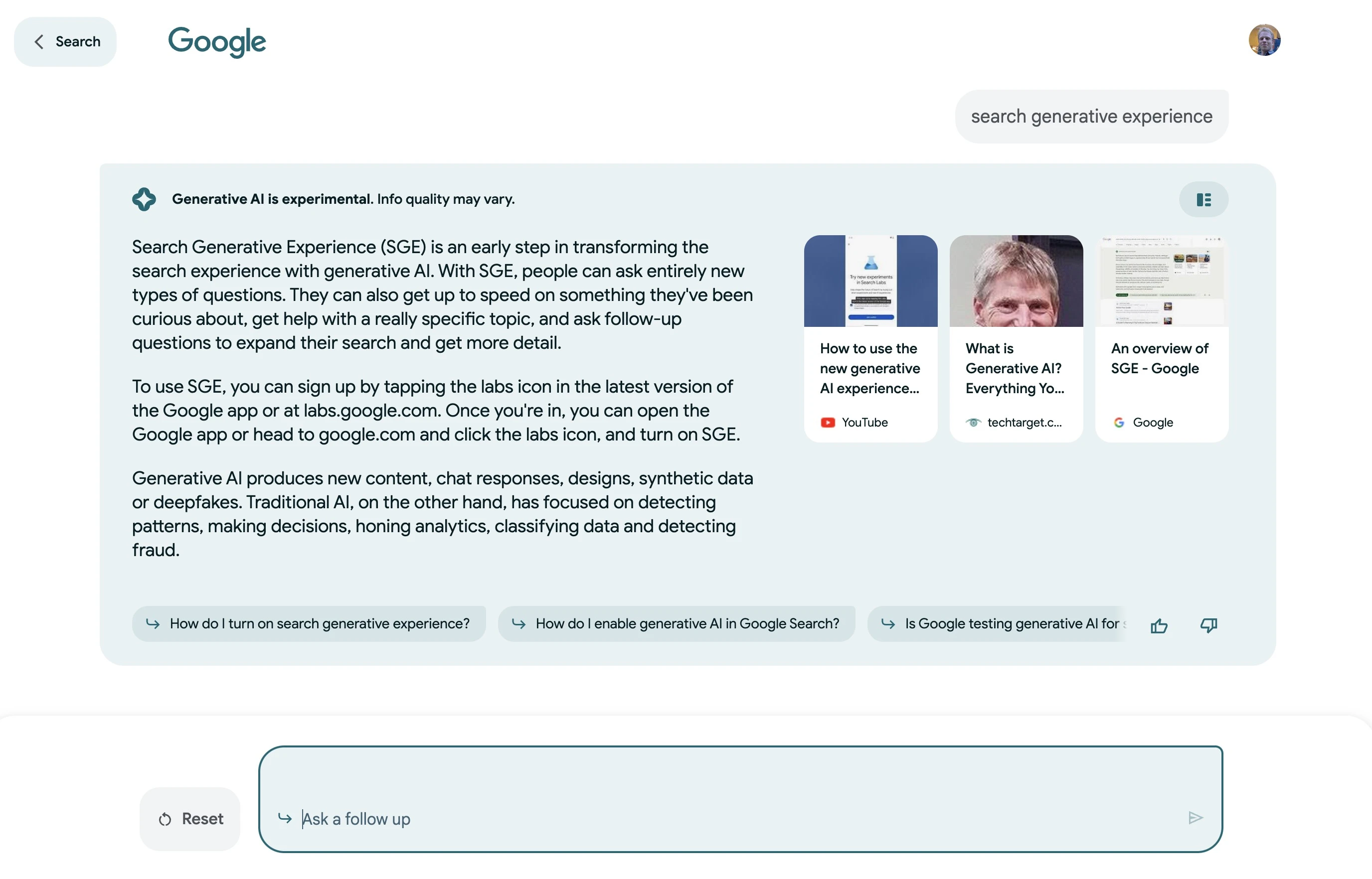
Similar to Bing, SGE also offered a full-screen chat mode, which you could open with the “Ask a follow up” button at the bottom left of the snapshot:
At launch, the Search Generative Experience was only available in English and as a limited beta via a waitlist at Google Labs, initially only for users in the US.
That’s history now. Google officially renamed SGE to AI Overviews in May 2024 at its developer conference Google I/O and moved it into regular search. AI Overviews came to Germany in March 2025. In October 2025, AI Mode followed, an even more conversational search interface, available since October 7, 2025 for Germany, Austria, and Switzerland as well.
The core of the feature has stayed the same: Google generates an AI answer directly in the search results based on several sources, and the organic results get pushed further down as a result. In substance, the snapshot element from SGE is now called an AI Overview. The big difference: it’s no longer a waitlist or a beta, but a fixed part of Google Search for practically every query in Germany.
What does this mean for SEO?
I tested Google’s SGE extensively in the summer of 2023 and analyzed hundreds of search results.
The result:
My assessment back then was that blogs, online magazines, and other websites would lose traffic overall because of SGE and that there would be more searches without a click (so-called zero-click searches).
That assessment has been confirmed. According to Ahrefs, the organic click-through rate at position 1 in February 2026 was 58.0% lower for queries with an AI Overview than for queries without one. How large the share of queries with an AI Overview is overall is measured very differently by different tracking tools, though. Depending on the methodology, estimates range from around 20% to 60% of all queries, and there is no reliable single figure.
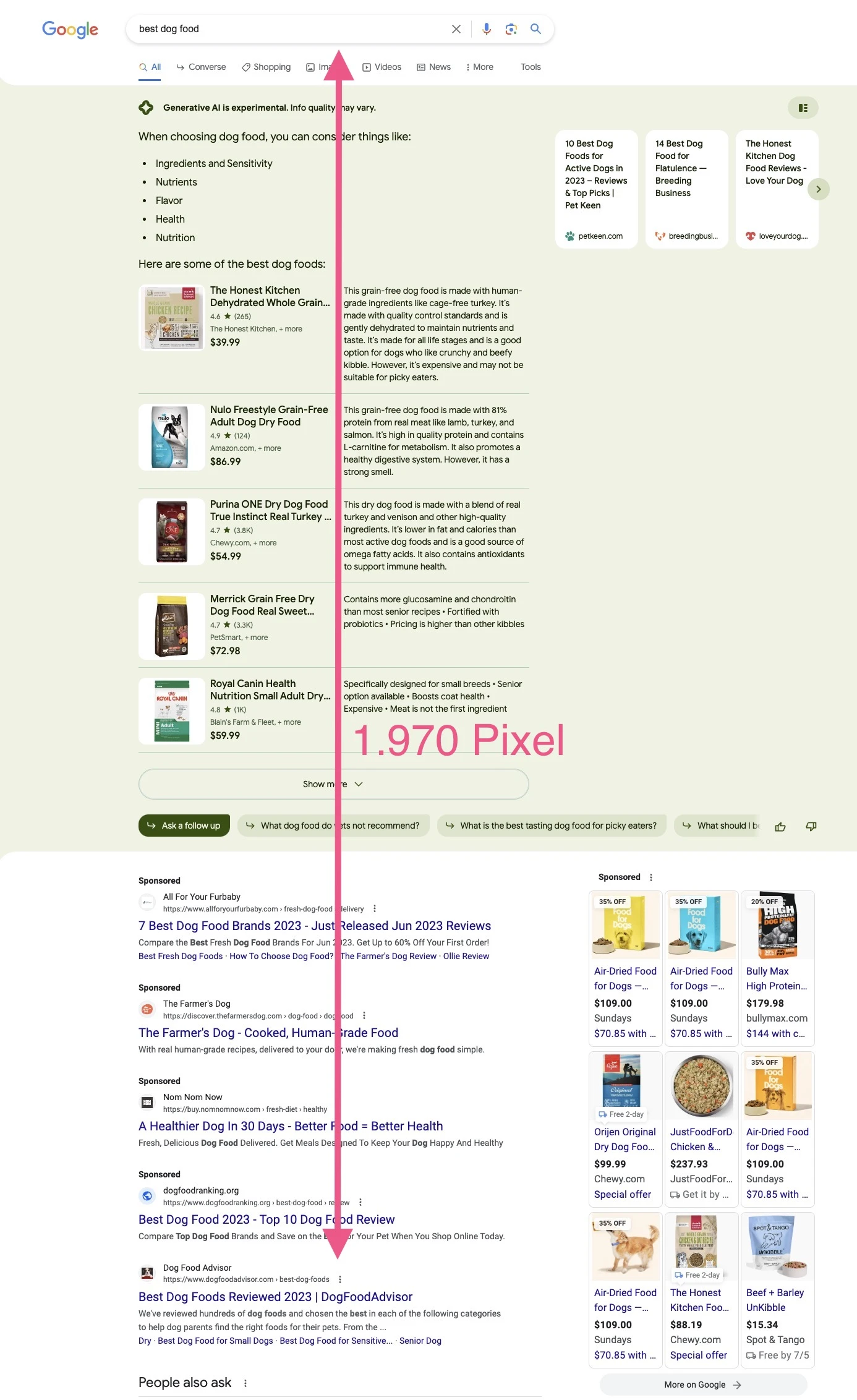
Back in the SGE beta in 2023, it was already clear how strongly snapshots can affect the visibility of organic results. For the keyword “best dog food,” the first regular organic result was about 1,970 pixels away from the search box at the time.
So on most screens, it only became visible after scrolling several times (I had to set Chrome’s zoom to 50% to take the screenshot):
For comparison: in classic Google Search without SGE, the first organic result for “best dog food” was only about 700 pixels away from the search box.
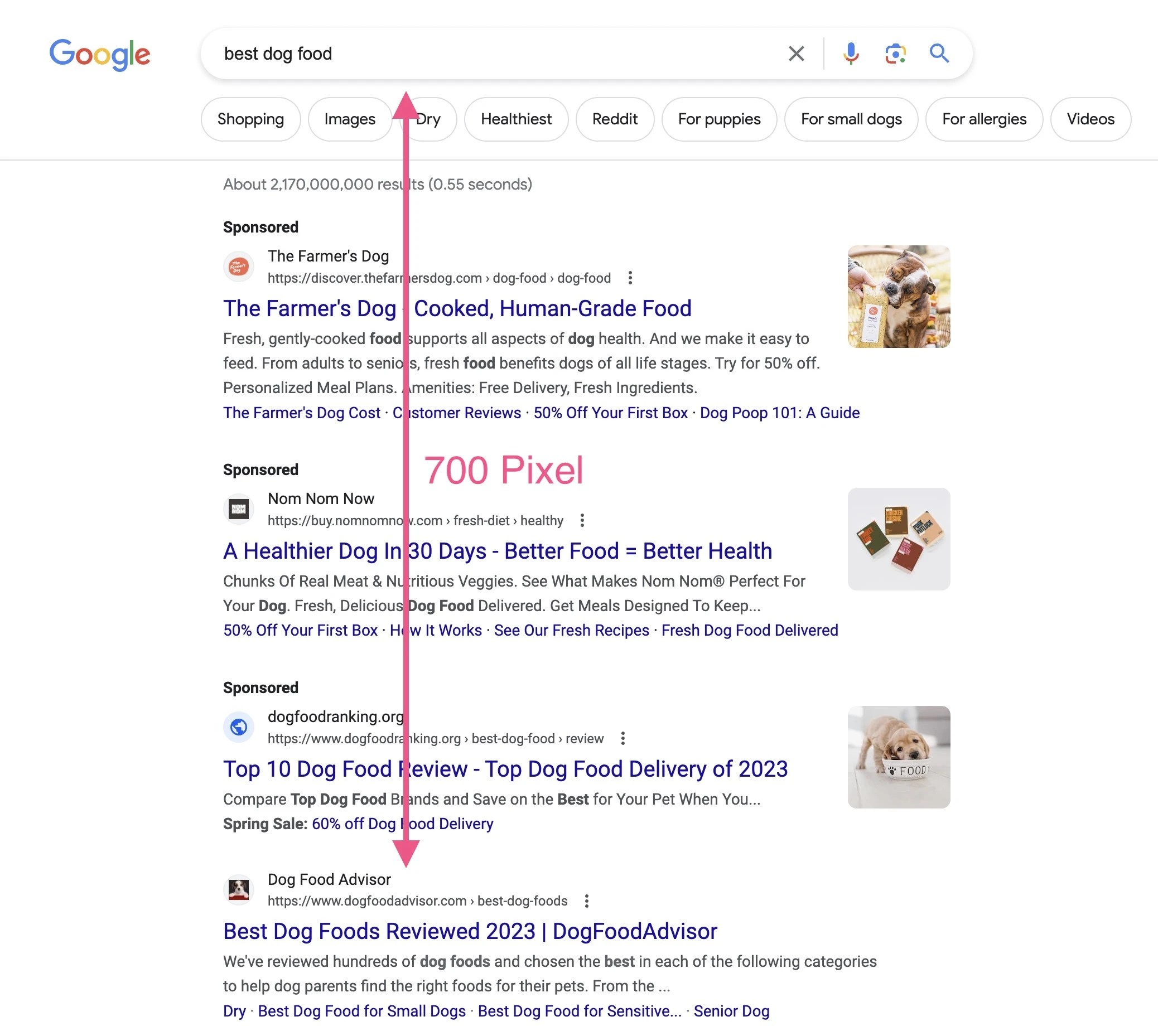
Here, though, only three ad blocks were shown and not four, as in SGE.
Of course, this wasn’t that extreme for every query. For many brand-related keywords like “facebook” or “youtube,” the snapshot in the 2023 beta was only shown if you explicitly requested it (by clicking “Generate”):
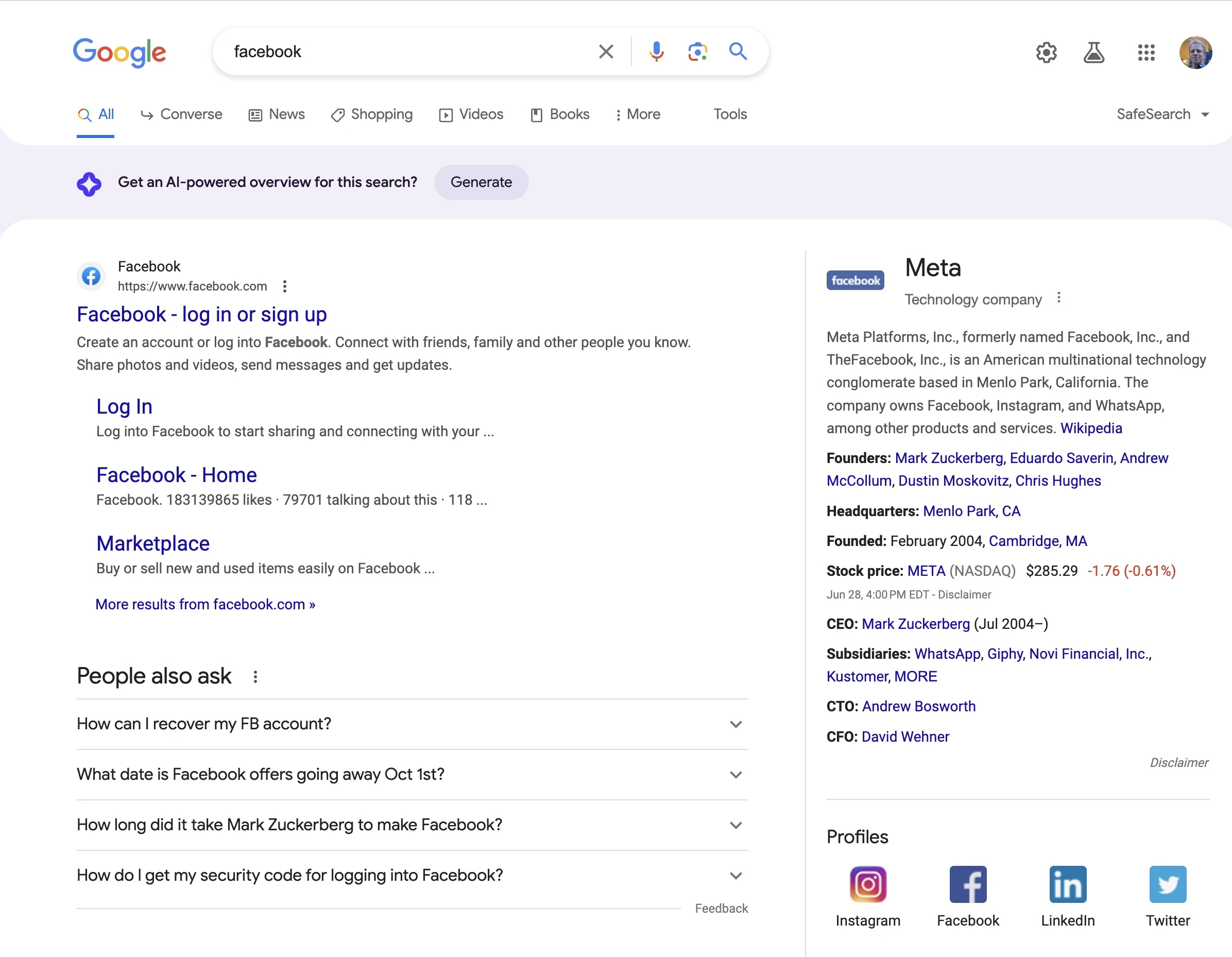
That still holds today: some keywords, industries, and types of websites are affected by AI Overviews to different degrees.
While online stores and local websites (e.g. a tradesperson’s website) tend to be less affected and can sometimes even benefit from AI Overviews, editorial websites with reviews, product comparisons, tutorials, or guide content are more likely to be among the losers.
But does that mean SEO is now “dead” and we should all delete our websites and do Instagram, TikTok, or YouTube instead?
No, of course not.
There are many reasons why AI Overviews and AI Mode are not as bad as they may seem at first glance, and why SEO can still be lucrative today:
1. Generative AI makes SEO much more efficient
AI chatbots like ChatGPT and Bing Chat or AI image generators like Midjourney or ArtSmart save us an enormous amount of time in SEO, e.g. when it comes to:
- Content planning
- Article outlines
- Research
- Image creation
- Creating lists and tables
- Article formatting
- Writing itself (as a first draft)
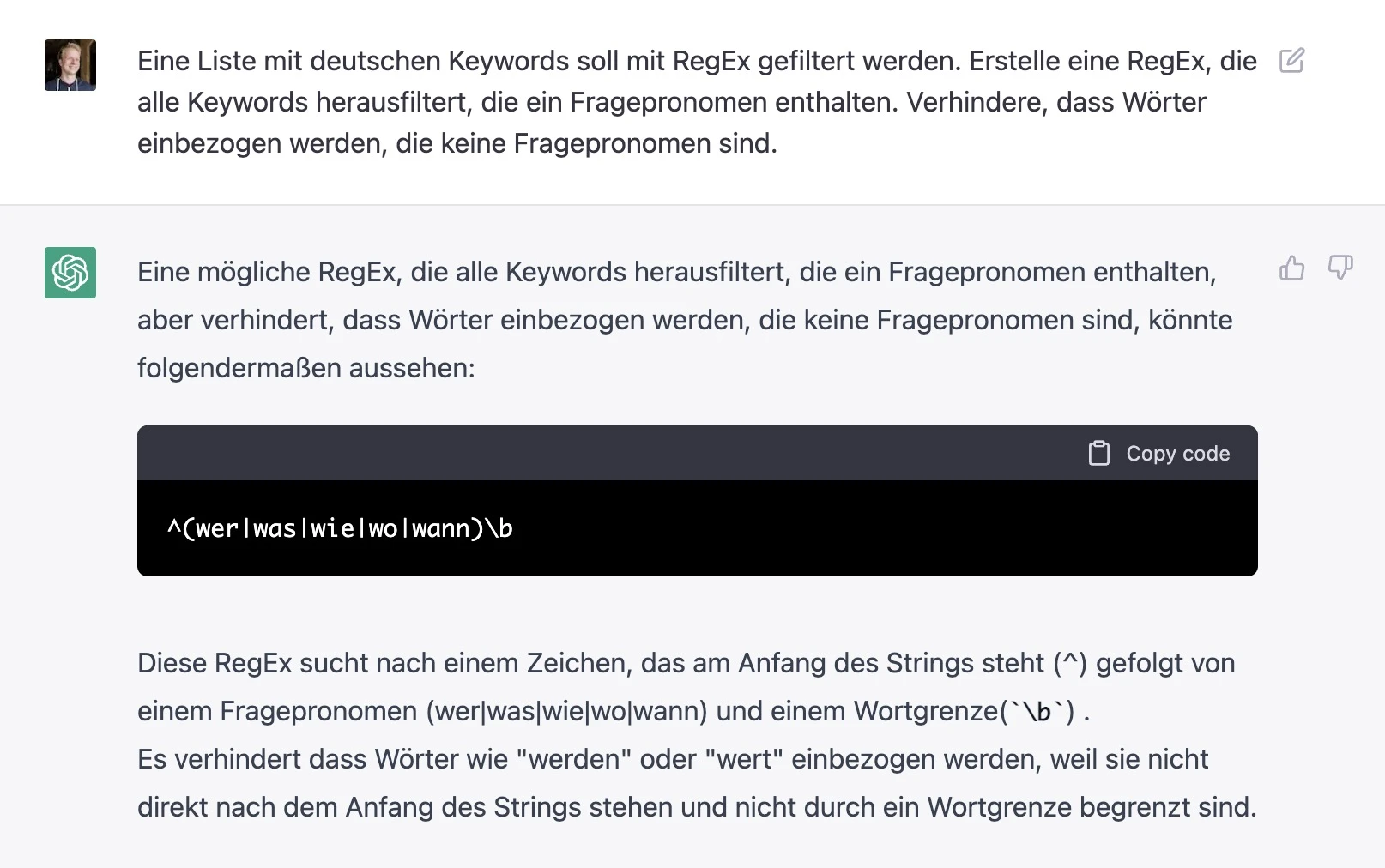
- Generating code (e.g. JSON-LD for Schema.org or RegEx)
In my article on ChatGPT & SEO, you’ll find a few examples, e.g. for creating RegEx to filter keywords in Google Search Console:
Pretty cool, right?
At Blogmojo, AI tools currently let us produce blog articles about twice as fast as before (with a steeply rising trend).
That means: even if we lose 20% of traffic to AI Overviews, we’re still much better off than before the “AI era.”
On top of that, AI tools will in the future help not only with content creation but also with other (sometimes boring) SEO tasks. For example, the following is conceivable:
- Keyword optimization at the push of a button
- Ongoing keyword optimization (keywords on pages and in blog articles are automatically aligned with those from Google Search Console)
- Automatic optimization and split testing of meta descriptions and page titles
- Automatic alt text generation (through image recognition and taking the surrounding text into account)
2. SEO would still be very lucrative even with traffic losses
SEO is a very lucrative way to win visitors and customers (if you do it right, of course).
Even if Google takes 20%, 30%, or even 40% of our traffic through AI Overviews, SEO is still very lucrative for us.
And that holds even if we couldn’t make up for the traffic losses with higher productivity!
3. The traffic that gets lost is not the most valuable
An important question to ask about traffic losses:
“Which visitors actually get lost?”
And the point is:
These are not the visitors with more complex or in-depth questions. These are not the ones doing intensive product research or wanting to dive into a topic. And for the most part not the ones with real buying intent who end up as customers.
The visitors who get lost are rather the ones who “just quickly look something up” and search for information superficially.
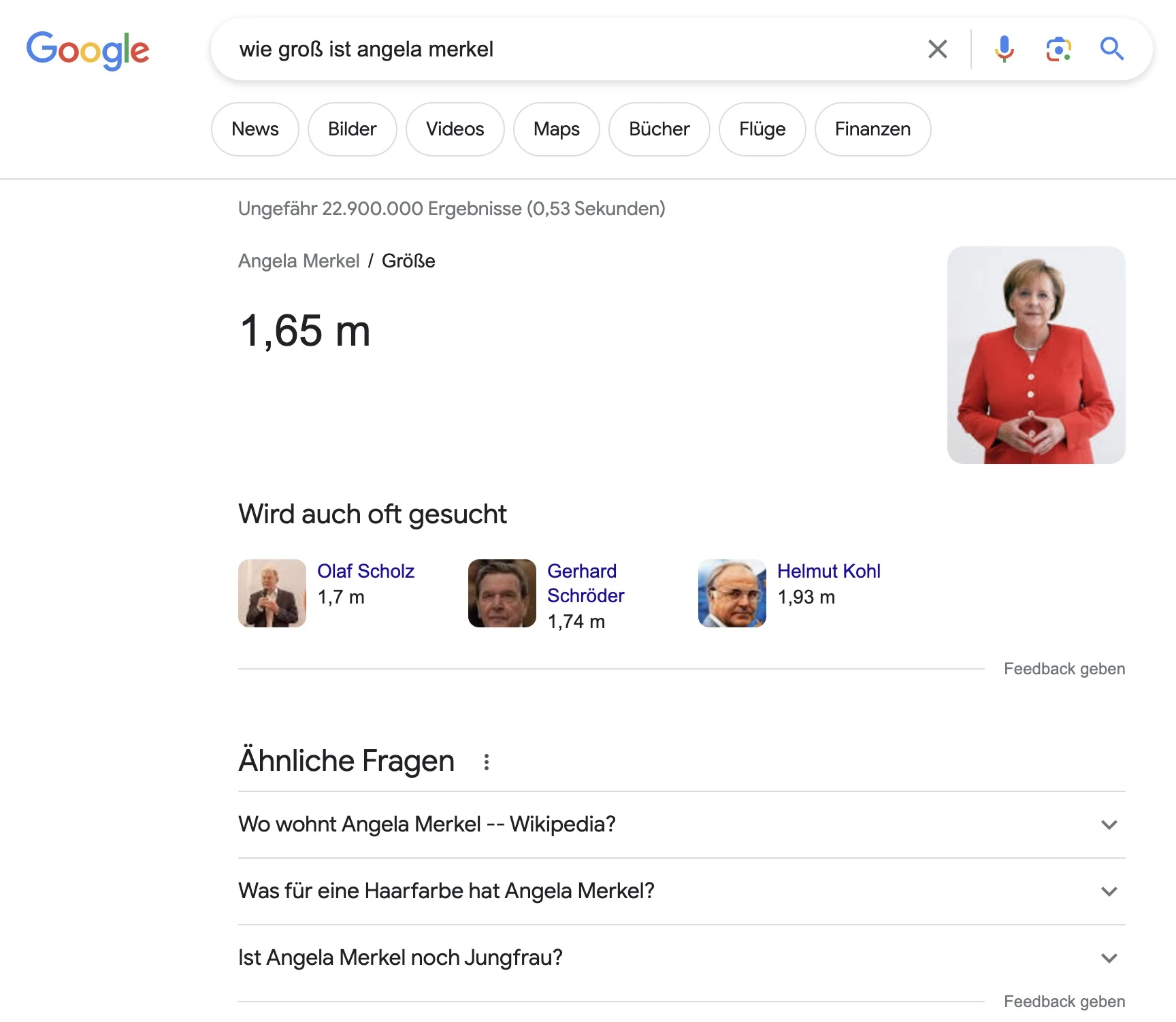
So mainly the traffic for “Know Simple” keywords, or generally for “Know” queries that are easier to answer.
And those are already answered by featured snippets and other SERP features in Google Search itself:
4. SGE took longer than I thought
Back then, I assumed it would still take a while until SGE arrived.
Google itself had named December 2023 as the end of the experiment in Search Labs:
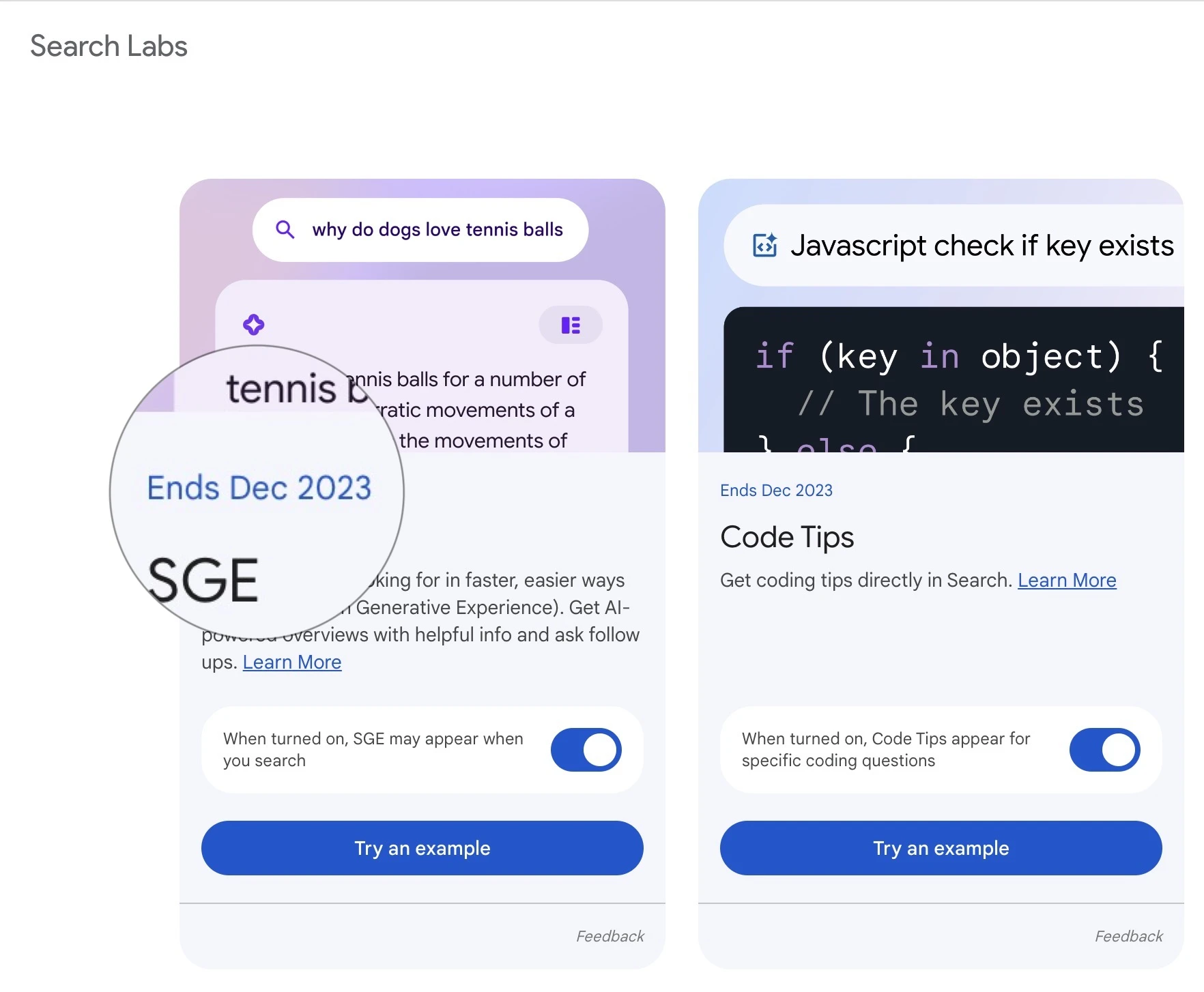
My assessment back then: the Search Generative Experience would stay limited to English at first and would come to Germany at the earliest half a year to a year later, among other reasons because generating that many answers with an LLM is probably very expensive for Google.
I was about right, only the overall timeframe was longer than expected: Google only officially renamed SGE to AI Overviews and launched it in the US in May 2024, a good half year after the December 2023 date Google itself had named. The feature then came to Germany in March 2025, about ten months later, which fits almost exactly into the timeframe I had assumed back then. With AI Mode, the next expansion stage followed in October 2025, also for the German market.
In hindsight, two factors did play a role in how the rollout got delayed and how the form of SGE changed:
5. Pushback against SGE
The rollout of SGE was in fact bumpy and was accompanied by lawsuits and other forms of pushback from publishers.
That’s because SGE was problematic from a copyright perspective: answers in the snapshot were often taken over unchanged from websites.
That in itself wouldn’t have been so bad. But with SGE (unlike featured snippets), you couldn’t tell at first glance which website served as the source for which part of the answer. You first had to expand the snapshot by clicking an icon on the right.
And that, unfortunately, wasn’t the default setting...
Pushback emerged even during the test phase, e.g. from big US publishers like Tom’s Hardware or Barry Diller. Back then, I also thought protests like in the 2023 Reddit API dispute were conceivable once publishers were confronted with real traffic losses.
The criticism hasn’t completely disappeared to this day, it has rather shifted: Google clarified its spam policies on May 15, 2026 and now explicitly covers the manipulation of AI Overviews and AI Mode answers as well, for example through deliberately manipulated recommendations, one-sidedly flattering listicles, or prompt injection.
6. Google and ad revenue
The new snapshots could potentially have hurt Google’s ad revenue. Not only the organic results but also the ads got pushed further down by the snapshot.
That wouldn’t have been good for Google: at the time SGE was announced, ads in Google Search still made up 58% of total revenue, according to Alphabet’s quarterly figures for the first quarter of 2023:
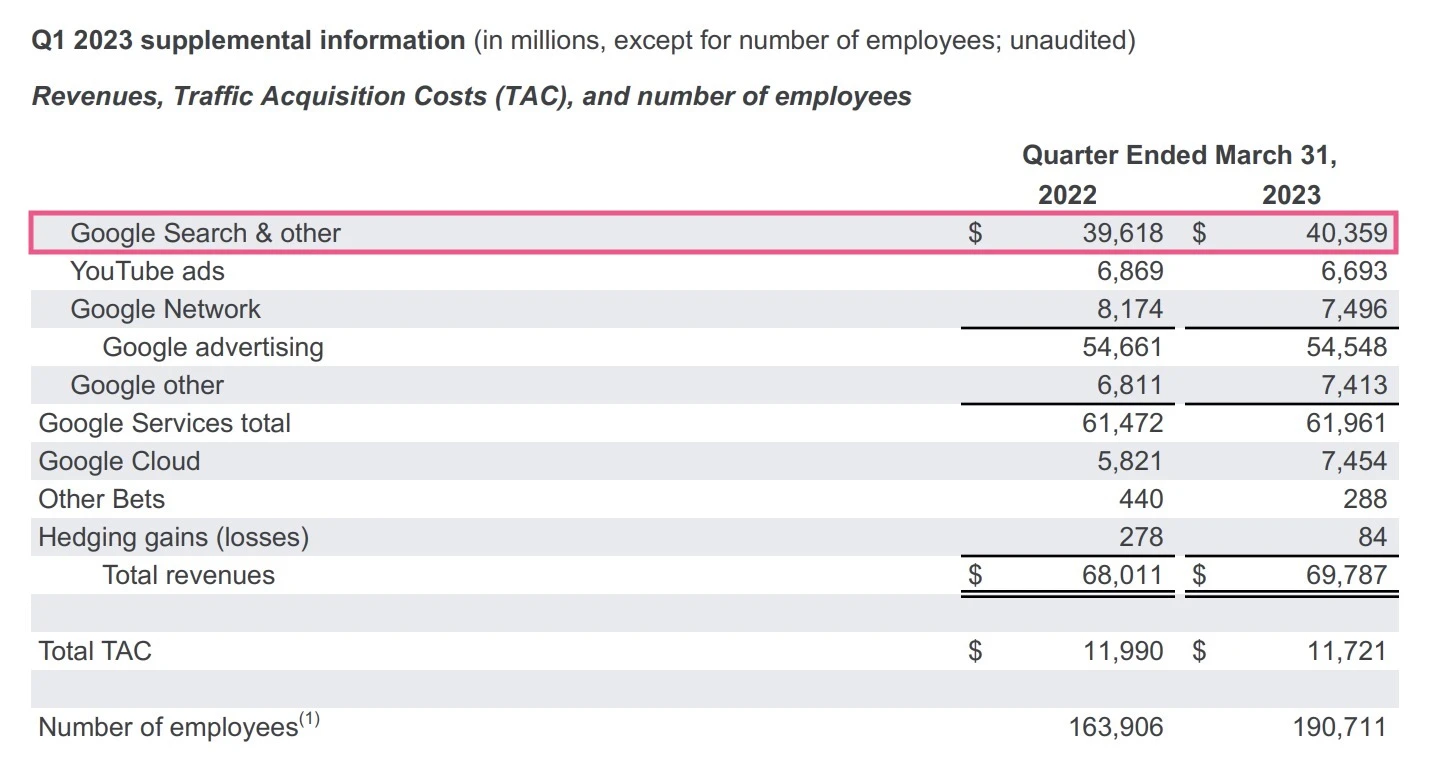
Had revenue dropped by 10% because of SGE alone, that would have meant roughly €16 billion less per year for Google on paper.
That’s why I considered it plausible back then that Google would adjust the look of search once more before rolling the feature out broadly. In my view, four scenarios were conceivable:
- Ads are shown inside the snapshot
- Snapshots are more often shown only on demand (i.e. by clicking a “Generate” button)
- Snapshots are shown less frequently in general
- Snapshots are made smaller or less prominent
Which of these levers Google has actually pulled since then, I can’t conclusively judge from the outside. All that’s certain: Google has stuck to the basic logic of showing AI answers directly in search despite the revenue risk.
7. New types of search results
With SGE, two new types of search results emerged that you can optimize for and that didn’t exist like this in classic search. First, the linked sources to the right of the AI answer.
For these, it’s still worth having a good featured image today:
Second, the separate tab that Google calls Perspectives and introduced alongside SGE. Here you’ll find forum posts, community discussions, videos, and blog articles.
Smaller blogs and content creators in particular could benefit from Perspectives:
8. Snapshots are (not yet) always helpful
Already in the SGE beta, I noticed that many of the AI answers weren’t really helpful and that I preferred to scroll down and click the classic organic results.
There were several reasons for that:
- Generating the snapshots sometimes took too long (even despite the updates at the time)
- The AI-generated answers sometimes contained wrong numbers, dates, or facts.
- The answers were often too long (to my taste, at least).
- The answers often contained repetitions
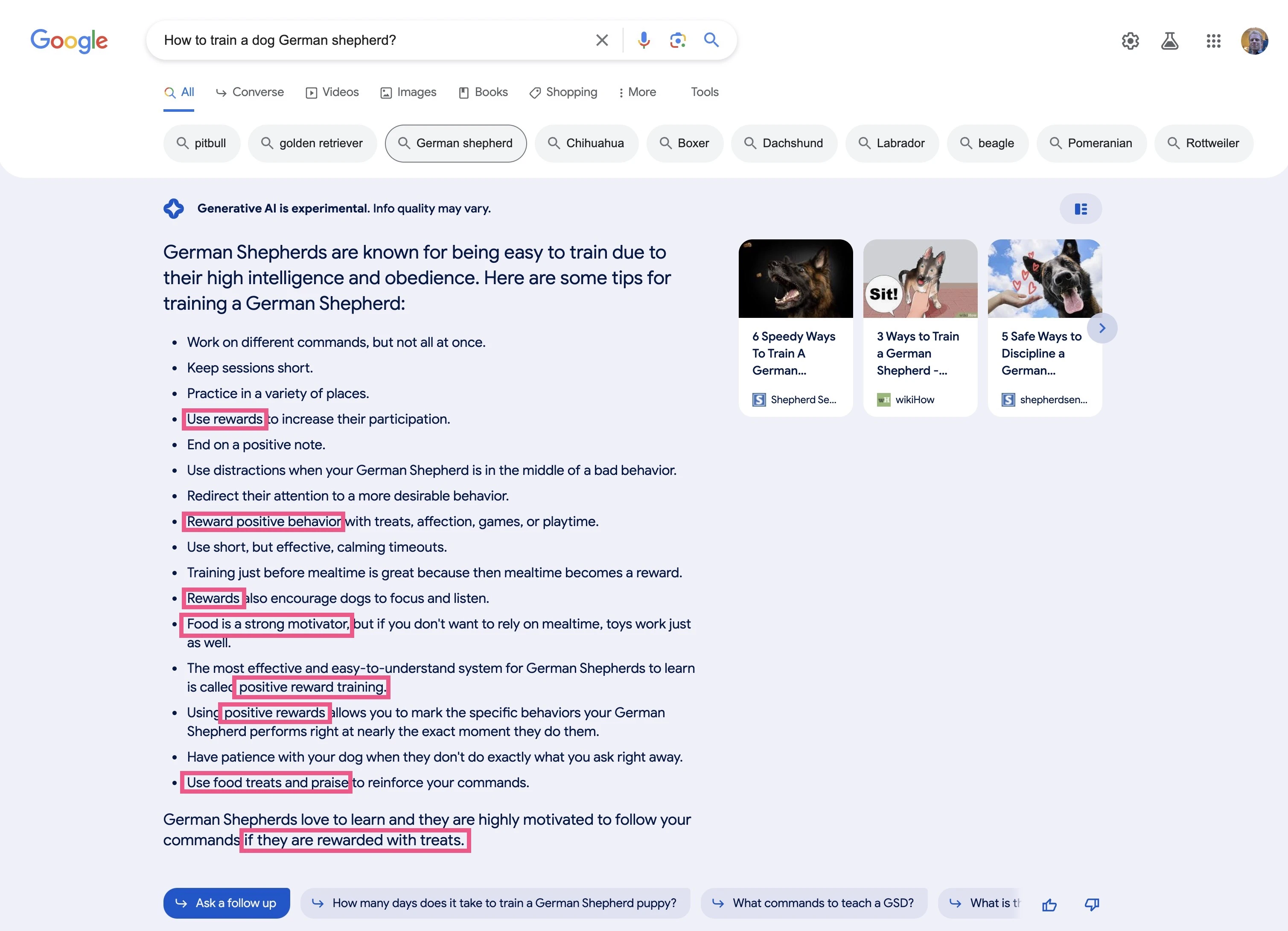
Points 3 and 4 can be shown nicely with the snapshot at the time for the keyword “How to train a German shepherd?”. It contained 16 (!) list items and two paragraphs, eight of which gave the tip to work with rewards:
In short:
From a user’s perspective (so without my SEO glasses on), I wasn’t yet convinced by SGE back then. Hallucinated facts and overly long answers are still a known problem of AI search features like AI Overviews and AI Mode today, even though Google has worked a lot on quality and speed since.
For internet research, I still mostly use classic Google Search.
9. Snapshots replace other SERP features
Snapshots partly displaced other SERP features. Featured snippets in particular were shown less often once a snapshot was generated.
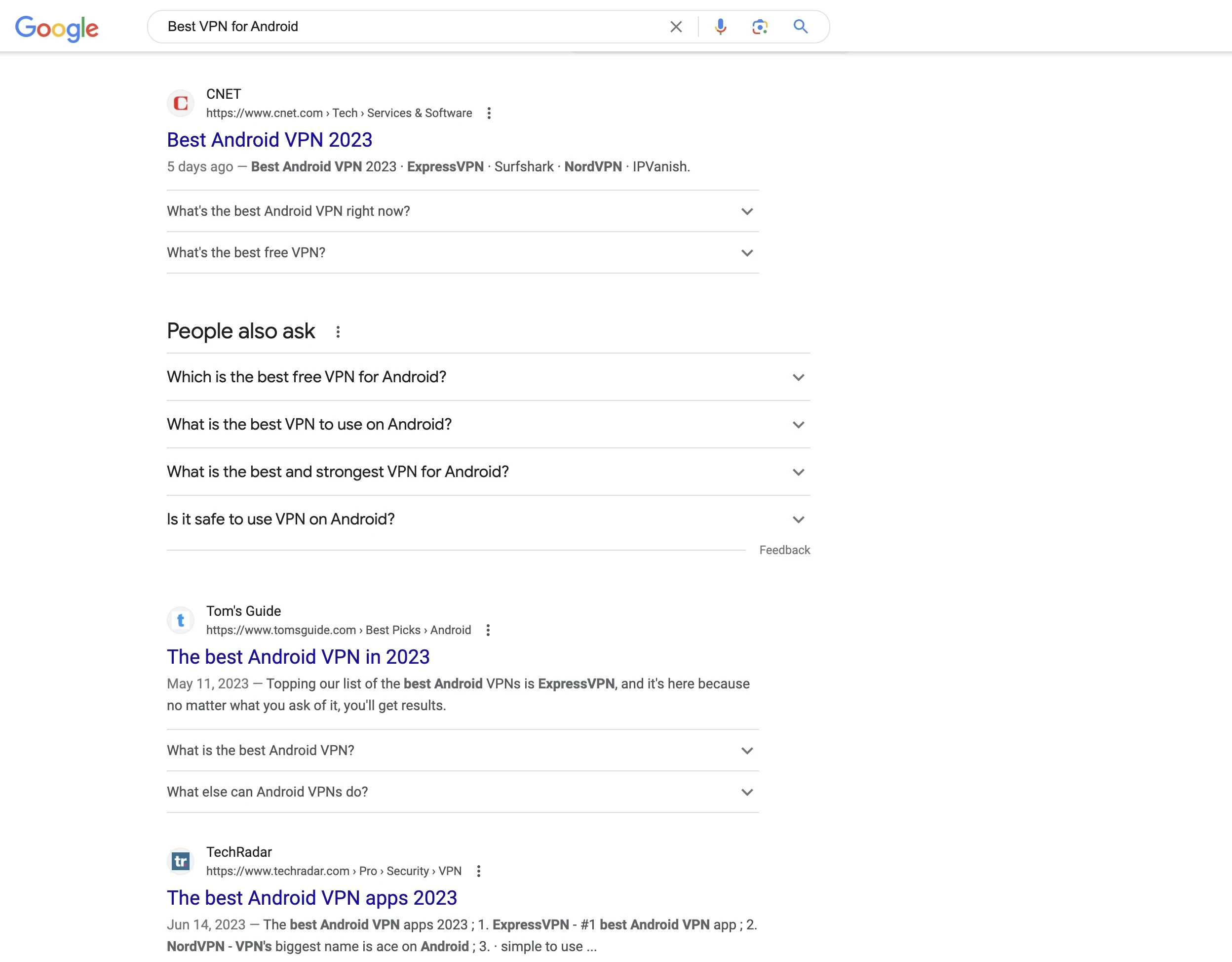
For the keyword “best vpn for android,” for example, classic Google Search still showed a featured snippet.
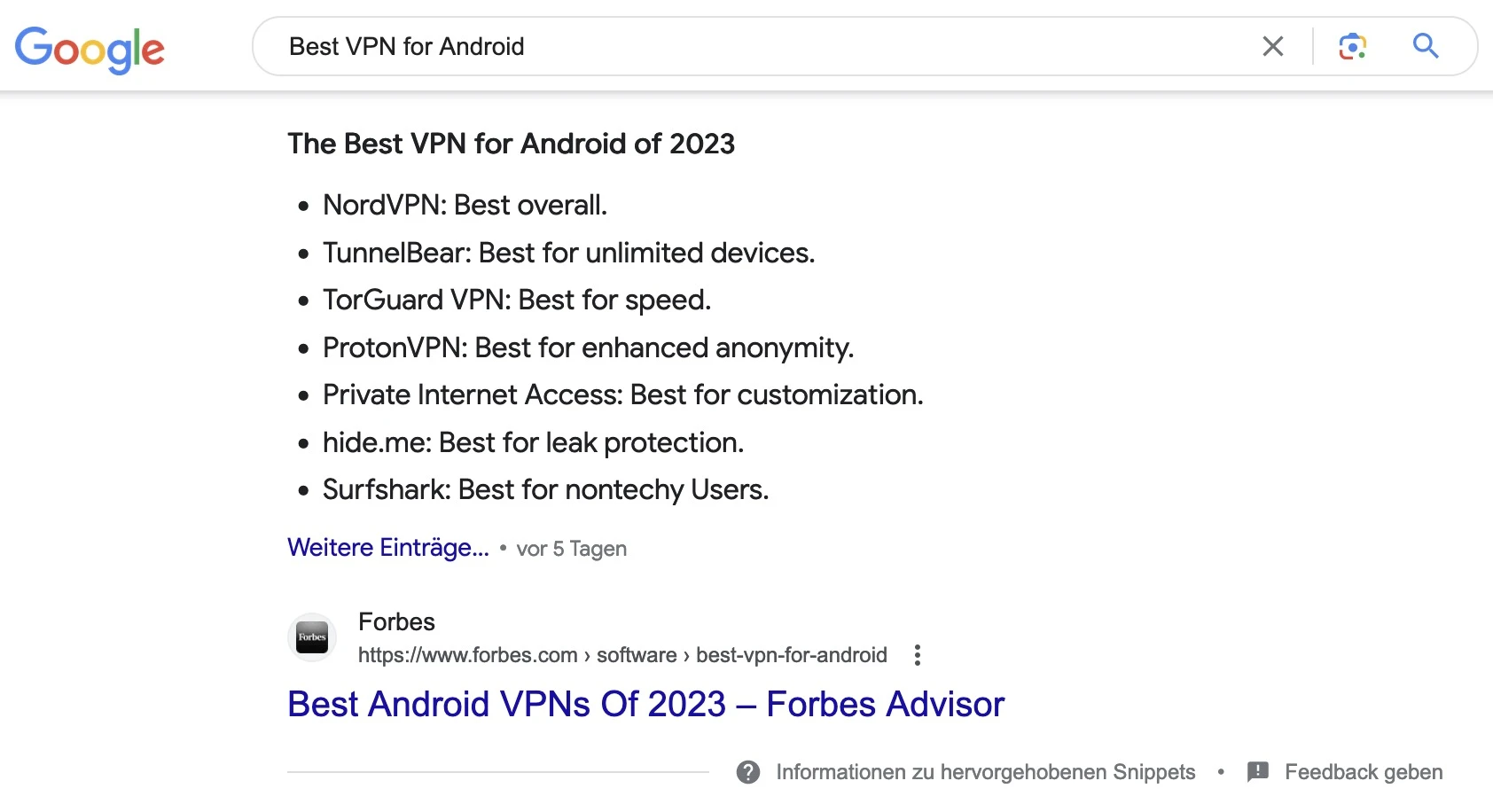
In the SGE preview, it was no longer visible below the snapshot:
This effect basically applies to today’s AI Overviews as well: where an AI answer appears, the featured snippet for the same query usually disappears. That can soften traffic losses for some keywords a bit, because a click on the source stays more attractive than with a featured snippet that has already fully answered the question.
10. Promises from Google
Back in 2021, Google claimed that its search sends more clicks to websites every year (to counter the accusation that more and more Google searches end without a click).
In the presentation Live from Paris on February 8, 2023, where the chatbot Bard was introduced, Prabhakar Raghavan, then Senior Vice President at Google, repeated this claim and promised to keep sending valuable traffic to creators:
Open access to information is core to our mission. And we know people seek authentic voices and diverse perspectives. As we scale these new generative AI features, like this, in our search results, we continue to prioritize approaches that will allow us to send valuable traffic to a wide range of creators and support a healthy, open web. In fact, we've sent more traffic to the web every year each year than the year prior.
Whether Google has kept this promise can at least partly be quantified today. According to SparkToro, the share of zero-click searches in the US between January and April 2026 was 68.01%, compared with 60.45% in 2024. So the direction points more away from more clicks for the open web, not toward it.
11. Other marketing channels are uncertain too
If you think doing SEO or investing in it is uncertain, take a look at other marketing channels:
- On Facebook, it has become harder and harder over the years to build reach or get organic traffic (except maybe through groups)
- Twitter has been going downhill since Elon Musk’s takeover
- TikTok could be banned completely in the US (it’s already banned for government employees, for students, and in the state of Montana)
- The EU accuses TikTok of inadequate protection of children and young people (the app has been banned on EU Parliament work devices since March 2023)
The idea that any platform or social network is 100% safe is an illusion.
FAQ
Here I’ve put together answers to common questions about SGE and AI Overviews:
Is Search Generative Experience (SGE) still the current name?
No. Google officially renamed SGE to AI Overviews in May 2024 at its developer conference Google I/O and moved it from the experimental beta into regular Google Search.
Since then, the name SGE only refers to the original test phase of 2023 and 2024.
Since when have AI Overviews and AI Mode been available in Germany?
AI Overviews have been live in Germany since March 2025.
AI Mode, the more conversational evolution, followed on October 7, 2025 for Germany, Austria, and Switzerland as well.