
You rank on page 1 on Google.
Your SEO is working. The traffic is coming in. So far, so good.
But do you know what ChatGPT answers when someone asks about your topic? Whether Perplexity cites you? Whether Google AI Overviews even knows your blog exists?
Neither did I. Until I started taking GEO seriously.
GEO stands for Generative Engine Optimization. It's the part of visibility that most bloggers and online entrepreneurs have simply ignored so far.
Many traditional SEO tools have added first GEO features by now. But most of them only scratch the surface. If you really want to understand how often you show up in AI answers, which sources get cited, how your competitors are doing, and whether the AI might even be saying false things about you, you need specialized GEO tools.
I took a look at the most important ones. Here's my assessment.
- My favorite (best all-rounder for SEO + GEO): SE Ranking. Keyword research, backlinks, audits, and AI Search Visibility in one platform, including GA4 integration and an MCP server for direct AI workflows.
- For a cheap GEO start: Rankscale. From $17 per month with annual billing, 17+ AI platforms.
- For enterprise teams that need the deepest data: Profound. Crawler analytics, prompt volume research, and AI agents for content, but now only available in the enterprise plan on request.
What are GEO tools and why should you have them on your radar?
Short answer: Because search behavior is changing fundamentally right now.
Two years ago, people still googled. Today they ask ChatGPT. Or Perplexity. Or they get an AI-generated summary right in Google, without a single click on your website.
That's the decisive difference.
SEO helps you show up in the blue links on page 1. GEO tools help you land in the answers that AI systems generate themselves.
And while you're reading this article, ChatGPT is answering thousands of questions around your topic. Without mentioning you. Or maybe with you. How would you know without a GEO tool?
Exactly.
The 6 best GEO tools at a glance
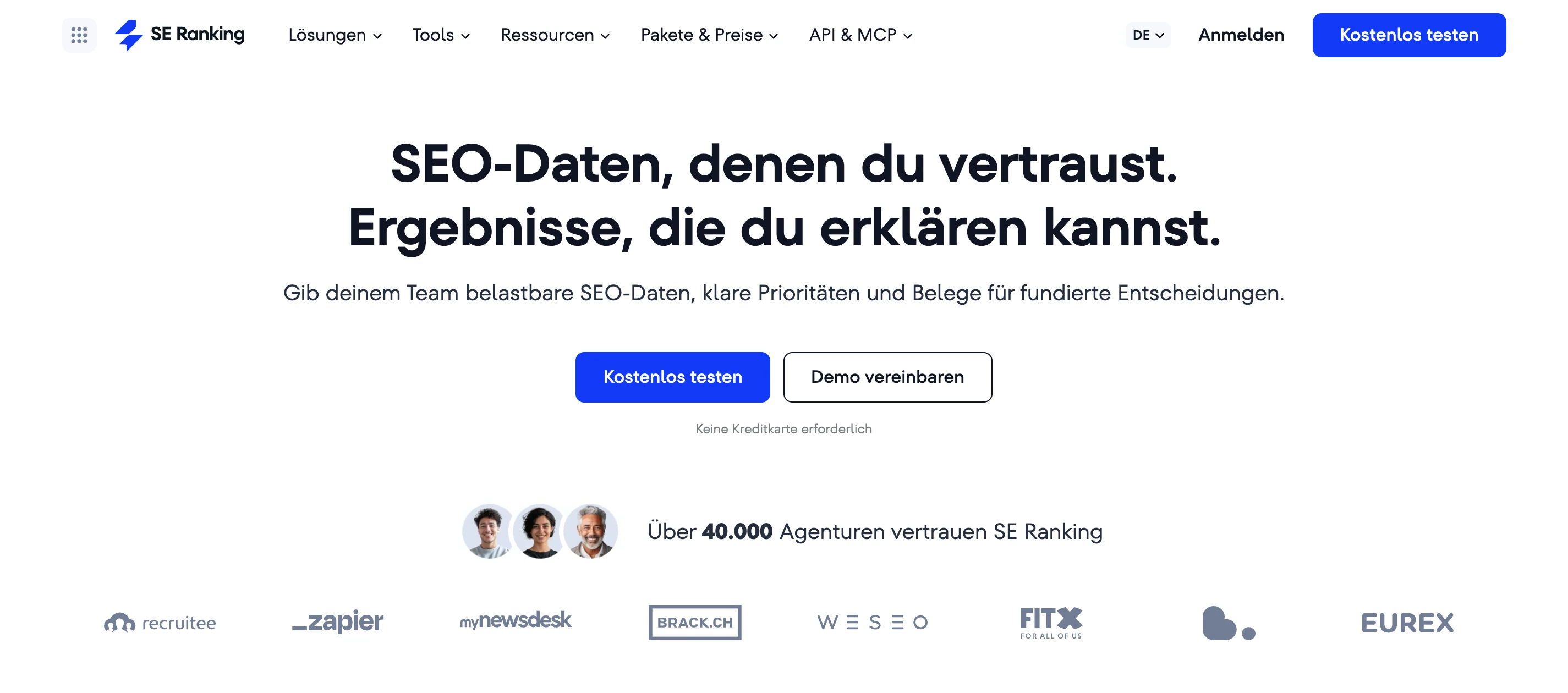
1. SE Ranking (+ SE Visible)
| Price | Level | Trial |
|---|---|---|
| From €87.20 per month (annual payment) | Beginner to advanced | 14 days free |
If you already use a comprehensive SEO tool and just want GEO on top, without opening another subscription:
SE Ranking is a very solid choice.
SE Ranking has established itself over the years as a reliable SEO platform and has also covered AI visibility since 2025. I've been using it for years on my own projects and tested the GEO features from the start.
What SE Ranking can do in GEO:
You get an AI Search Toolkit that's integrated directly into your existing SE Ranking dashboard. It tracks how your brand and your content show up on these platforms:
- Google AI Overviews (the AI summaries above the organic results)
- Google AI Mode
- ChatGPT
- Gemini
- Perplexity
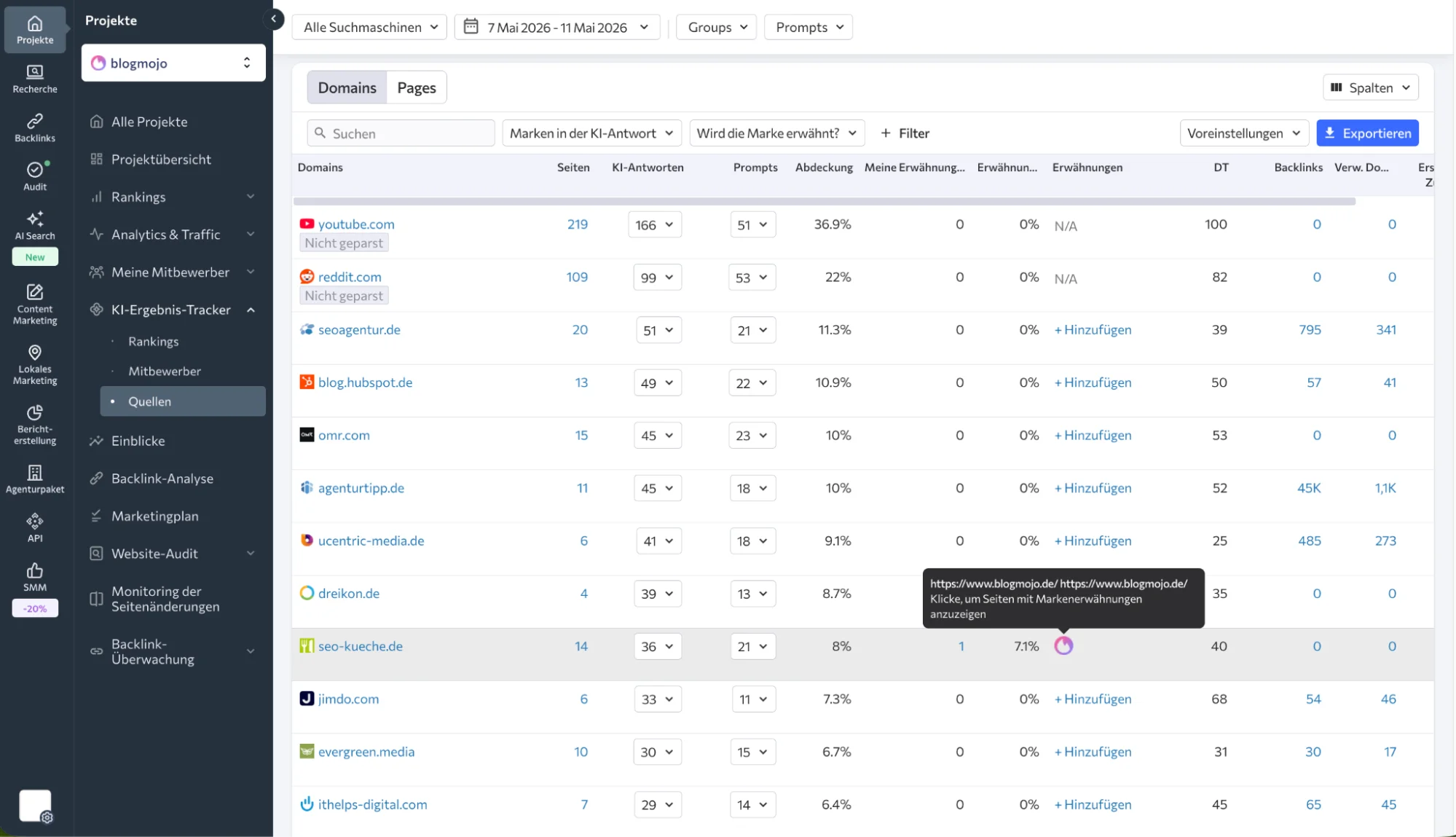
You see whether your domain is mentioned or linked in AI-generated answers, which sources the AI prefers, and how that develops compared to your competitors. By the way, that doesn't apply only to your own website. You can enter any domain and immediately see how often it shows up in AI answers. Handy for competitive analysis.
Really good: There's a feature called “Sources”. It shows you which websites get cited in AI answers for your tracked prompts. So you see where the competition shows up and you don't. That's also a ready-made list of content ideas and outreach targets.
Worth its weight in gold.
What sets SE Ranking apart from pure GEO tools:
You simply get a complete SEO and GEO package. Rank tracking, AI search tracking, keyword research, site audits, backlink analysis, and competitive research all live in the same platform. On top of that comes the GA4 integration. So you don't just see whether you show up in AI answers, but also what that traffic actually does on your website.
SE Ranking also has an MCP server. It lets you feed your GEO data directly into AI assistants like Claude or ChatGPT, for automated reporting and your own workflows. Handy if you already work with SEO APIs or have AI assistants built into your workflow.
Then there's SE Visible, a separate, standalone tool from the SE Ranking team that focuses exclusively on AI visibility. SE Visible currently tracks ChatGPT, AI Overviews, AI Mode, Gemini, and Copilot, with a focus on sentiment, benchmarking, and brand perception. It has its own plans from €64 per month with annual payment and can also be tested free for 14 days.
Yes, the navigation takes some getting used to, since SE Visible is a separate tool. But in return you get SEO, GEO, and brand monitoring in AI search in one ecosystem.
Who is it for? SE Ranking suits teams and agencies that want to put SEO data, AI visibility, and traffic behavior into one shared context. Once you've worked like that, you won't want to go back.
2. Rankscale
| Price | Level | Trial |
|---|---|---|
| From $17/month (annual billing) | Beginner to advanced | Yes (Pro plan) |
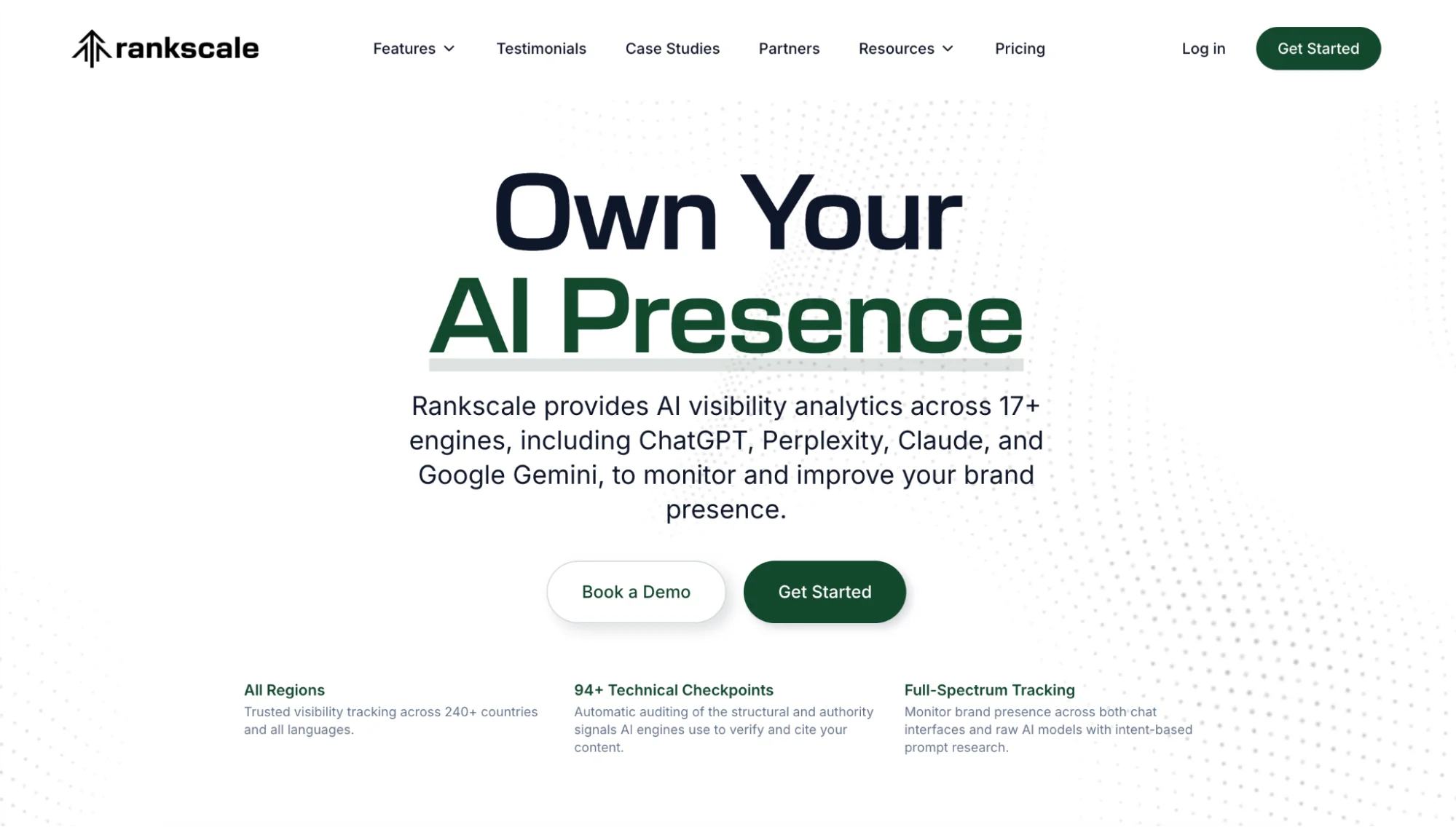
Rankscale focuses entirely on GEO tracking. You see how your brand shows up on 17+ AI platforms: ChatGPT, Perplexity, Gemini, Claude, AI Mode, AI Overviews, DeepSeek, Grok, Copilot, Mistral, and more.
On top of that you get:
- Citation Analysis: Which sources does the AI cite and why?
- Sentiment Tracking: In what tone is your brand talked about?
- Competitor Analysis: You see how a competitor performs in AI answers
- Prompt Research: Which questions should you be visible for? Rankscale estimates the prompt volume and the intent behind it
- Shopping Analysis: Do your products show up in ChatGPT Shopping or Google AI Mode Shopping?
The great thing: Rankscale estimates prompt volume through a semantic reconstruction instead of quoting a panel figure that nobody can verify. In the process, the tool decodes which intent and which topics are behind the queries. That's essentially keyword research for AI search.
I've had Rankscale on my radar for a while. The project started in October 2024, and the official launch followed in July 2025. It has been growing fast since. If you want to dive deep into AI visibility only, without the detour through a full SEO package, this is a clean option.
Who is it for? Solo bloggers, freelancers, and anyone who wants to get into GEO on as little budget as possible. $17 per month is a manageable risk, even though the entry plan is only available with annual billing. If GEO is relevant for your business, you'll notice that here very quickly.
3. Profound
| Price | Level | Trial |
|---|---|---|
| On request | Enterprise | Demo only |
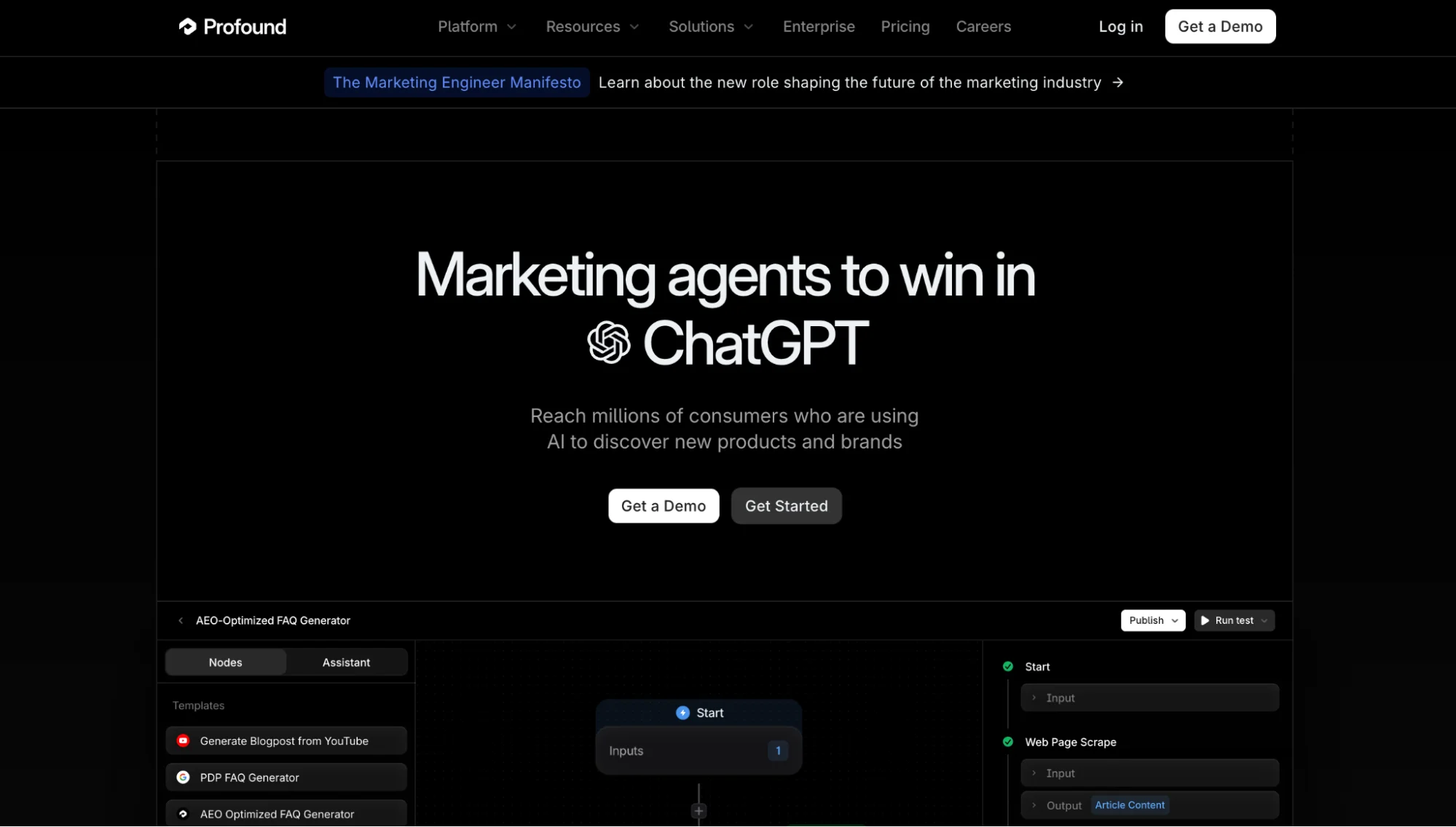
Profound thinks about GEO a little differently than most tools on this list.
It's not just about whether you show up in AI answers. Profound also asks: What happens before you show up? How do AI systems crawl your website? What does GPTBot actually read when it lands on your page?
That's the Agent Analytics feature. You see in real time which AI crawlers are active on your website, which pages they visit, and how often. The part that interests me personally the most.
You also get Answer Engine Insights (how does the AI portray your brand?), Prompt Volumes (what do millions of people ask AI systems every day?), and with the “AI Marketer”, agents that write content based on your positioning and take over recurring tasks.
The platforms Profound tracks: ChatGPT, Perplexity, Google AI Overviews, Google AI Mode, Gemini, Claude, DeepSeek, Exa Search, Muse Spark, and Qwen.
The cheap plans are gone. Profound discontinued the Starter and Growth plans for brands in September 2026. What's left is an enterprise plan with individual pricing that you only get through a demo.
Who is it for? Clearly not for solo bloggers, and since the cheap plans were dropped, not for small teams anymore either. Profound is for large marketing teams and companies that want not just to track GEO but to work with it actively. If you're ready to spend money here and really go deep, it's a strong package.
4. Peec AI
| Price | Level | Trial |
|---|---|---|
| From $95/month | Beginner to advanced | Yes |
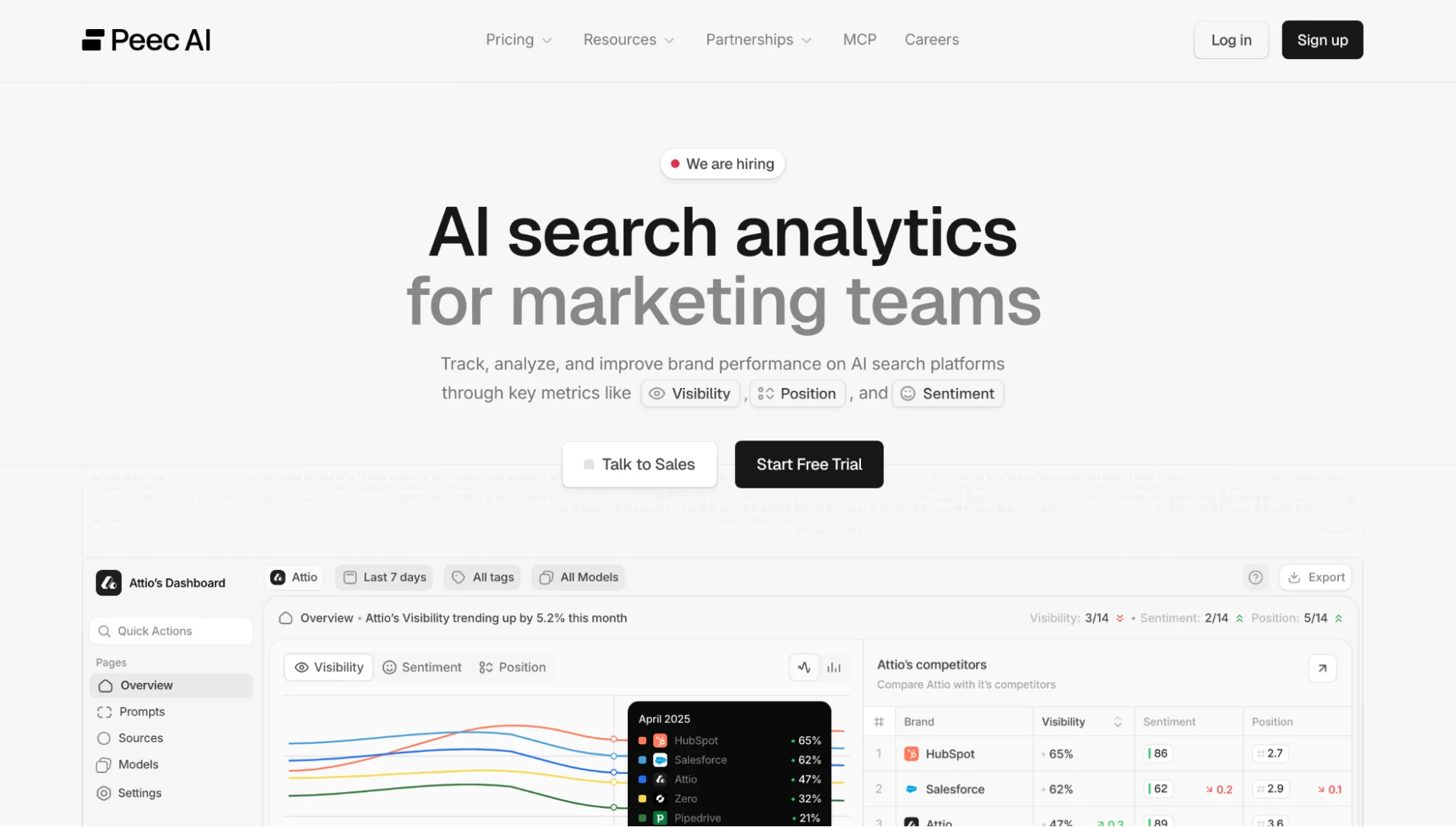
Peec AI comes from Berlin and launched in early 2025. Still young, but it quickly caught attention in the GEO community.
You track your brand visibility across ChatGPT, Perplexity, Gemini, Google AI Overviews, and Google AI Mode, with three core metrics in focus: visibility (how often do I show up?), position (where am I mentioned?), and sentiment (in what tone does the AI talk about me?).
On top of that comes competitor benchmarking, which shows you how you compare to the competition. And a source analysis that shows which domains the AI prefers to cite when someone searches in your topic.
In the standard plans you choose three models. Each additional one costs extra, $30 per month in the Starter plan. There's also an MCP server that lets you use your Peec data in Claude, Cursor, or n8n.
What stands out to me: Peec runs its own Slack community around GEO. You reach support itself by chat or email, depending on the plan.
The focus is clearly on monitoring and analysis. You see where you stand, how you compare to the competition, and which sources the AI prefers. With the “Actions” section, Peec now also gives you pointers on what you should improve and why.
The interface is tidy, and most people get first results within 30 minutes.
Who is it for? Peec AI suits anyone who wants to get into GEO tracking without hassle and doesn't immediately need a full SEO package. If you want to have content written and optimized directly in the tool, you'll be better off looking at Goodie or AthenaHQ.
5. Goodie AI
| Price | Level | Trial |
|---|---|---|
| From $295/month | Advanced to enterprise | 7 days free (Core plan) |
Goodie, which you'll find at higoodie.com, goes further than most tools on this list.
Other GEO tools show you where you stand. Goodie does that too. And then tells you directly what to do to stand better.
The Optimization Hub delivers concrete recommendations for action: which content needs to be optimized, which content gaps exist, which topics the AI prefers to cite, and what's missing for you to show up there.
On top of that comes an AEO Content Writer that creates content optimized for LLMs directly from your visibility data.
Platforms Goodie tracks: ChatGPT, Gemini, Claude, Perplexity, DeepSeek, Grok, Google AI Overviews, AI Mode, Meta AI, Copilot. How many of them you get depends on the plan: five in the Core plan ($295), eight in the Pro plan ($999), and up to 14 for enterprise customers.
Who is it for? Clearly not for solo bloggers. But for ambitious marketing teams, agencies with several clients, and e-commerce brands that want to approach GEO strategically and with measurable ROI, Goodie is one of the most complete packages on the market.
6. AthenaHQ
| Price | Level | Trial |
|---|---|---|
| Free entry, Starter $295/month | Advanced to enterprise | Free plan with $25 starting credit |
AthenaHQ was built by a team around a former Google Search product manager who previously worked on AI search projects at Google and DeepMind.
The approach is similar to Goodie's: not just tracking, but covering the entire process from monitoring to content in one platform.
What sets AthenaHQ apart from many other GEO tools: the focus on the content quality of the AI answers. It analyzes not only whether you get cited, but also what information the AI delivers about your brand and where content gaps or misrepresentations could arise. If you want to actively manage your AI reputation, this is a well-thought-out approach.
Otherwise AthenaHQ delivers the full package: monitoring across ChatGPT, Perplexity, Gemini, Claude, AI Overviews, AI Mode, Copilot, and Grok, plus citation tracking, gap analysis, prompt volume research, and a content feature that turns optimization recommendations directly into usable text.
Who is it for? Growing teams and agencies looking for a complete GEO package with optimization features.