“How long does SEO take?” is one of the questions I get asked most often as an SEO coach.
The problem:
There is no one-size-fits-all answer. Asking how long SEO takes is a bit like asking “How long does driving take?”.
Anything from 8 minutes (to the Edeka supermarket around the corner) to 139 hours (from Lüneburg to Vladivostok) is possible.
So when I see a general survey on this, like the one ahrefs recently ran, I can only shake my head.
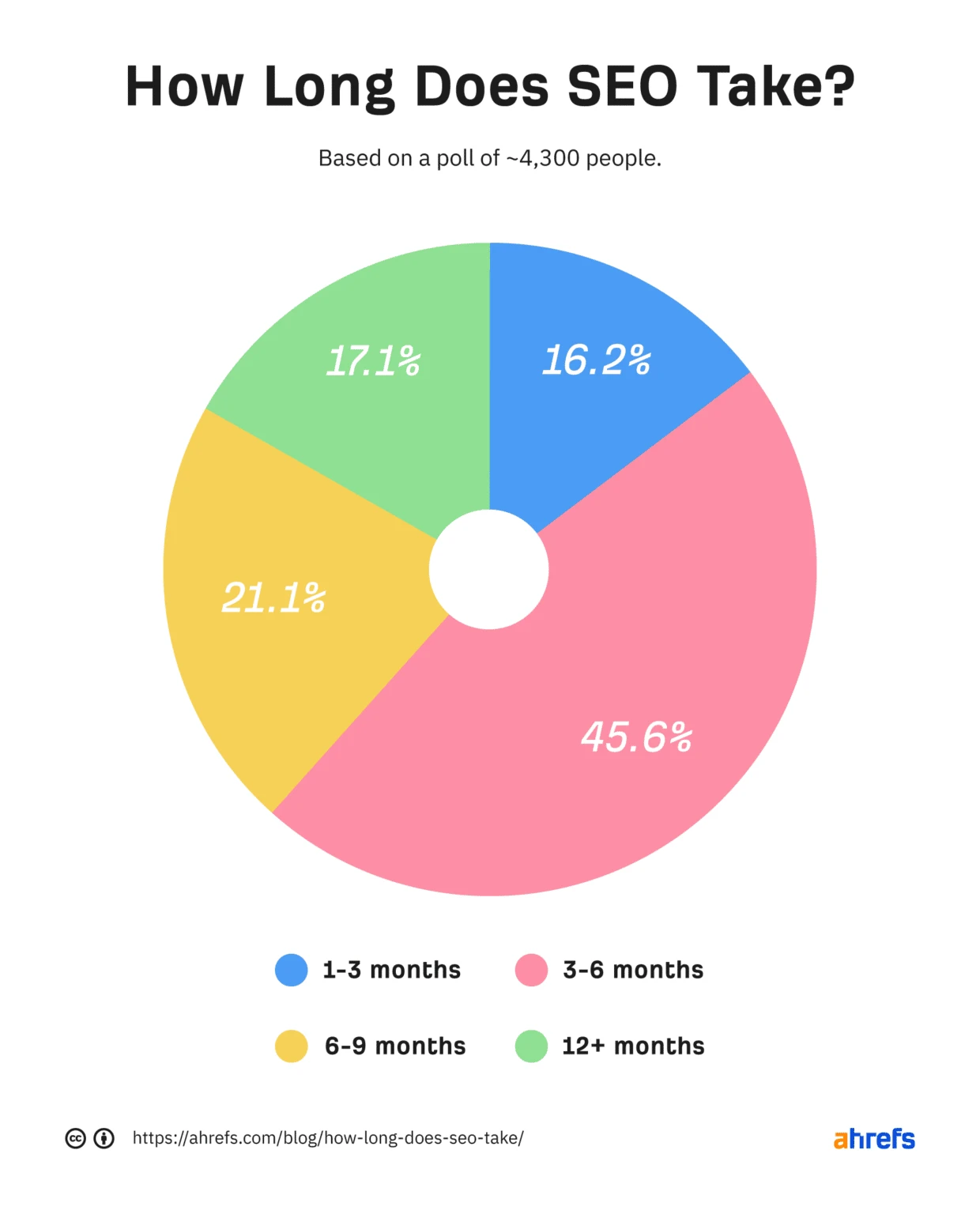
Still, you can of course answer this question. There is just far more than one answer.
Bigger increases in clicks or revenue can sometimes take only a few days or even just a few hours too (but also several months).
But let’s take a closer look:
1. Article updates
One of the biggest “quick wins” in SEO, or even the biggest, is updating existing articles or pages.
Depending on the website and the article, you can often see ranking increases within a few days to two or three weeks. Sometimes it takes only a few hours.
For example, on Friday, October 21, 2022, I updated my article on Google Fonts & GDPR. The very next morning it had moved up one or two positions for many of its keywords:
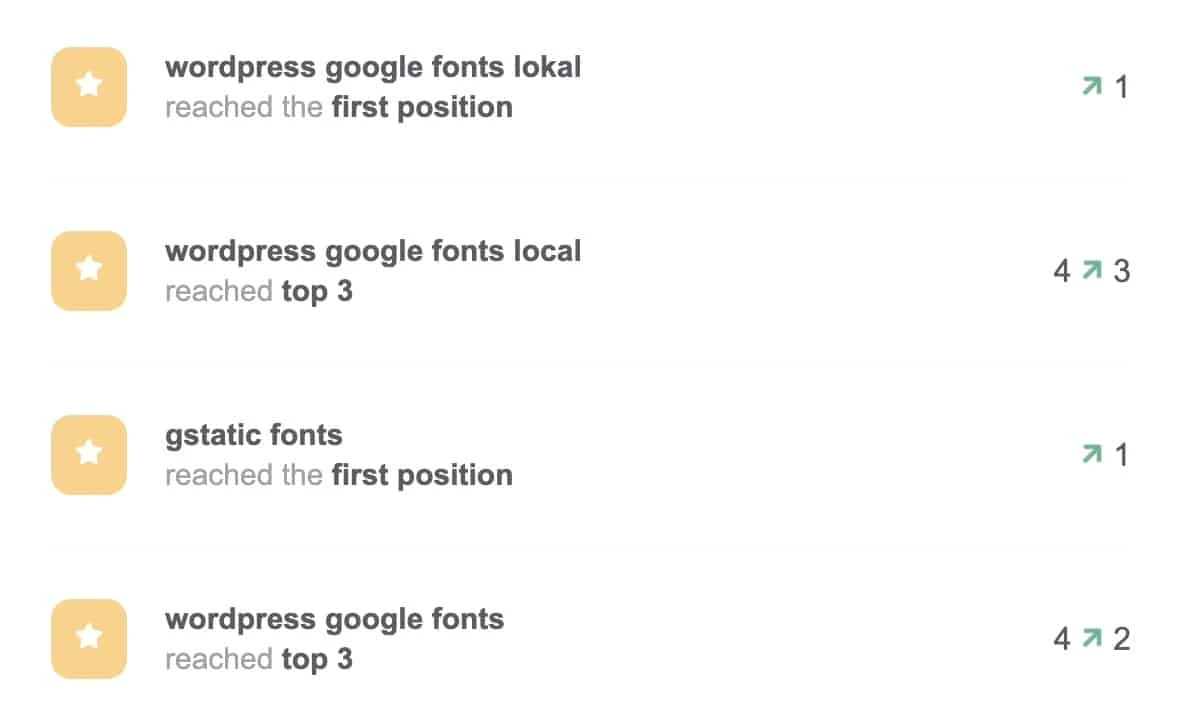
Pretty cool, right?
2. New articles
To reach first-page rankings or the top 3 on Google for a completely new article, it takes longer than for existing articles in most cases.
And that makes sense: Google first has to find the article and add it to its search index. Then the Google algorithm has to evaluate its quality and relevance from scratch.
The time span ranges from a few days to several months. How long it takes for your articles to land in the top 3 (and whether they do at all) depends, for example, on the following factors:
- the number and quality of the backlinks an article has (and of the website it belongs to)
- the linguistic relevance of the text
- user signals (measuring whether searchers’ problems and goals were met, especially relevant for the top 5)
- internal linking (often underestimated)
- how easily Google can find it (can be improved with a sitemap, manual submission, backlinks, internal links, etc.)
Always in relation to your competition, of course.
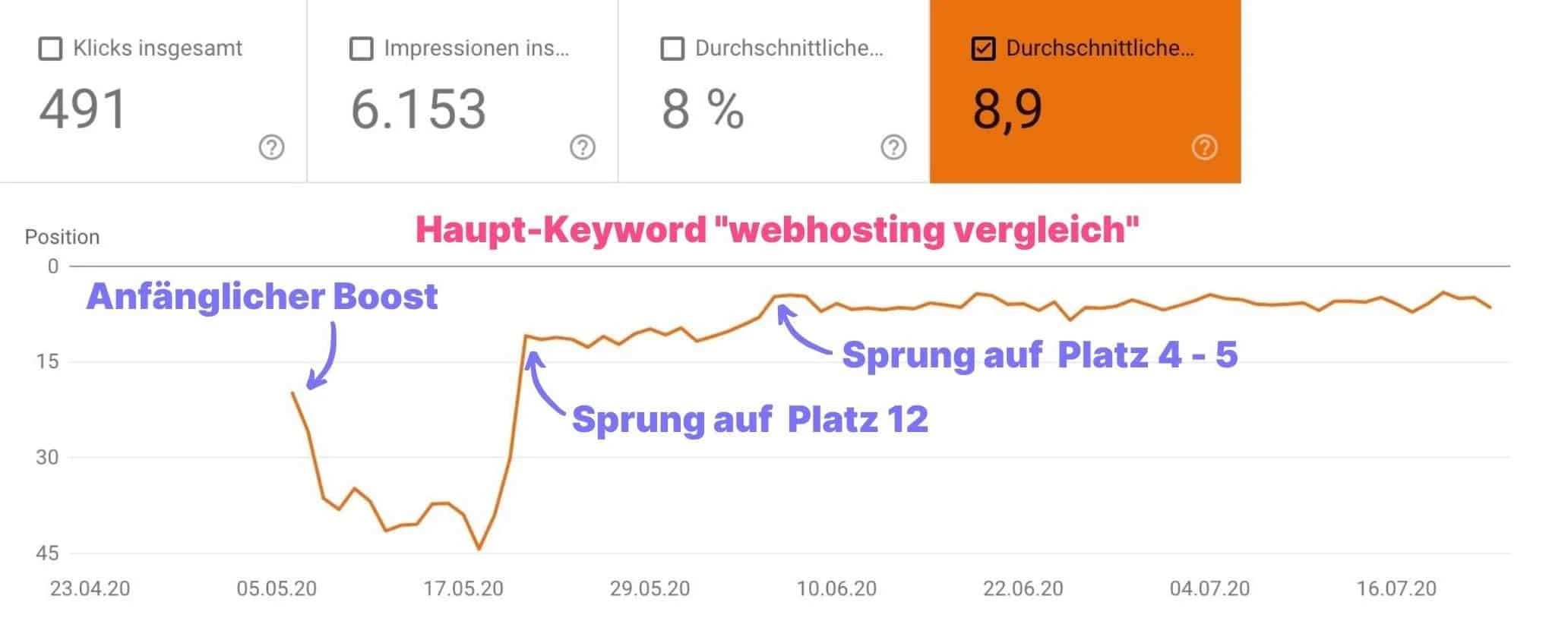
Here you can see an example progression for the keyword “webhosting vergleich” (web hosting comparison), for which we reached the top 3 within about 6 weeks with our web hosting comparison.
This is a keyword with strong to very strong competition:
Week | What happens to the rankings? |
|---|---|
| 1 | Initial boost, entry on page 2 only the main keyword ranks |
| 2 & 3 | Ranking drops back to page 3 or 4 only the main keyword ranks |
| 4 | Jump to positions 7 - 12 only the main keyword ranks |
| 5 | Jump to positions 4 - 5 Secondary keywords also jump to page 1 |
| 6+ | Slowly working its way up into the top 3 (Google evaluates user signals) Secondary keywords work their way into the top 3 as well |
In the following screenshot you can see the entire progression for the main keyword once more:
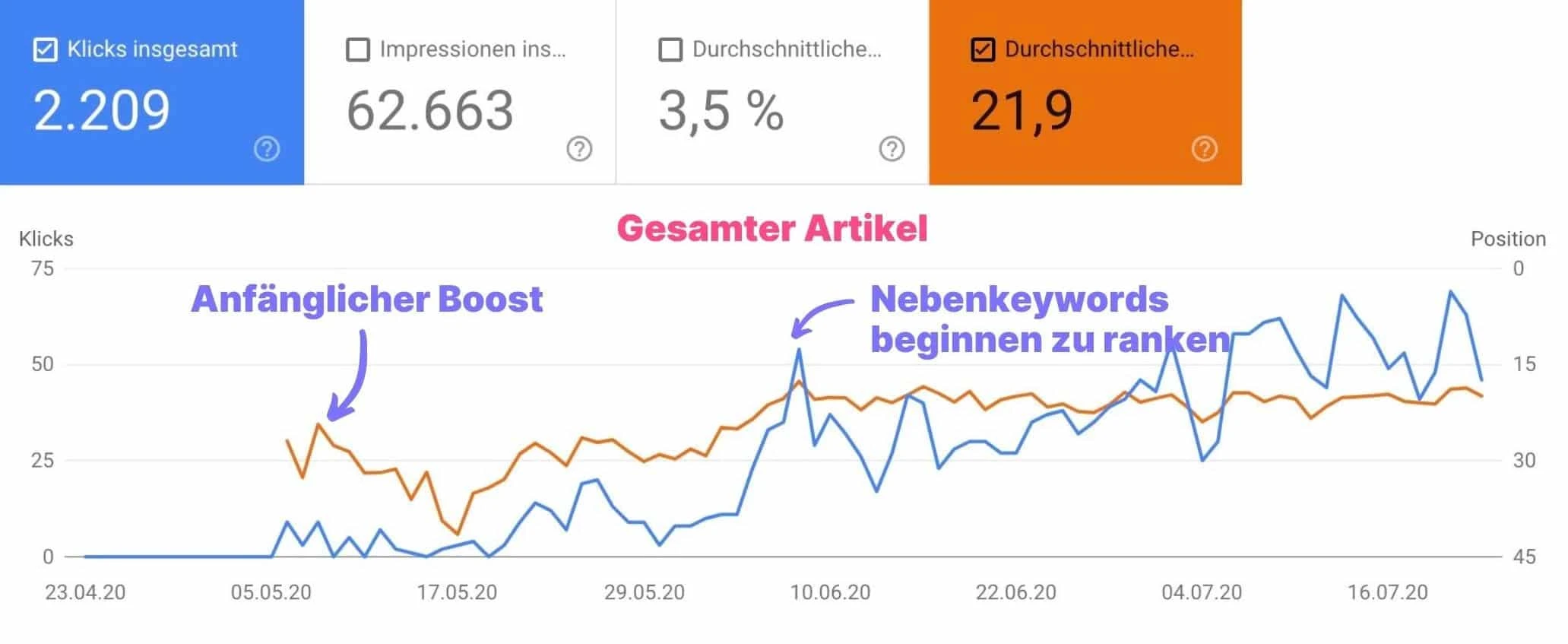
What’s really interesting is that the article first ranks for its main keyword and only after a few weeks for its secondary keywords too, such as “webhoster vergleich” or “webhosting test”:
3. Rich snippets showing up
Implementing structured data is one of the most effective hacks for getting more visitors from Google.
That’s because it makes so-called rich snippets appear in Google Search.
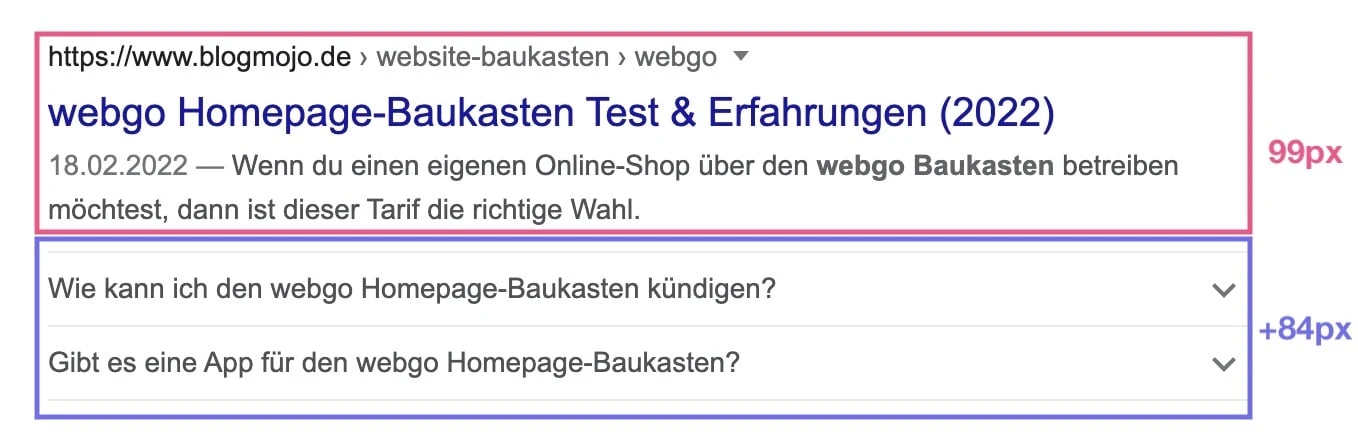
These are search results that contain additional features besides the title and description, such as star ratings or FAQ toggles. The latter make search results almost twice as big as they actually are, which increases the likelihood that searchers click on them:
If the structured data is implemented correctly and an article is already on the first page of Google, it usually doesn’t take long for it to show up in Google Search as rich snippets.
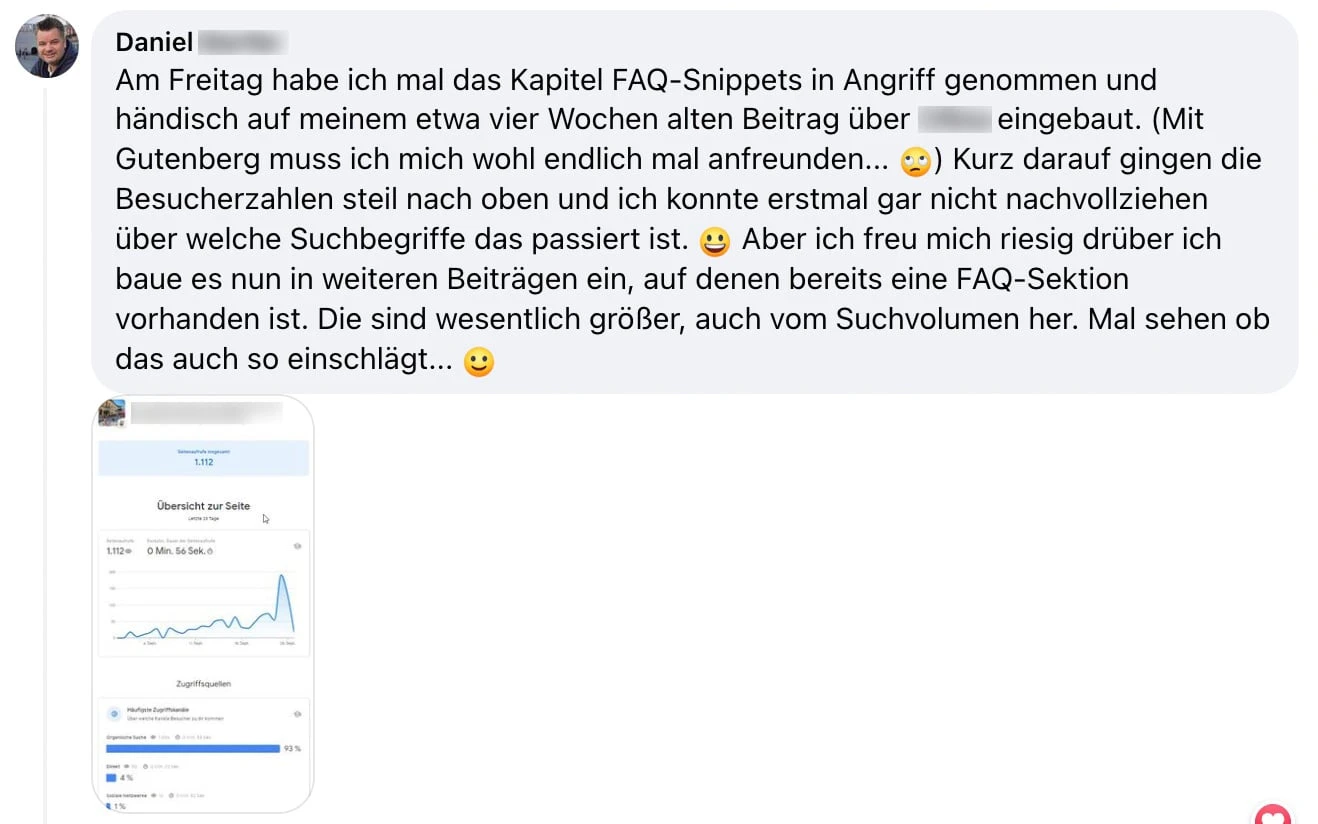
Usually only a few days, as with my client Daniel:
4. Manual actions
In individual cases, Google may take manual actions (also called a penalty) if you violate Google’s quality guidelines and have bought or sold backlinks, for example.
The cause of a manual action is often quickly fixed. However, Google can take longer to process a “reconsideration request”.
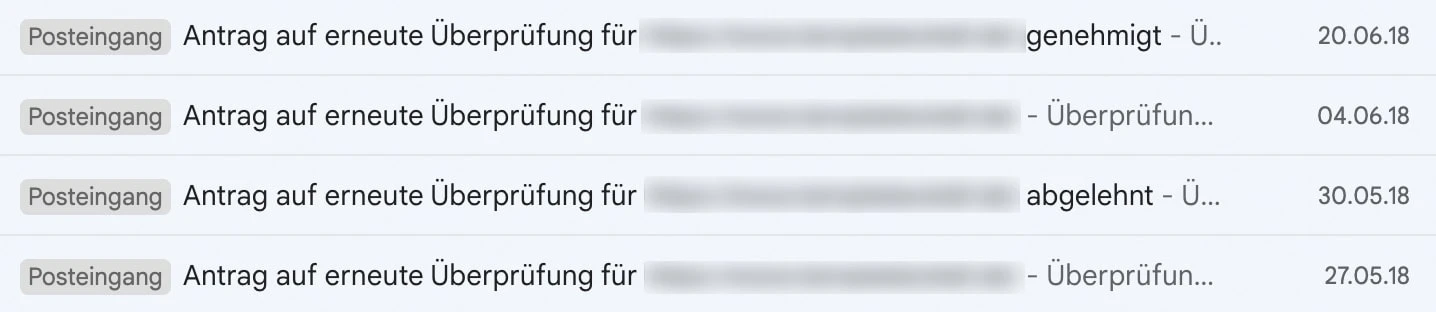
Sometimes such a request is answered within a day:

Sometimes it can also take several weeks, especially if the request is rejected the first time you submit it:
It can even take several months, which was more often the case in the first half of 2020.
5. Recovering from Google updates
Were you hit by a Google update?
Then it may take longer until you get back to your old visibility.
Sometimes there is a slight gradual recovery in between, but the lion’s share of a recovery from a Google update usually only comes with another Google update.
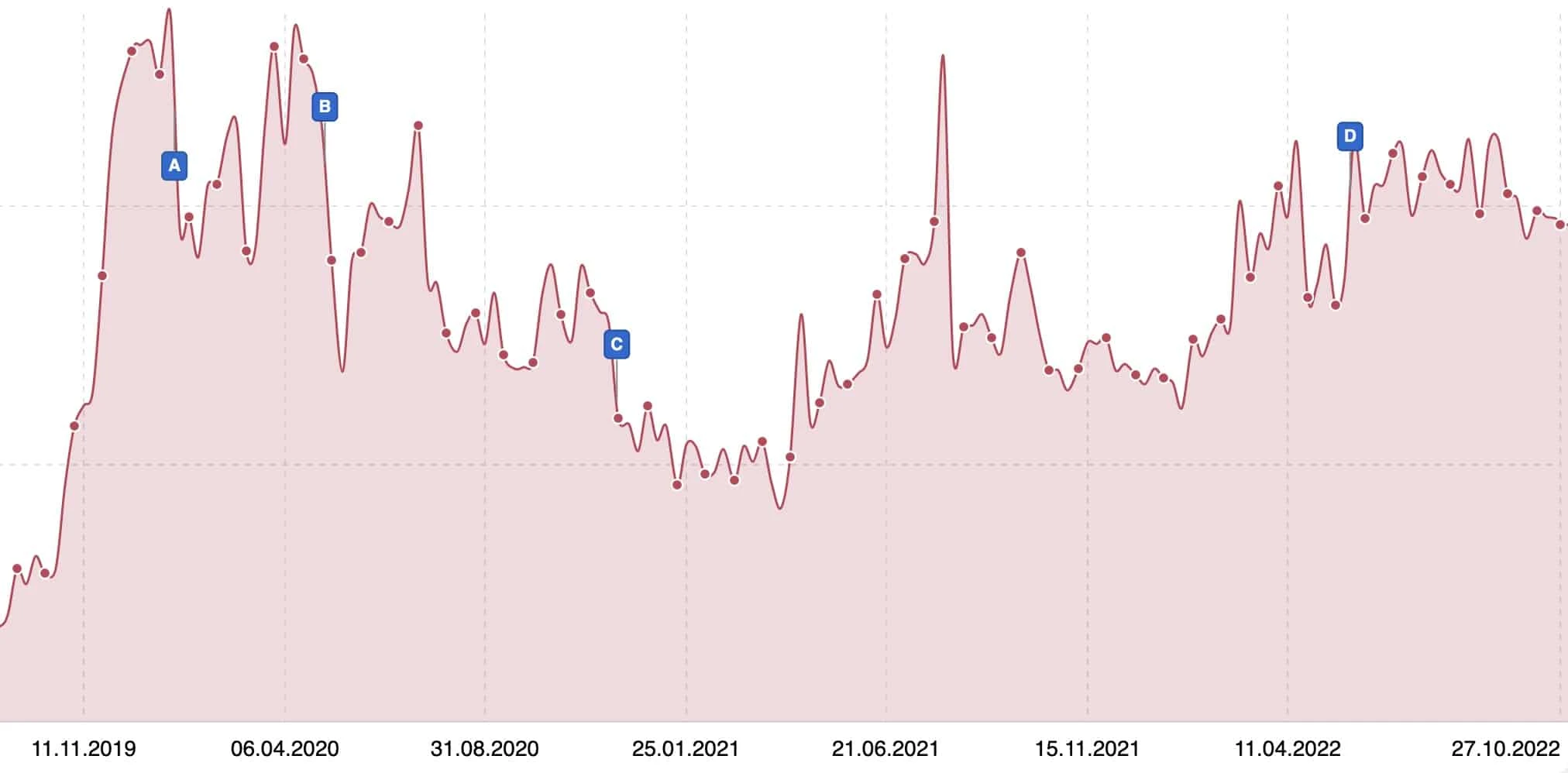
Blogmojo, for example, lost visibility with the core updates in May and December 2020. And there was a reason for that:
In 2019 I had pretty much neglected the blog. For example, I put off an urgent design overhaul and the fixing of some technical errors, I hardly wrote any new articles, and many old articles were not up to date.
After that I worked a lot on the blog again, and then 6 and 12 months later respectively, with the core updates in June and July 2021, I gained visibility again. With the core update in May 2022, I finally got back to the level of early 2020:
6. Technical SEO errors
Technical SEO errors, which often appear after relaunches, large-scale URL changes, or domain or host changes, can have a very negative effect on visibility.
That said:
If technical errors are fixed correctly and completely, the lost visibility is also back quickly. Usually within a few weeks.
But let’s take a look at a small case study:
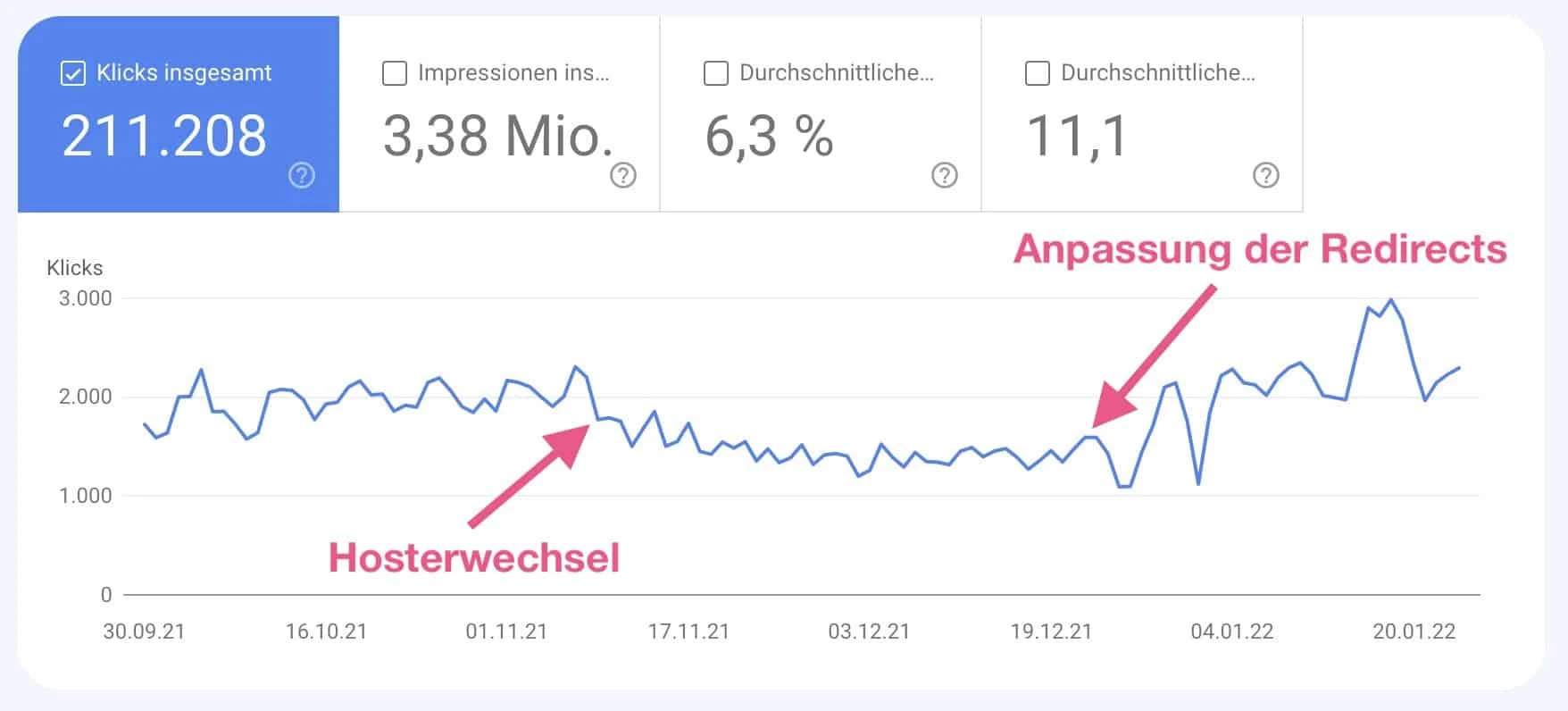
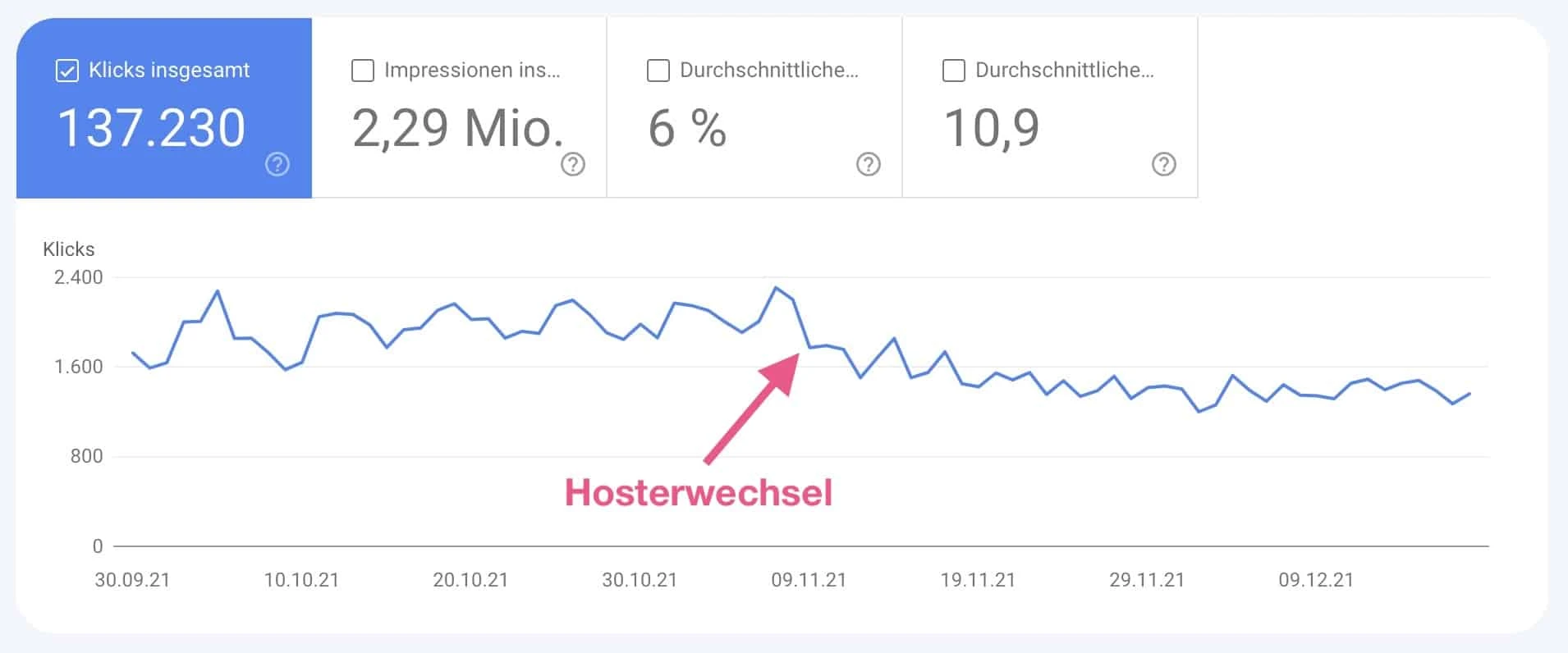
A student in my SEO course had switched hosts in November 2021 and changed the permalink structure at the same time.
The result was that her daily clicks had dropped from over 2,000 to about 1,300 visitors:
The interesting part:
The move wasn’t actually done that badly. My student had conscientiously set up redirects for all URLs, and all the old URLs were redirected to the new URLs.
For users, everything looked completely normal:
- There were no error messages in the browser
- All links led to the right pages
- The design wasn’t broken
- All images were displayed correctly
- No problems with the SSL certificate
- etc.
Just as interesting:
Even a site audit with ahrefs showed a score of 93/100, which is a very good value in itself:
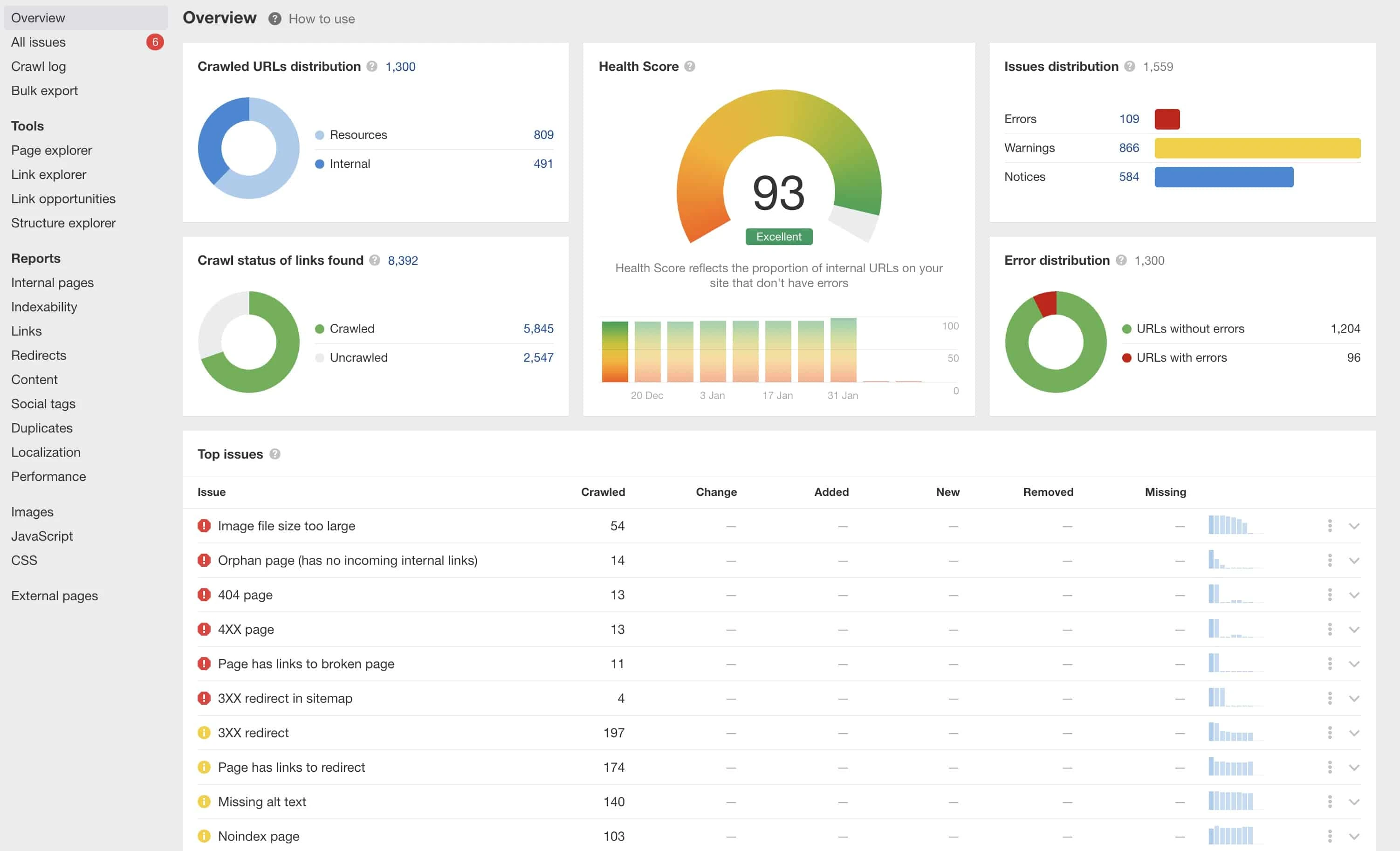
As so often, the devil was in the details:
Among other things, my student had forgotten the slash (/) at the end of the URLs in the redirects she had set up, which, combined with another misconfiguration, created longer redirect chains.
Users don’t notice this (or only very slightly, through a few milliseconds of delay after clicking a link). Google does.
And lo and behold, after she fixed that, her visibility went back up just as quickly as it had dropped: