Search volume is one of the most important metrics in keyword research and analysis.
It can also be deceptive, especially if you only look at the raw number and ignore other factors.
In this article, you'll learn step by step how to find search volume as accurately as possible, which tools give you reliable data, and which pitfalls to avoid.
That way you invest your time in content that people actually search for and that brings you qualified visitors.
- Search volume shows how often a keyword is searched per month, but keep seasonal fluctuations in mind, and note that tools usually show averages of the last 12 months.
- Tools like KWFinder or SearchVolume.io deliver reliable search volumes, while the Google Keyword Planner often groups keywords together and shows only ranges without an active campaign.
- High search volume alone gets you nowhere. Focus on keywords where you can realistically rank on page 1, and always look at the whole topic cluster.

1. What is search volume?
Search volume describes how often a specific keyword is entered into Google Search per month on average.
If the search volume is 1,000, for example, that term is searched around 1,000 times in an average month, regardless of which pages end up getting clicked.
1.1 Why is search volume important for keyword research?
Imagine you spend hours on research, structure, text, images, and optimization for a blog article.
After publishing, you realize that even a top 5 ranking brings no traffic.
The reason: nobody is searching for this topic.
That's exactly why solid keyword research helps you gauge the demand behind a keyword.
Search volume shows you how high the demand for a topic or keyword is.
2. Tools for finding search volume
There are plenty of tools that give you the search volume of a keyword. You'll find a comprehensive overview in my article on keyword tools.
Here I'll introduce two especially beginner-friendly options.
2.1 KWFinder
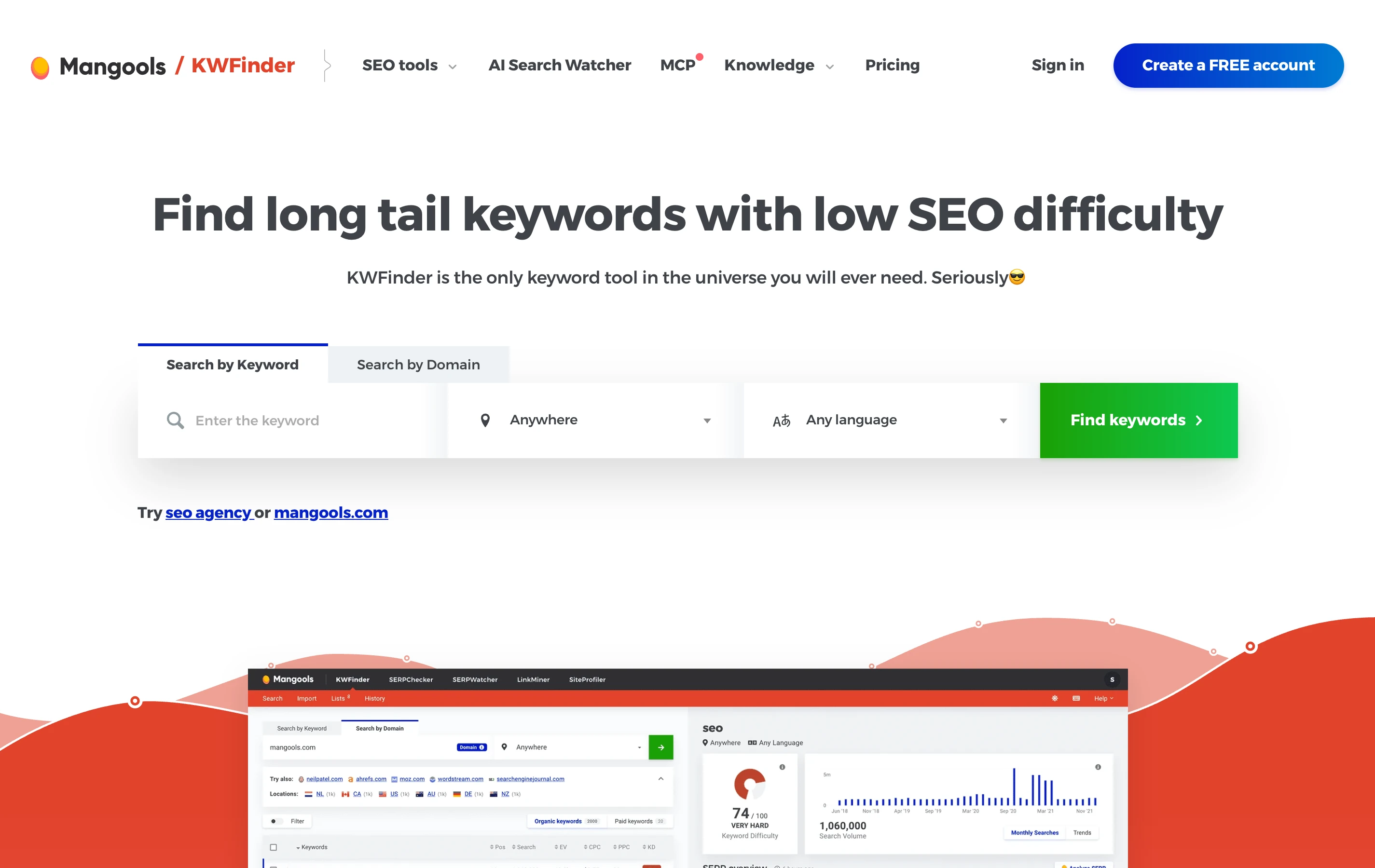
KWFinder is one of our favorite tools for keyword research.
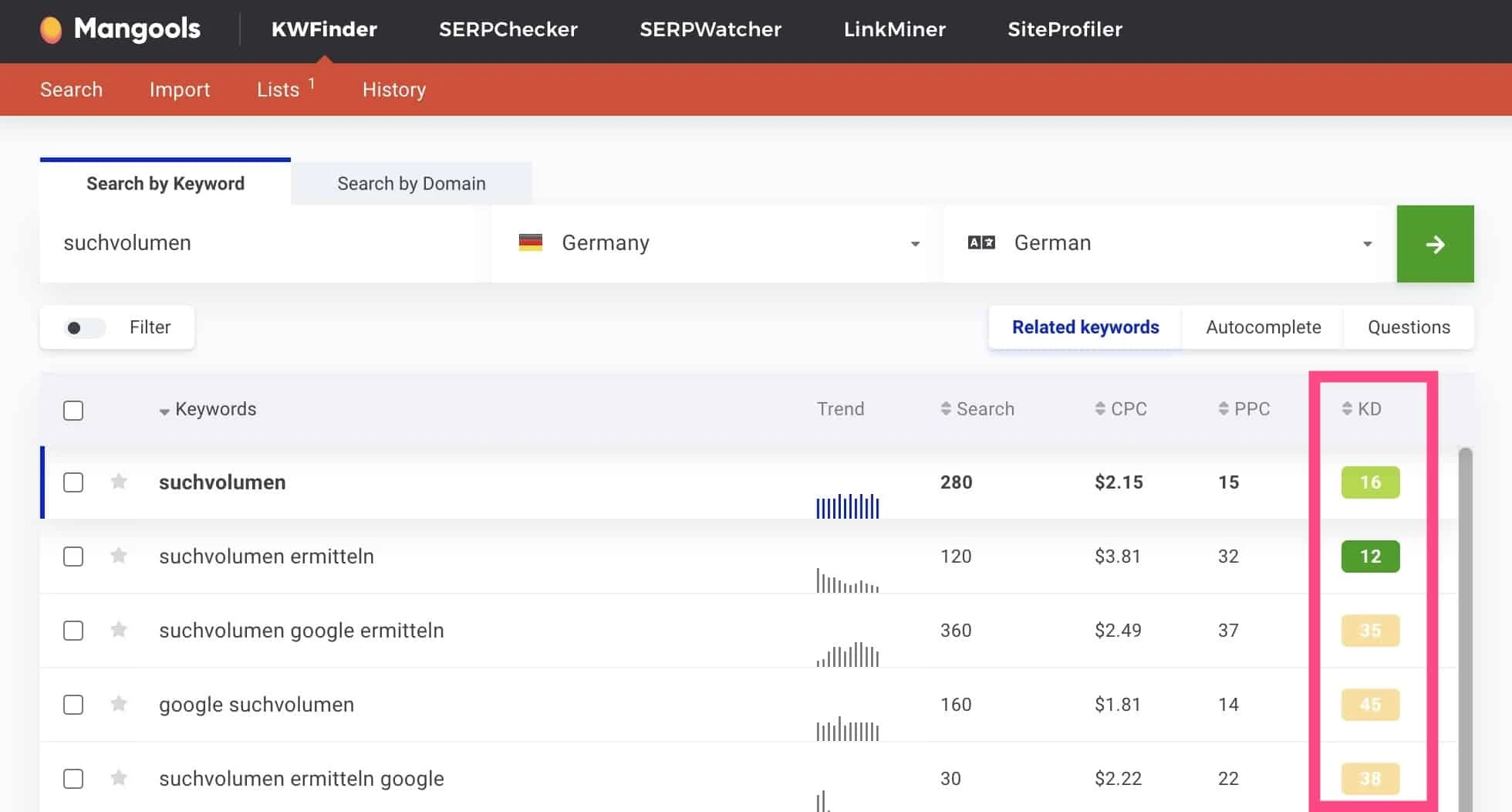
As part of the Mangools suite, it delivers plenty of suggestions for your topic and at the same time shows the search volume for a given region and language.
“Keyword Difficulty” is especially handy for beginners. This value gives you a first estimate of how tough the competition is for a keyword, calculated from the link profiles of the top results.
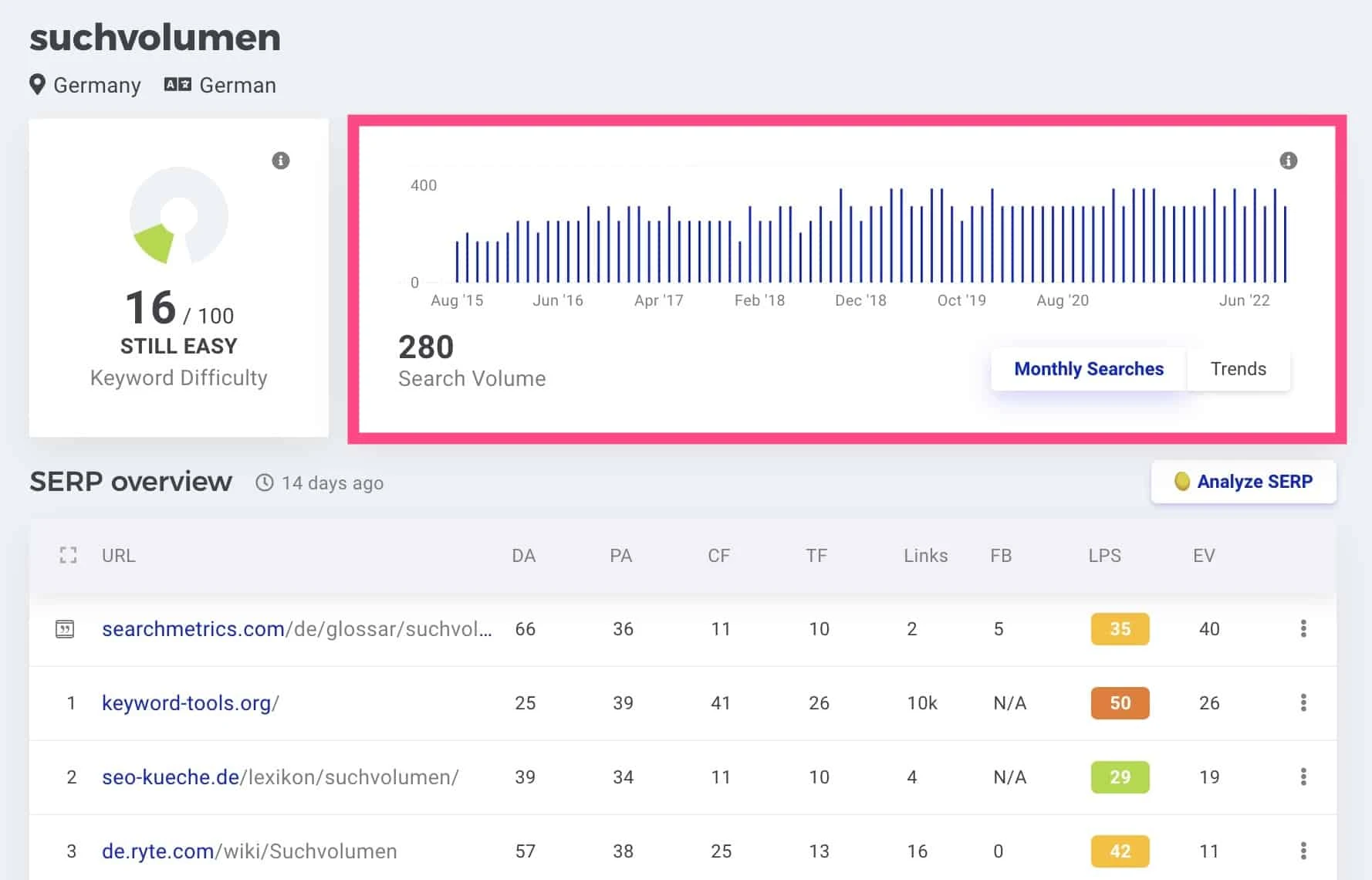
KWFinder also visualizes seasonal fluctuations right in the interface. That helps you spot topics where demand swings up and down strongly.
You can export the keywords you find as CSV or save them directly in lists. Besides classic suggestions, KWFinder also offers modes for Google Autocomplete and questions, which are ideal for structuring content.
- Free trial
- Very beginner-friendly interface
- Many search modes, including autocomplete and questions
- Keyword Difficulty shows the competition right away
- Trend display directly in the tool
- Top support
- Export and list functions
- Expandable suite with LinkMiner, SERPWatcher & Co.
- Comparatively expensive for beginners
2.2 SearchVolume.io
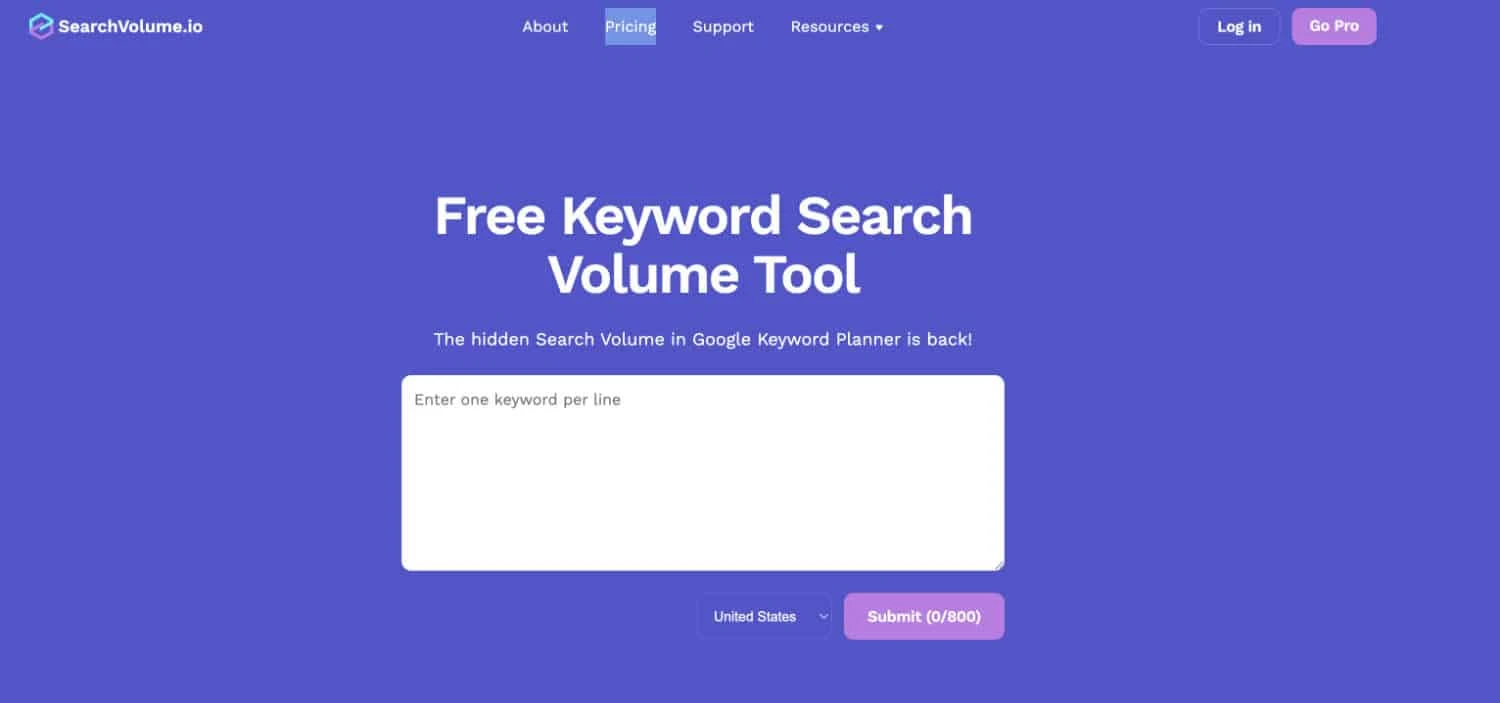
SearchVolume.io is a lean tool that lets you run up to 800 keyword queries per day for ten countries, for free.
The premium plan, at $5 per month or $24.95 per year, even gets you 5,000 queries a day.
You can export the results as CSV and process them easily.
SearchVolume.io isn't suited for detailed analysis, because it only outputs the search volume. CPC, difficulty, and other metrics are missing.
Still, it's a very handy tool for quick first estimates or when your SEO budget is small.
- Free to use
- Very simple to use
- Reliable numbers
- Up to 800 keywords at once
- CSV export
- Maximum of 800 keywords per day
- Only ten countries available
- No additional metrics
3. What you need to know about search volume
Search volume is a central factor in evaluating keywords, but it is also often misunderstood or overrated. Keep the following points in mind:
3.1 It's usually shown as a monthly average
Most tools show you search volume as the average of the last twelve months. Seasonal peaks disappear in the average as a result.
That's why a keyword with 1,000 searches a month can generate only 200 views in January but 2,000 in June.
3.2 There are seasonal fluctuations
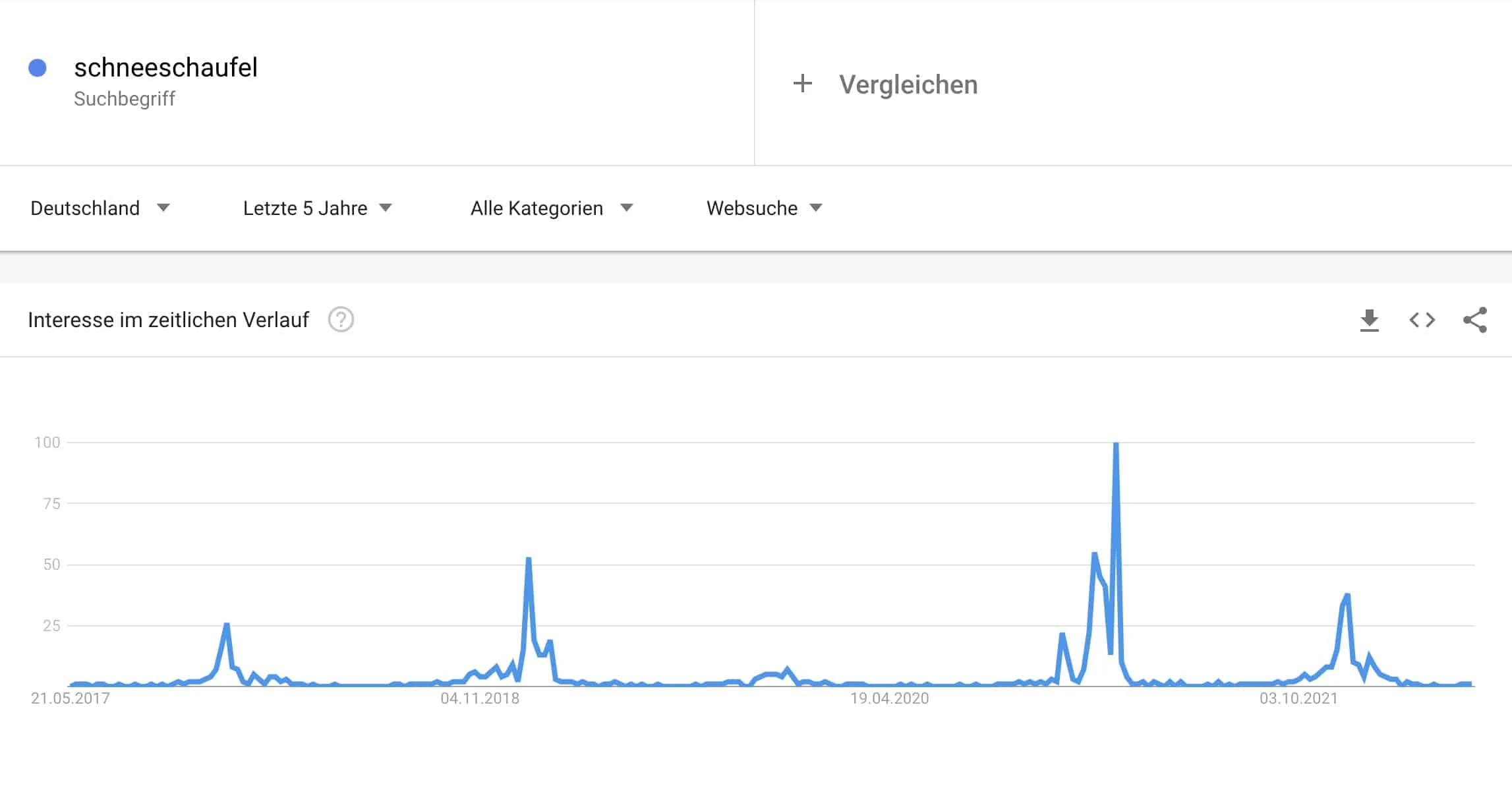
With keywords like “wintermantel frauen” (women's winter coat), “black friday,” or “halloween dekoration” (Halloween decoration), the seasonality is visible right away.
Terms like “schneeschaufel” (snow shovel) also show clear peaks in the winter months:
With other keywords (such as “dsgvo,” the German term for GDPR), the peaks only become clear on a second look:
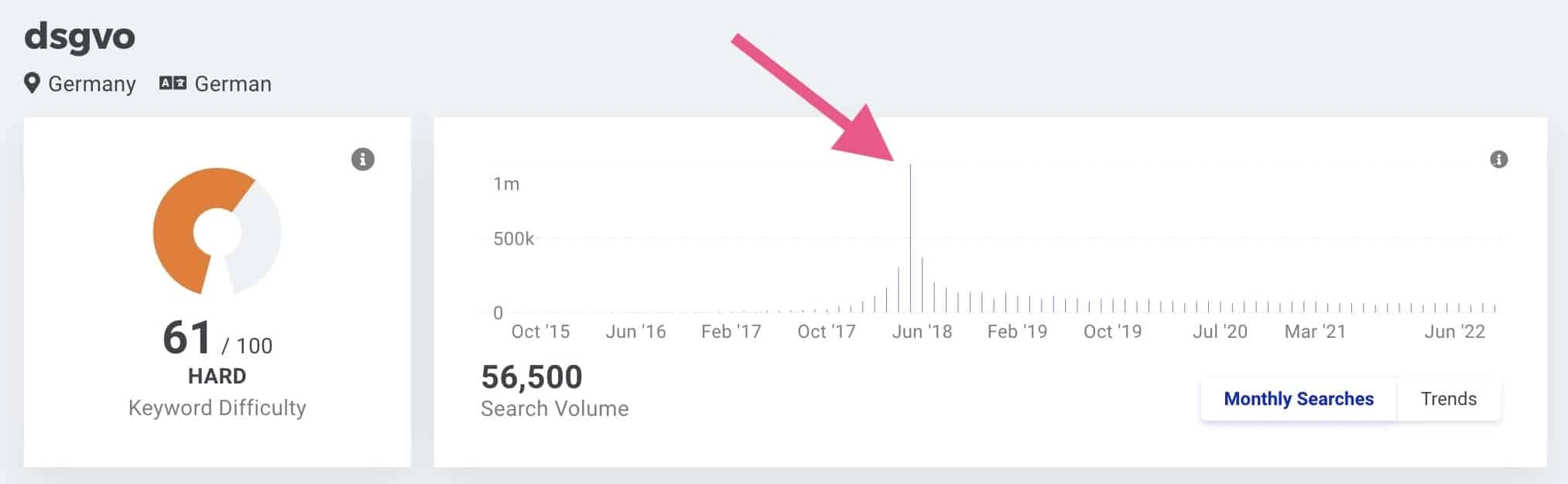
Check seasonal patterns with tools like KWFinder or Google Trends, and plan your content ahead of the demand peak.
3.3 Never look at search volume alone
Many SEOs focus purely on high volumes and neglect search intent, competition, or monetization options. As a result, profitable niches with lower volume often fall by the wayside.
3.4 Look at the whole topic cluster
What matters is not the search volume of a single keyword but the traffic an entire topic complex can bring.
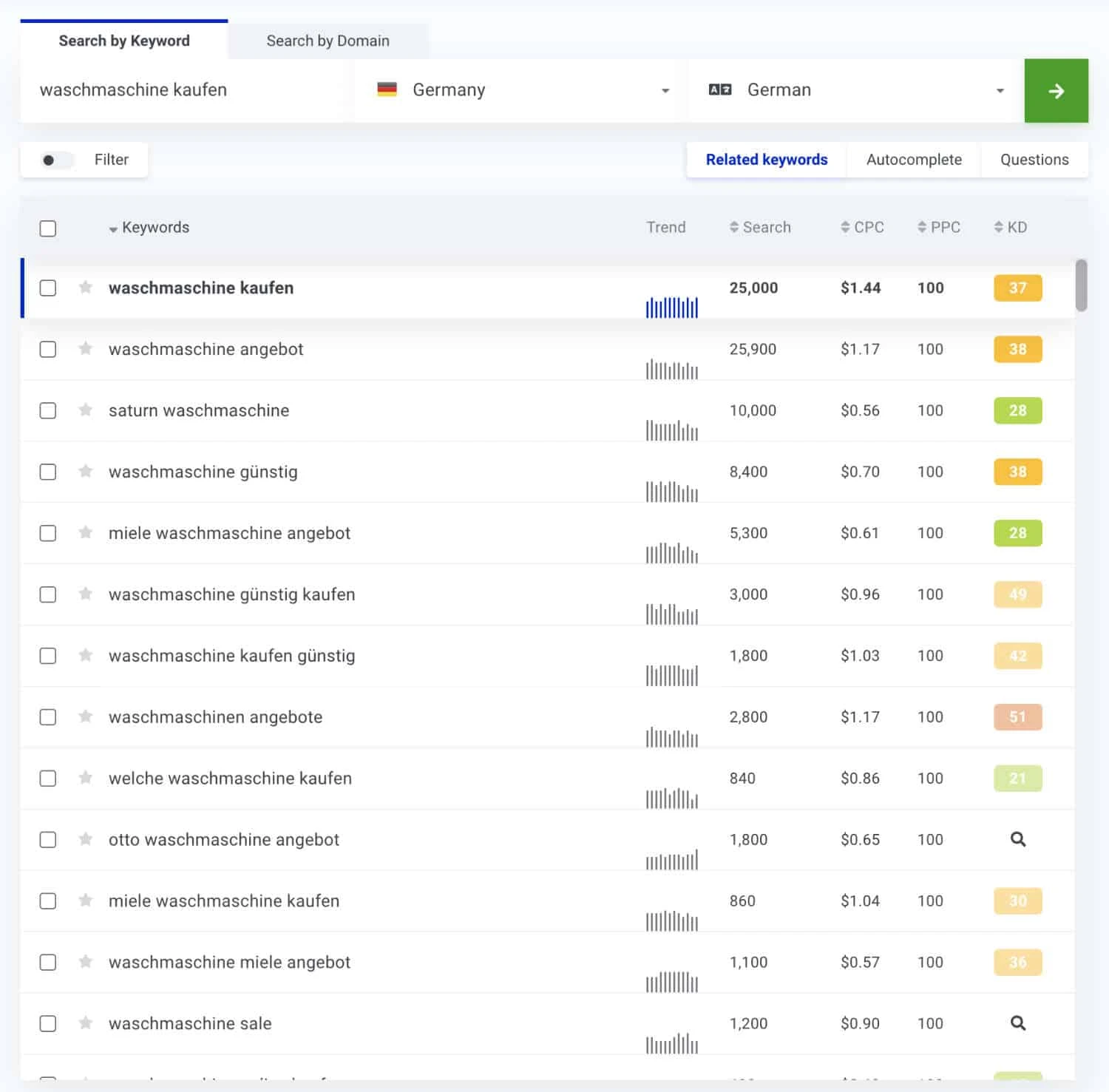
Example: for “Waschmaschine kaufen” (buy a washing machine), KWFinder shows 25,000 searches. But you also rank for variants like “Waschmaschine günstig” (cheap washing machine) or “Waschmaschine online kaufen” (buy a washing machine online).
3.5 Tools often group similar keywords together
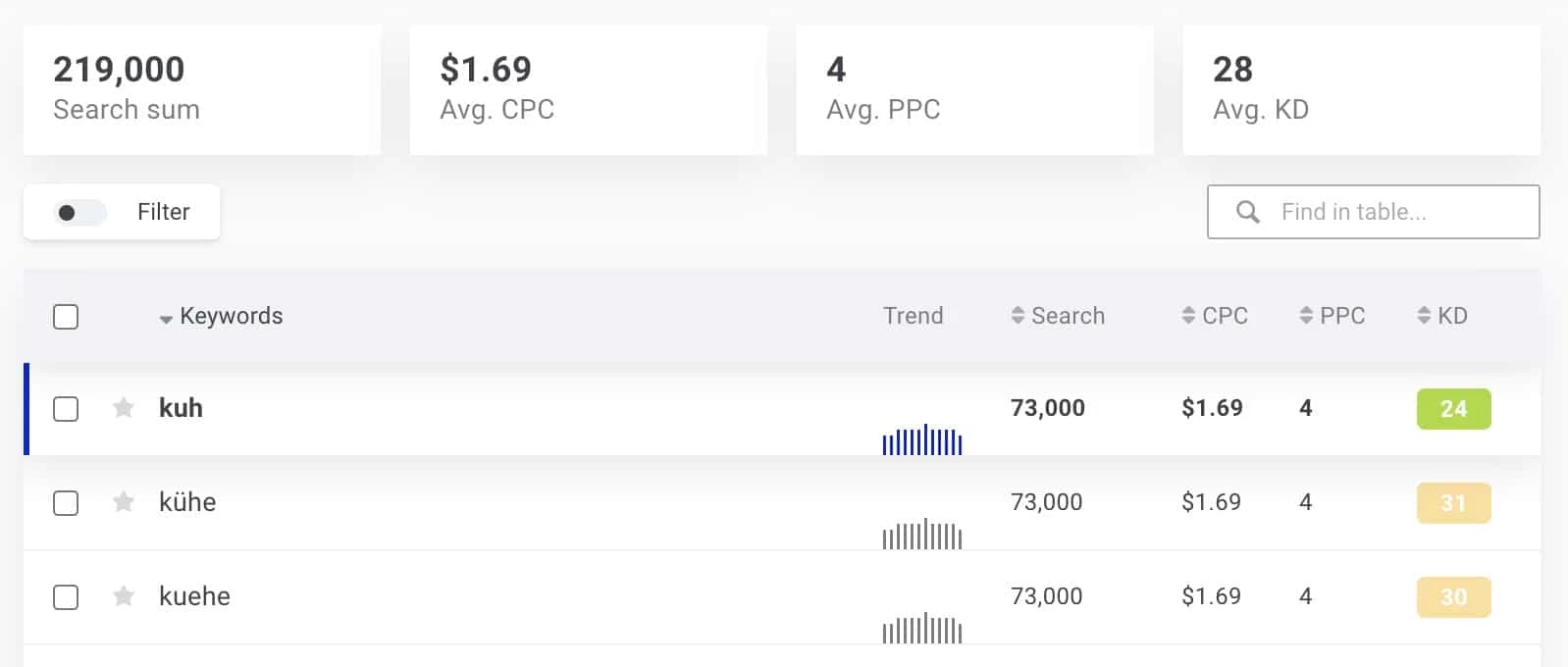
Many tools bundle keyword variants with the same word stem. “kuh,” “kuehe,” and “kühe” (cow, cows) then return the same value, even though the actual searches vary.
3.6 Search volume differs from tool to tool
The data basis mostly comes from the Google Keyword Planner, but it's processed differently. For “Waschmaschine kaufen,” KWFinder shows 26,200 searches, while Ubersuggest outputs only 22,200.
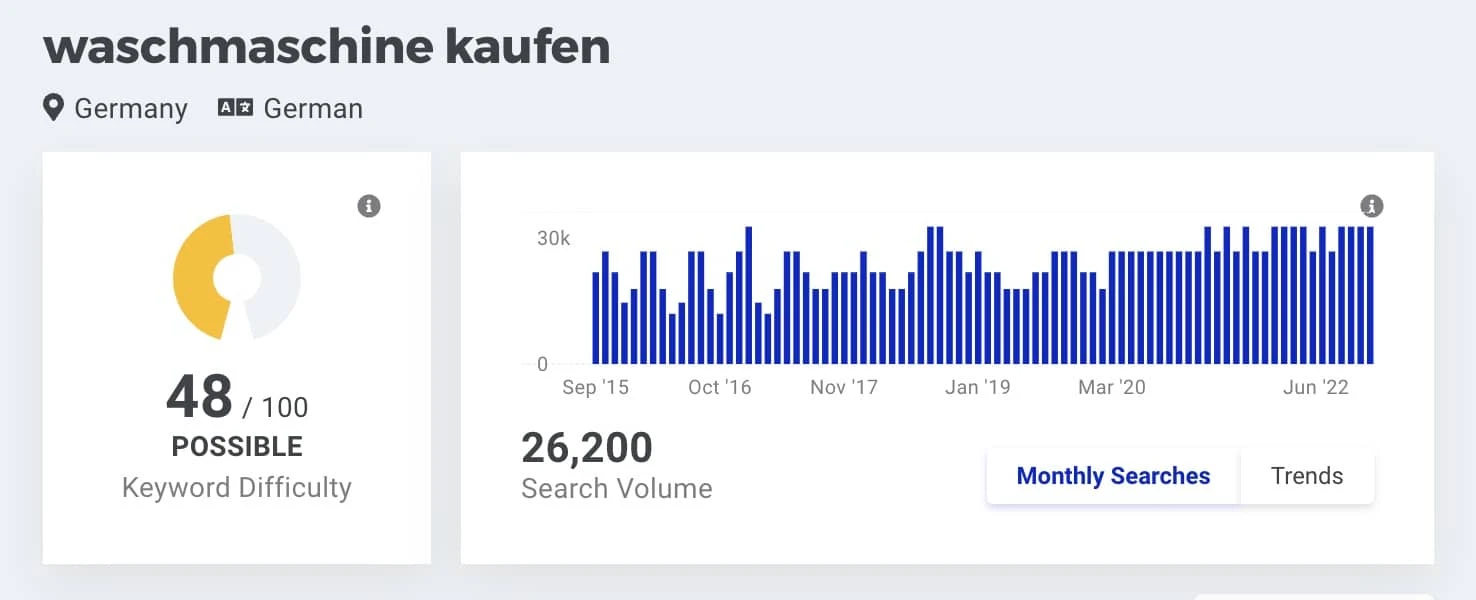
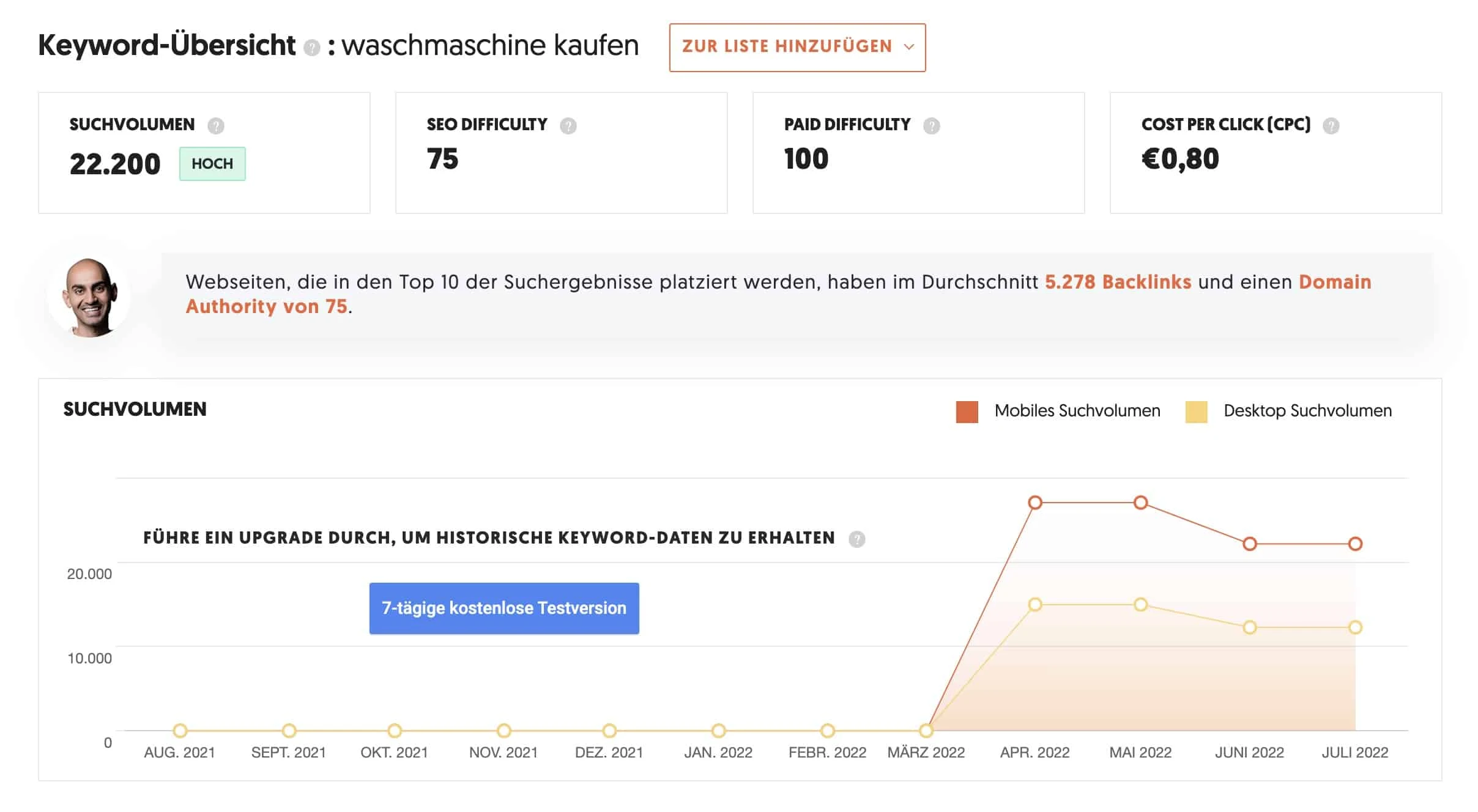
Different algorithms and additional data sources such as clickstream data or anonymized Search Console values cause these deviations. No tool delivers 100% exact values, not even in the three-digit price range.
You get the most realistic picture when you compare values from several tools or analyze your own data from Google Search Console.
3.7 You only get a piece of the pie
Search volume is spread across all search results, including ads and SERP features. The better your ranking, the bigger your share.
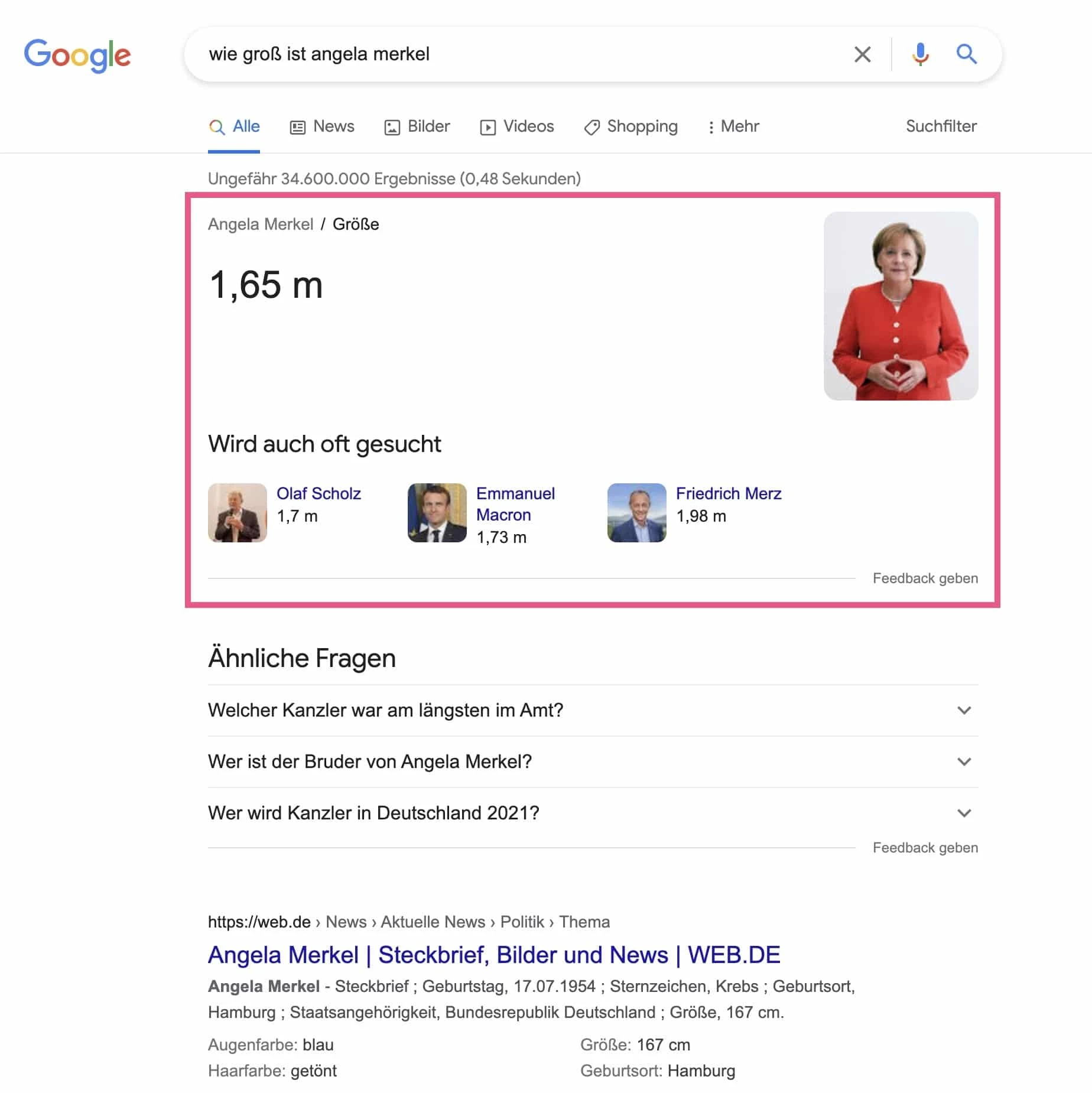
Some queries, like “Wie groß ist Angela Merkel?” (How tall is Angela Merkel?), are even answered directly by Google. Then only a few clicks are left for organic results:
3.8 Keywords with high search volume aren't always the best choice
A keyword with 37,100 searches like “hundefutter” (dog food) brings little if you only rank in position 15. Then maybe 50 to 100 visitors a month land on your article.
Focus instead on keywords like “hundefutter mit hohem fleischanteil” (dog food with high meat content), with 520 searches, where you can realistically reach position 1 or 2. That way you get 200 to 300 visitors per month.
Improve your chances further by analyzing competition, search intent, and monetization potential.
4. FAQ
Here you'll find answers to the most common questions about search volume.
Do tools show annual or monthly search volume?
Keyword tools like KWFinder, Semrush, or Ubersuggest always show you the monthly search volume. An annual figure would say little, because seasonal fluctuations would get lost in it.
How do I get exact search volumes in the Google Ads Keyword Planner?
You only see exact numbers if your Google Ads account has an active campaign running. Without running ads, the Keyword Planner shows only rough ranges.
Is search volume the same as impressions in Google Search Console?
No. Search volume describes how often a keyword is searched per month. Impressions show you how often your page was displayed in the SERPs, depending on ranking position and SERP features.
What are the most searched keywords?
At the top are big platforms and brands like “Facebook,” “YouTube,” or “Amazon.” Generic terms like “weather” are also right up there.
How do I find search volume on Bing?
The Bing Webmaster Tools include their own keyword tool that shows you search volumes for Bing.