
SEO can be frustrating. You write a long, painstakingly researched article for a keyword, but you only land on page 2 or 3 and just can't get past your competition.
These questions shoot through your head:
How am I supposed to beat competitors who have been doing this for years? Has the train already left the station? Can I even get past the market leader?
The point, though, is this:
In many cases, you won't manage it. Some of the most popular search terms in your industry can turn out to be too big an obstacle to overcome with the resources you have available (money, time, and expertise).
The good news: you don't have to beat your biggest competitors for the most important search terms if you can beat them more often for the smallest ones.
And that's where long-tail keywords come in.
In this article, you'll learn everything you need to know about long-tail keywords: what they are, how they work, why they matter and, most importantly, how you find them.
- Long-tail keywords are specific search terms with 4+ words that have less competition and often a higher conversion rate.
- You can find long-tail keywords with tools like KWFinder (filter by word count), AnswerThePublic (questions & prepositions) or Surfer SEO (Content Planner).
- Don't focus only on high search volume. A #1 ranking for a long-tail keyword often brings more traffic than a #15 ranking for a short-head keyword.
1. What is a long-tail keyword?
Long-tail keywords are longer, more specific keywords that usually have a lower search volume, but also less competition and therefore a better chance of ranking well.
In search engine optimization, keywords are usually classified as follows (the length can vary by one word depending on the source):
Name | Length | Example | Competition | Conversion |
|---|---|---|---|---|
| Short-Head | 1 word | staubsauger (vacuum cleaner) | high | low |
| Mid-Tail | 2-3 words | staubsauger test (vacuum cleaner test) | medium | medium |
| Long-Tail | ≥ 4 words | beutelloser akku staubsauger test (bagless cordless vacuum cleaner test) | low | high |
The classification above isn't 100% accurate or helpful, though:
The keyword “die fabelhafte welt der amelie” (the German title of the film Amélie), for example, contains five words, but it doesn't count as a long-tail keyword, because it's a general topic and isn't defined more closely by a “tail” of additional words.
A long-tail keyword is only a “real” long-tail keyword if it:
- contains more than four words
- defines a short-head or mid-tail keyword more closely.
1.1 Long-tail vs. mid-tail vs. short-head
In the following graphic, you can see how search volume, competition and conversion rate of the three keyword types usually relate to each other:
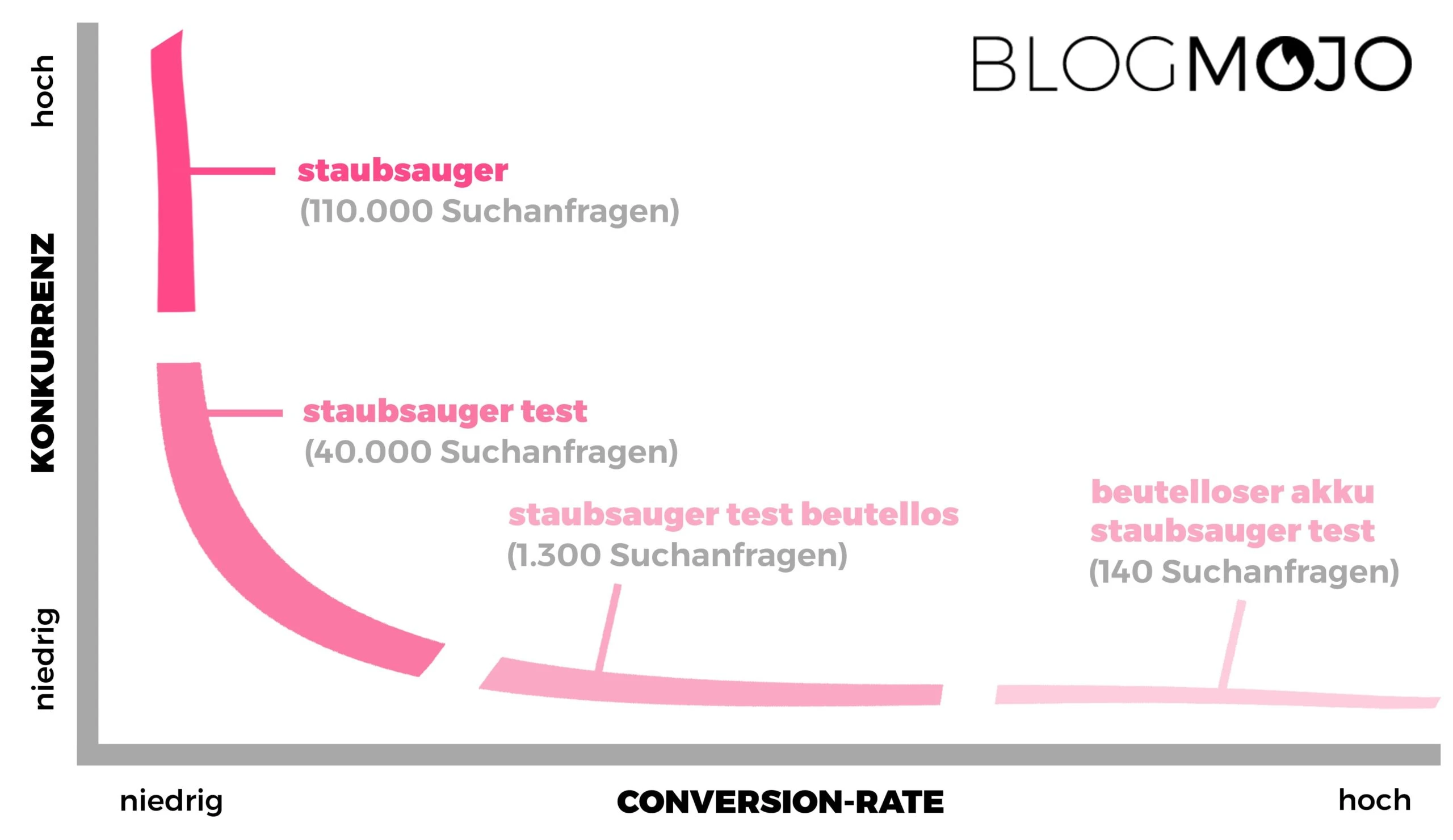
Short-head keywords have a high search volume, but competition is also very high and the conversion rate is low. The latter is often because the goals and problems of searchers can be very varied.
If someone types “staubsauger” (vacuum cleaner) into Google, that person may not necessarily want to buy a vacuum cleaner online, but may want to learn how it works or look for a store nearby.
Mid-tail keywords have a medium search volume, but competition is lower than for short-head keywords and the conversion rate is higher. Someone who types a mid-tail keyword into Google is often already clearer about what they want.
Someone who types “staubsauger test” (vacuum cleaner test) into Google probably wants to buy one soon, but doesn't know yet which type of vacuum cleaner and which model is best.
Long-tail keywords have a low search volume, but competition is low and the conversion rate is high.
Someone who types “beutelloser akku staubsauger test” (bagless cordless vacuum cleaner test) into Google is already much further along in the buying decision and product research. They're already clear about which type of vacuum cleaner they want and which features a suitable vacuum cleaner should have. Maybe they've also already eyed a few specific models. Seeing customer reviews or test results can be enough for them to make a purchase decision.
1.2 Search volume isn't everything!
What's important to understand:
Search volume is just one of many metrics that decide whether it's worth optimizing for a keyword or not.
Focusing exclusively on search volume in your keyword research is one of the biggest mistakes I see in SEO beginners.
Because a high search volume gets you nothing if you can't make it to the first page of Google for a keyword.
It's not for nothing that this joke is so popular in the SEO scene:
Where's the best place to hide a dead body? On the second page of Google!
If you'd like to learn more about search volume and its pitfalls, take a look at my article on it: What is search volume? And how do I determine it?
2. How do you find long-tail keywords?
There are a number of different tools you can use to search for long-tail keywords:
2.1 KWFinder
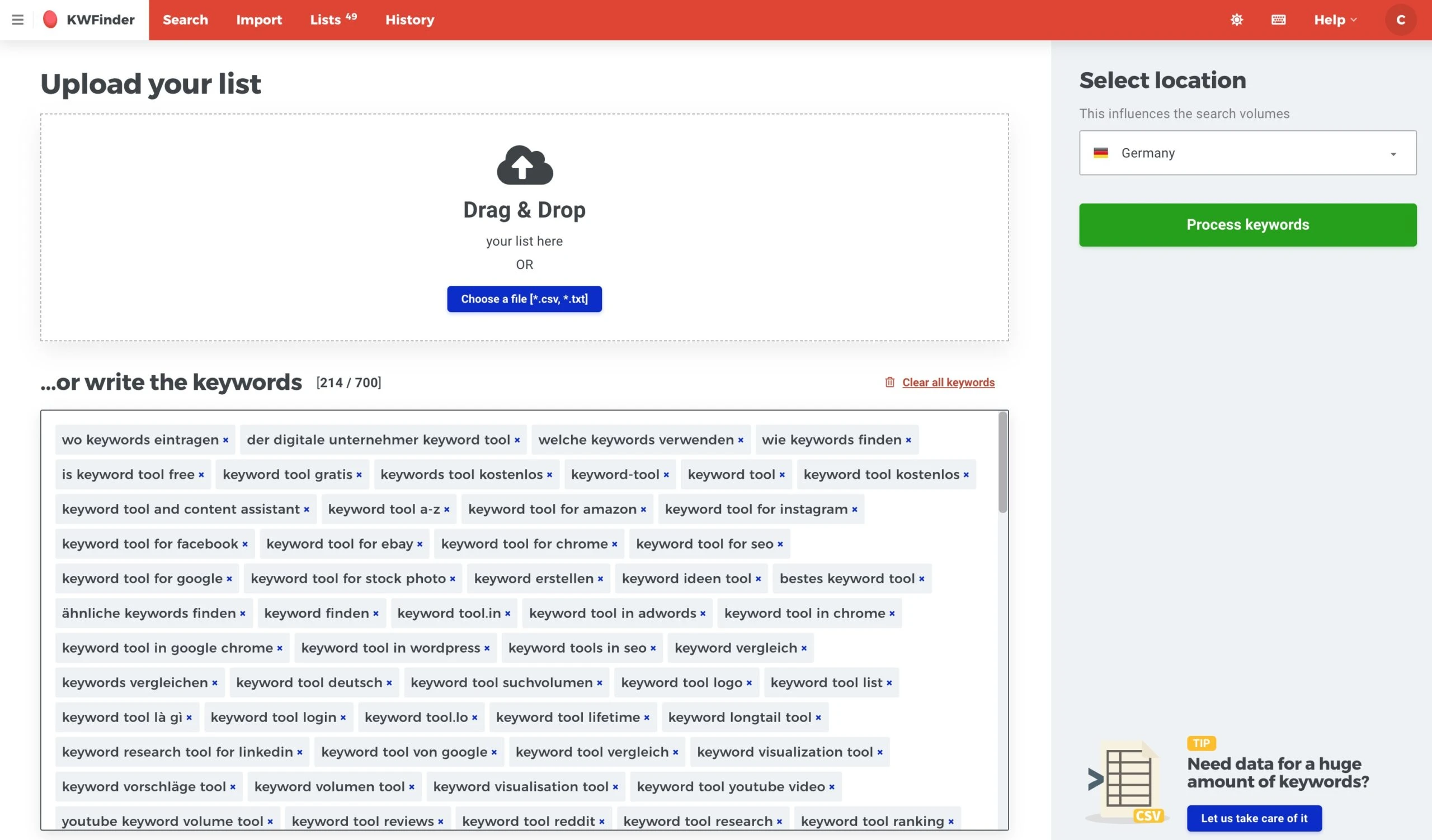
KWFinder (short for Keyword Finder) has been my keyword tool of choice for over 8 years now.
And not without reason:
It doesn't just show you similar keywords or autocomplete suggestions with search volume, trends and CPC, but also the matching search results for every keyword.
You can find long-tail keywords very well with the filter function. First you enter a general keyword like “staubsauger” (vacuum cleaner), click the filter switch directly below the search field and enter a minimum of 4 under “Number of Words”:
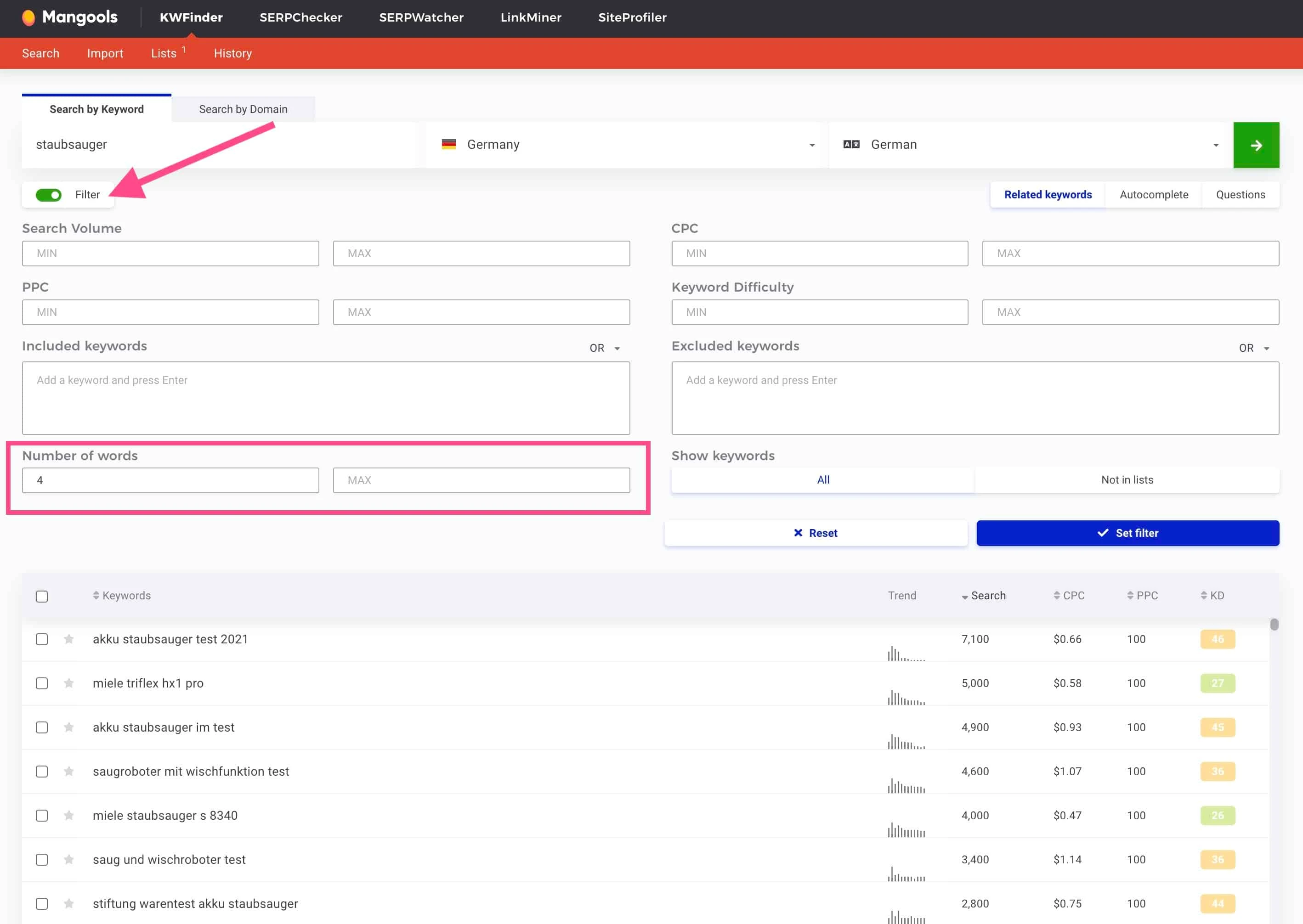
You can then sort or filter your list by “search volume” or “KD”.
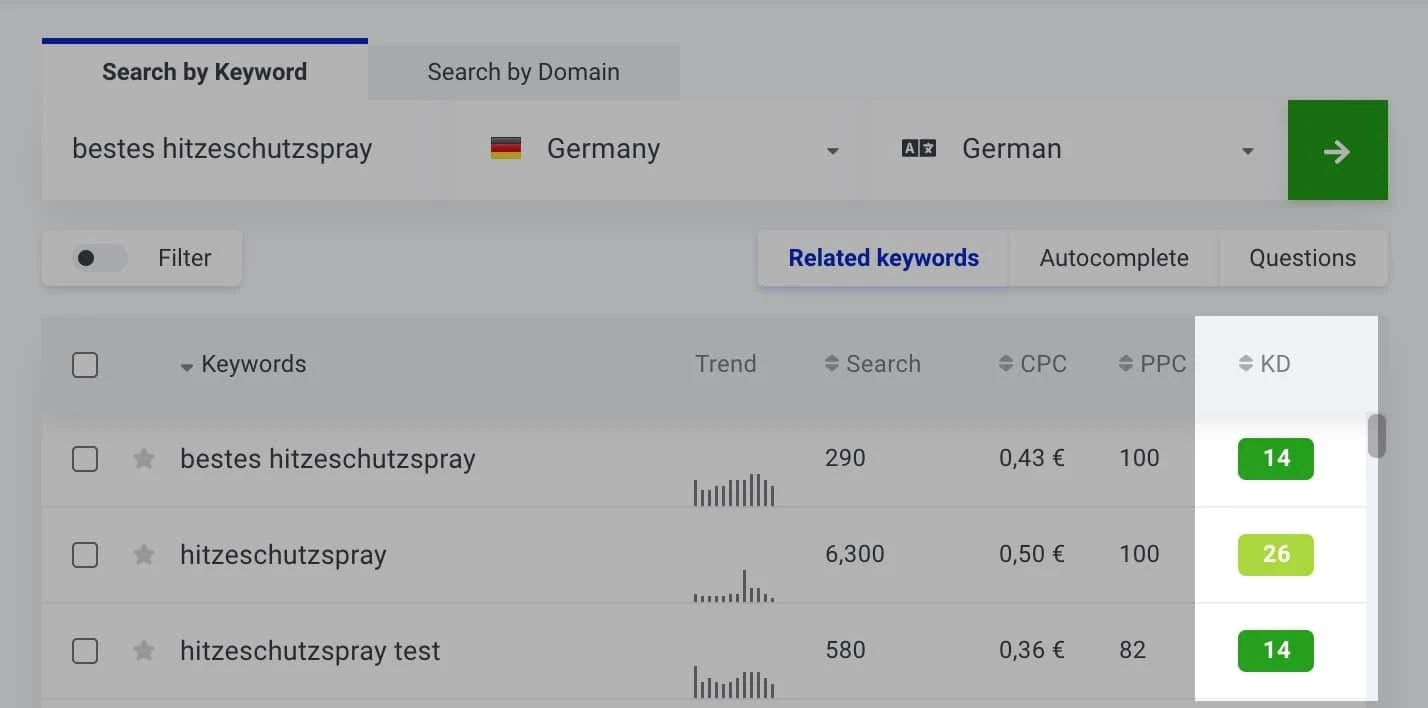
KD stands for Keyword Difficulty Score and is a super useful metric in keyword research. It shows how strong the competition for a keyword is.
You can recognize keywords with weak competition by light and dark green scores, which is excellent for a first assessment:
The import function is also brilliant. With it, you can check search volume, CPC and so on for hundreds of (long-tail) keywords at once:
That way, you can, for example, export keyword lists from AnswerThePublic or another tool and query the keyword data in KWFinder.
With the Basic plan for about €30 per month, you get 100 keyword lookups per day, which is more than enough to start with.
As part of the mangools suite, you also get many other useful tools, such as SERPWatcher for keyword monitoring.
2.2 Answer The Public

AnswerThePublic is a great keyword tool for finding long-tail keywords.
It collects suggestions from Google search and organizes them by prepositions and questions:
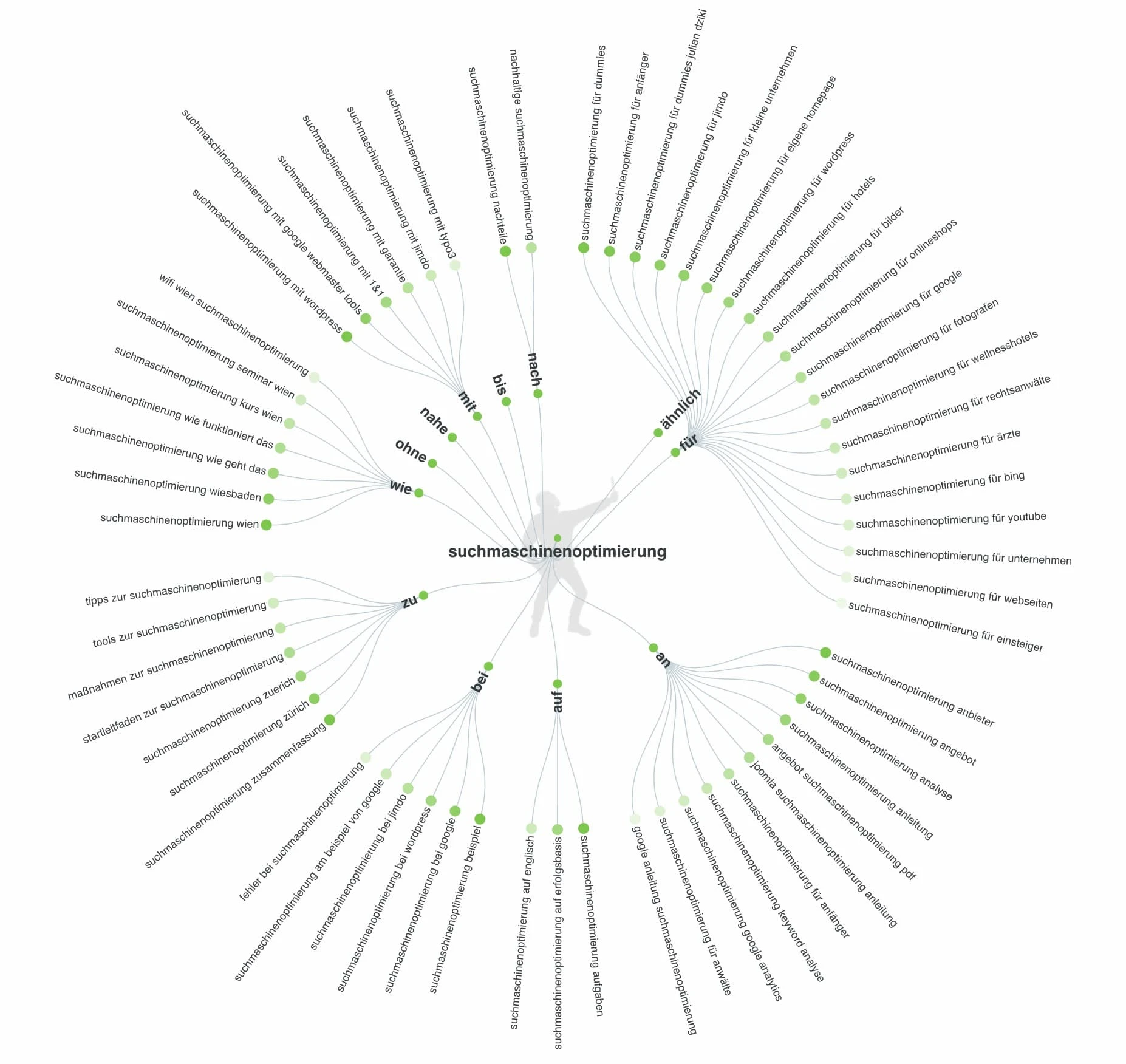
By the way, it's also excellent for finding out the different search intents behind a keyword and getting to know your target group better.
From the diagram above, you can read, for example, that users who search Google for the very general keyword suchmaschinenoptimierung (search engine optimization):
- are on the Jimdo and WordPress platforms
- are mainly beginners
- are small and medium-sized businesses, such as doctors, hotels, lawyers, photographers and so on
- want to read a guide or overview on it
This practical presentation of long-tail keywords helps you, first, to tailor your content better to the needs of search engine users and to answer their questions better.
Second, you can get a better overview of the different aspects of a topic. That makes it easier for you to structure blog articles and to find subheadings that are based on relevant long-tail keywords.
PS: The pro version of AnswerThePublic isn't worth it. I've been using the free version for years and have never missed anything.
2.3 Surfer SEO

Surfer SEO is one of my favorite SEO tools and one of the tools I use the most.
Useful features like the Content Planner, Content Editor, SERP Analyzer, Keyword Research or Audit help enormously with keyword research and the optimization that follows.
Surfer SEO uses artificial intelligence to analyze your competitors and to help you improve written content so that you rank better on Google.
The following two tools from Surfer SEO are very good for finding long-tail keywords and optimizing your content for them:
Content Planner

The idea behind the Content Planner is to discover new topics you can write about.
What makes it special is that it doesn't just spit out a long keyword list like KWFinder, but delivers ready-made keyword clusters.
These consist of a main topic and 2 to 16 relevant keywords, such as synonyms and long-tail keywords:
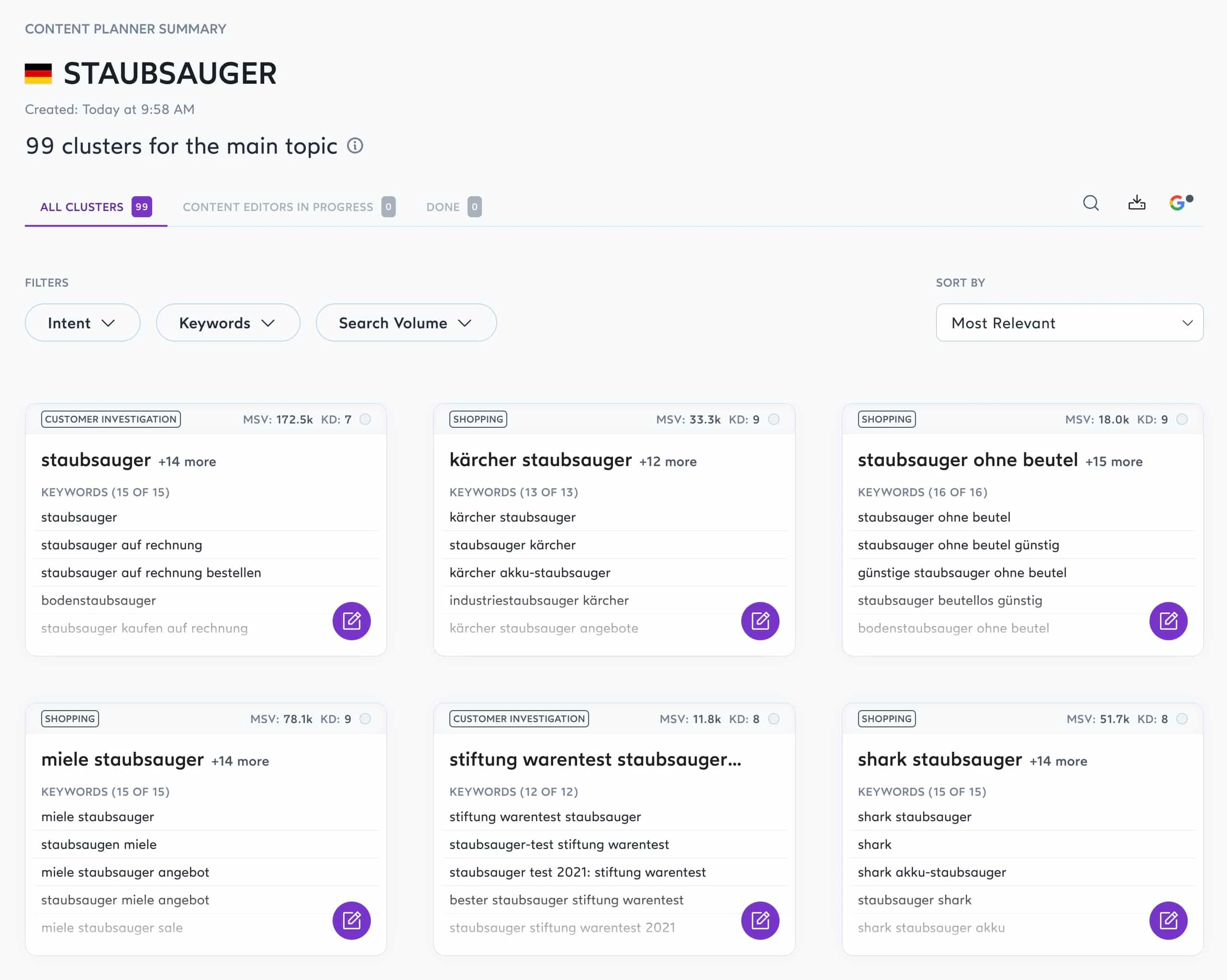
If you click on a single cluster, all the keywords it contains are displayed:
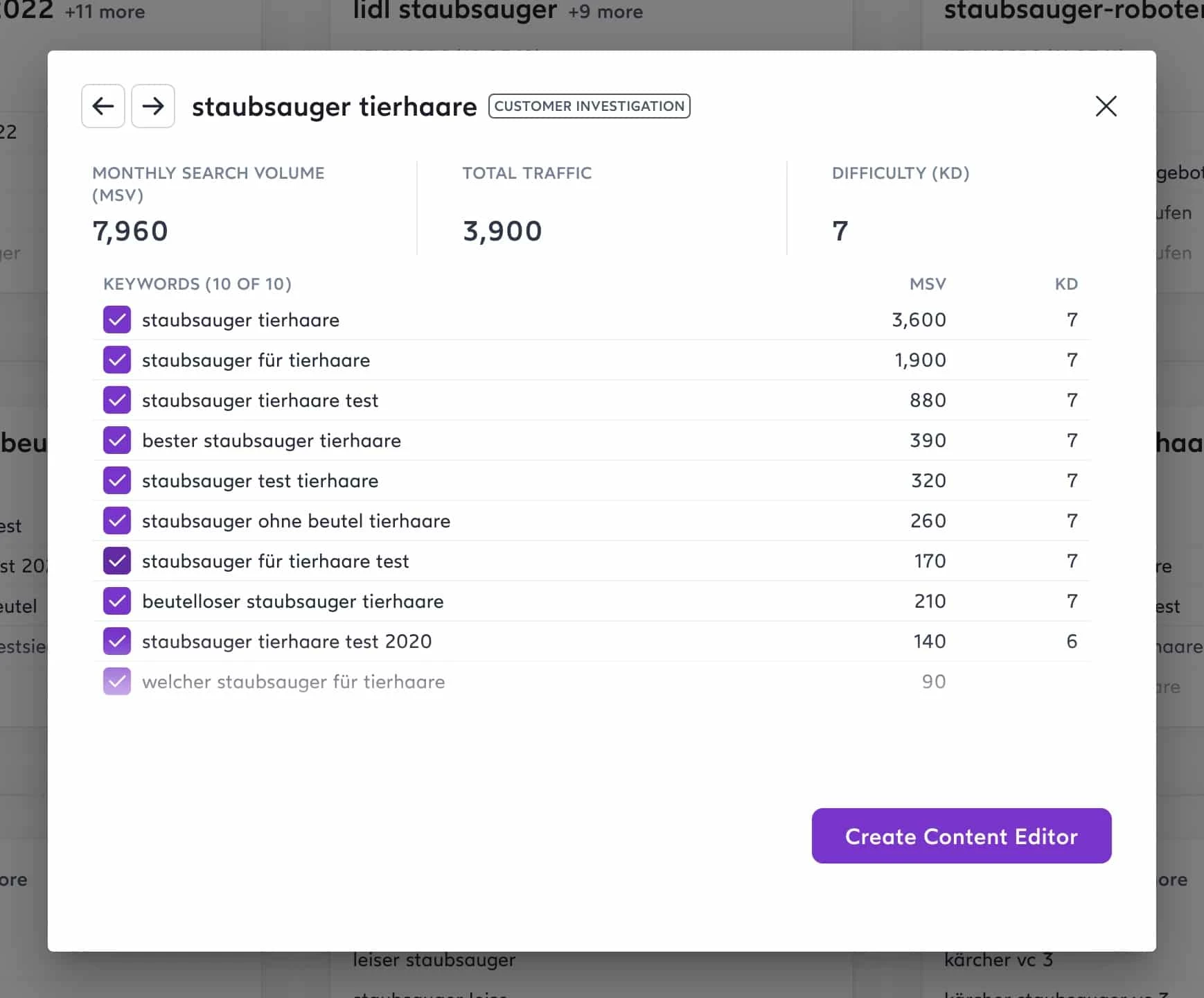
The keyword “staubsauger ohne beutel tierhaare” (bagless vacuum cleaner pet hair), for example, is interesting.
If you're writing a comparison of pet hair vacuum cleaners or running an online store for vacuum cleaners, you should therefore add one or more bagless vacuum cleaners.
Alternatively, you could also create a standalone comparison or your own product category for bagless pet hair vacuum cleaners.
Content Editor

The Content Editor is the real heart of Surfer SEO. It shows you how to optimize your content so that it has the greatest SEO effect.
The editor takes many ranking factors into account, for example how many keywords you should use in your article and where, how many images are ideal, or how long your article should be to rank on page 1.
With the help of the Content Score, your article is rated in real time. You should aim for a value between 70 and 90 and then adjust when you get the chance, or check how the ranking develops. This article still has quite a bit of work to do:

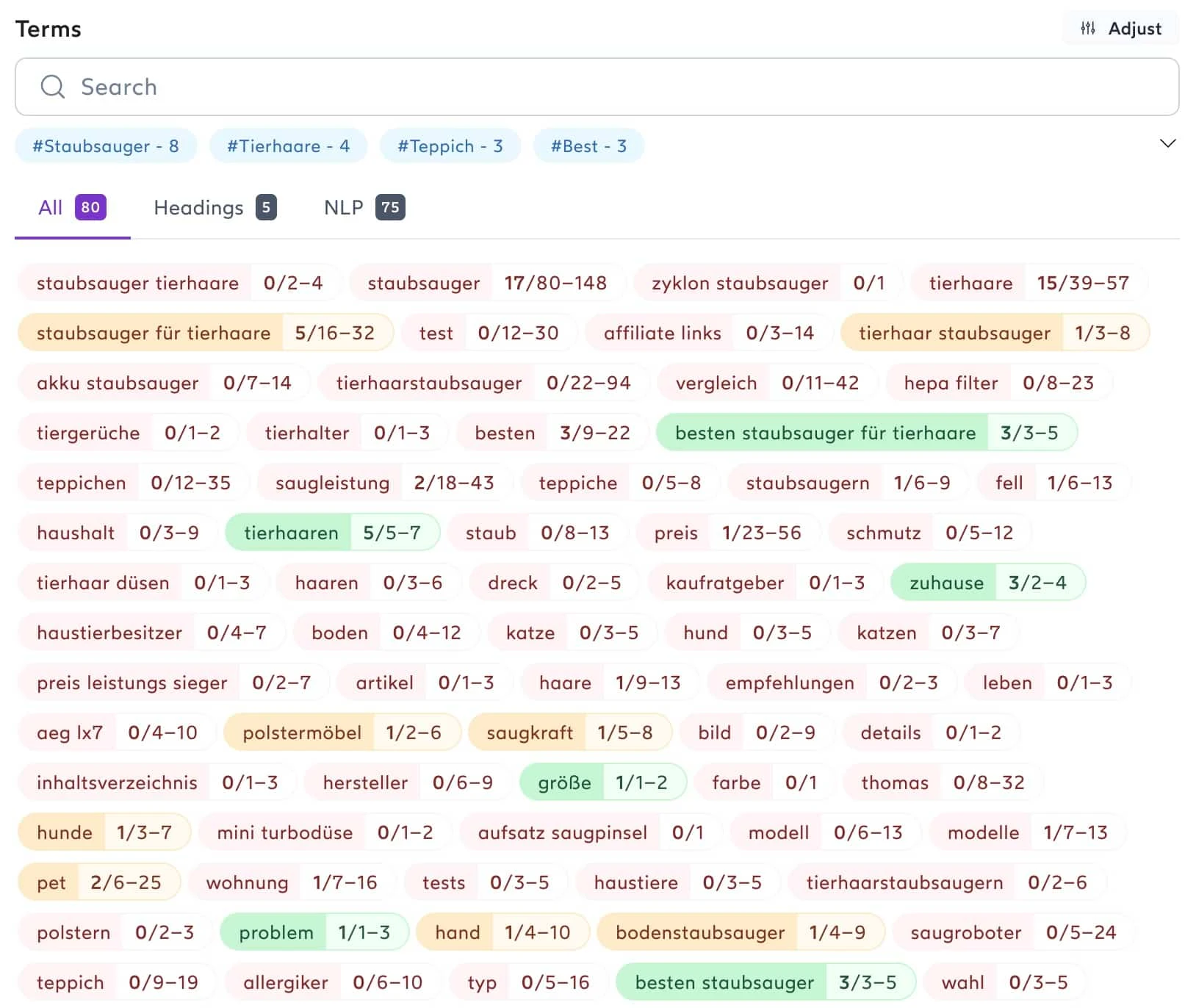
The Content Editor shows you the (long-tail) keywords and keyword components that the Google algorithm might expect and that you should include in your article to achieve the maximum ranking effect:
3. FAQ
Here I've put together the answers to the most common questions about long-tail keywords:
What is long-tail SEO?
Long-tail SEO is the SEO strategy of focusing exclusively (or at first) on long-tail keywords when you create content. This can work very well for new websites that don't have many backlinks yet and that the Google algorithm doesn't consider 100% trustworthy yet.
What is NLP?
NLP stands for “natural language processing”. Surfer SEO uses NLP to extract relevant words and phrases that are related to your main keyword. Besides long-tail keywords, these include synonyms and individual relevant words.
What is an example of a long-tail keyword?
A good example of a long-tail keyword is “Kann Meditation dich schlauer machen” (“Can meditation make you smarter”). According to KWFinder, it gets about 50 searches per month.
For comparison:
The short-head keyword “Meditation”, which the long-tail keyword builds on, gets about 211,000 searches per month and is therefore searched 4,000 times more often.