Instagram has become one of the most popular social media platforms on the internet.
And with more than three billion monthly active users, there is a lot of potential to make money on Instagram.
In this article, I'll show you 7 ways to make money on Instagram. Ways that really work, and that could earn you not just a side income but a living (if that's your goal).
No, you don't necessarily need 10,000 or 100,000 followers. What matters much more is finding the income sources that fit you and your community perfectly.
- With sponsored posts and stories, you earn money through paid collaborations with brands. The amount depends on your follower count, engagement rate, and audience fit.
- Digital products like online courses or e-books offer passive income. Even with a small community, you can earn €50,000 or more per year with them.
- Affiliate marketing and your own products (physical or digital) let you make money independently of collaborations. You decide what you promote and how much.
1. Sponsored posts
Sponsored posts, meaning paid Instagram posts, are probably the most popular way to make money on Instagram.
You publish a post on your profile and get paid for it by a company or an online store.
The content to be posted is often defined very precisely in advance, and some clients want to see it before publication and only then give the go-ahead to post.
Sponsored posts can be a great way to earn extra money, and they can be lucrative if you have a large fan base or a highly focused audience.
The price for such posts usually depends on the number of your followers or views.
How much money you can make with a post depends on these factors:
How many followers you have
The more followers you have, the higher the pay usually is. Some companies or shops also only start working with you once you've reached a certain follower count.
I've put together strategies for getting more Instagram followers in this article: What works in 2026 to get Instagram followers (my path from 0 to 140K)?
How high or low the share of followers from a certain country is
Some brands, for example, are only active in Germany and often pay less if many of your followers come from other countries.
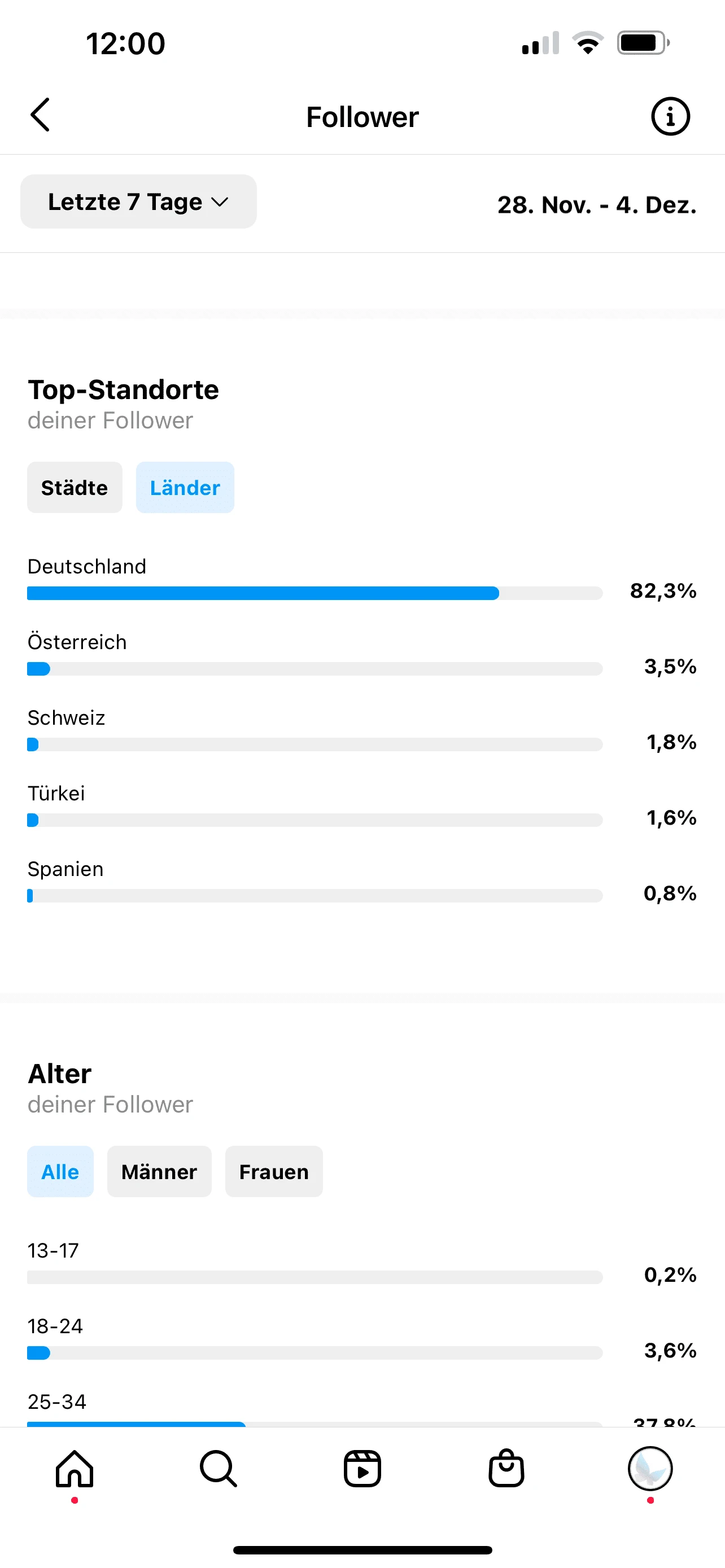
Want to see where your followers come from? Then open Insights. Click “Gesamtzahl der Follower” (total followers) and scroll down a bit. There you'll find the “Top-Länder” (top countries). Select the “Länder” (countries) tab:
How well your followers match the advertiser's target group
If a company wants to advertise surfboards, for example, a profile that deals exclusively with surfing has a better negotiating position than a profile that covers sports in and on the water in general.
The surf profile can therefore demand a higher price, even if it doesn't have quite as many followers as the general water sports profile.
How active your followers are
Profiles whose followers like, comment, and react to stories a lot usually have a better negotiating position and can demand higher prices.
To find sponsors, you can either approach brands directly or sign up with an influencer marketing platform.
To increase your chances of landing a deal, it makes sense to prepare your Insights well for the respective brand and to think in advance about where your strengths lie and why you're a particularly good fit for a campaign. A visually appealing and at the same time informative media kit can be a great help here.
2. Sponsored stories
Sponsored stories are similar to sponsored posts, but they appear in your story instead of your feed.
Here, too, some companies want to see the content before publication, and there is often a detailed briefing that says what you should say or where links should be placed.
Some companies also tell you what to wear or where to shoot the story. So you need to read the briefings very carefully, so that you don't have to reshoot something in the end or leave the client unhappy.
Companies usually pay you a flat fee of between 40 and 60 cents per viewer. As with sponsored posts, this amount can of course vary considerably. There is also the option of being paid not a flat fee but based on your performance, meaning you receive a commission for every sale you generate or every email address entered into a form.
Such commission models usually only pay off, though, if you have a very large fan base or the offer fits your followers perfectly.
Influencer marketing is also usually not performance marketing. Its purpose is more to strengthen a brand's image, create positive associations, and get customers excited about a brand in the first place.
When you upload sponsored stories, it's important that you clearly label them as advertising or as an ad, because otherwise you could run into legal problems.
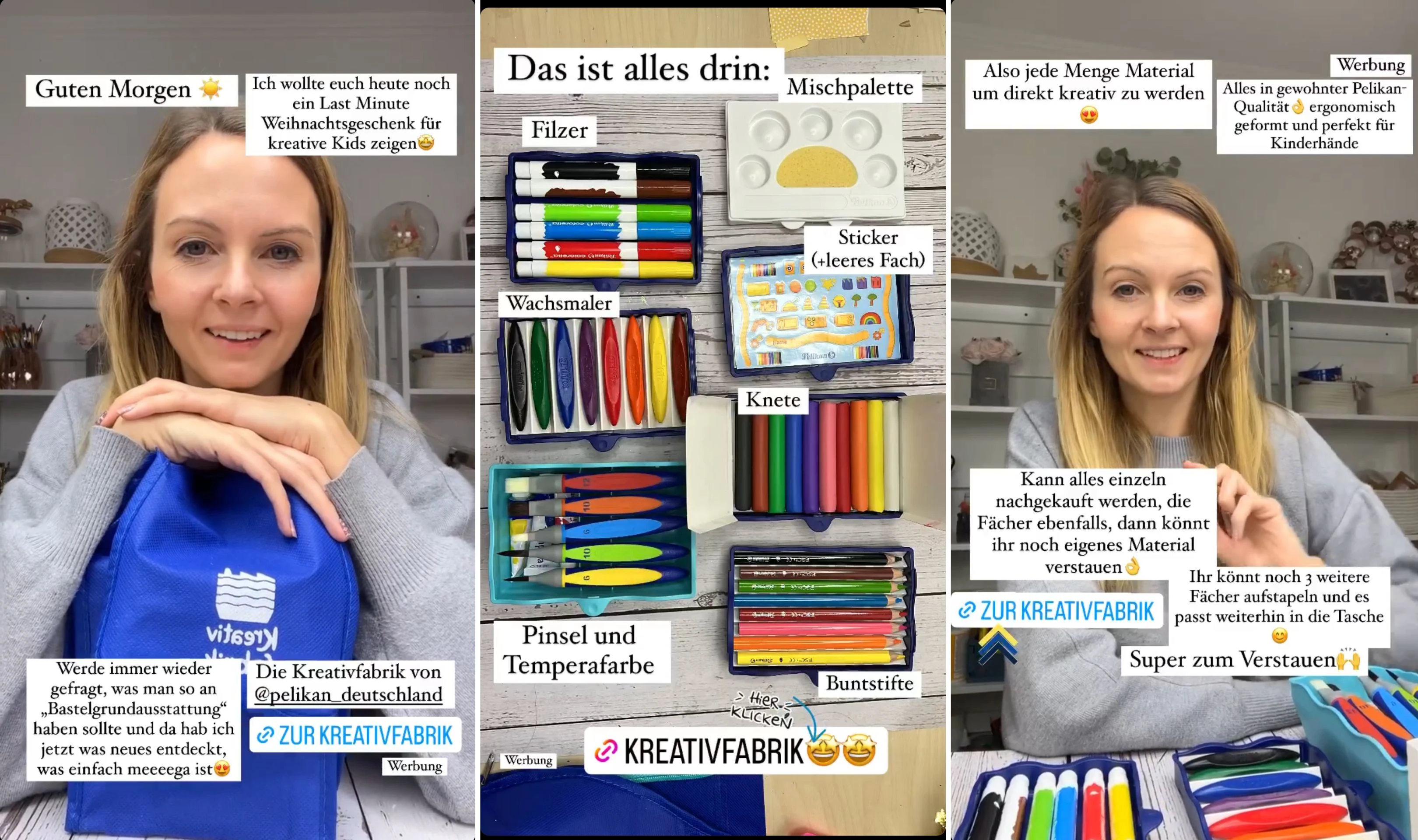
Here's a small example of a sponsored story from my account bunterbasteln:
3. Affiliate marketing
Affiliate marketing means you promote a product or service and receive a commission for every sale you generate.
Many brands offer affiliate programs. The art is finding the partner that really fits you and your profile. If you've found a shop or company that fits perfectly but doesn't offer an affiliate program, you can also ask whether they could imagine setting something up with you.
Once you've been accepted as a partner, you get a unique link that you can share on your Instagram profile. When someone clicks this “affiliate link” and buys something, you receive a commission.
The world's best-known and most widely used affiliate program is probably the Amazon Associates program.
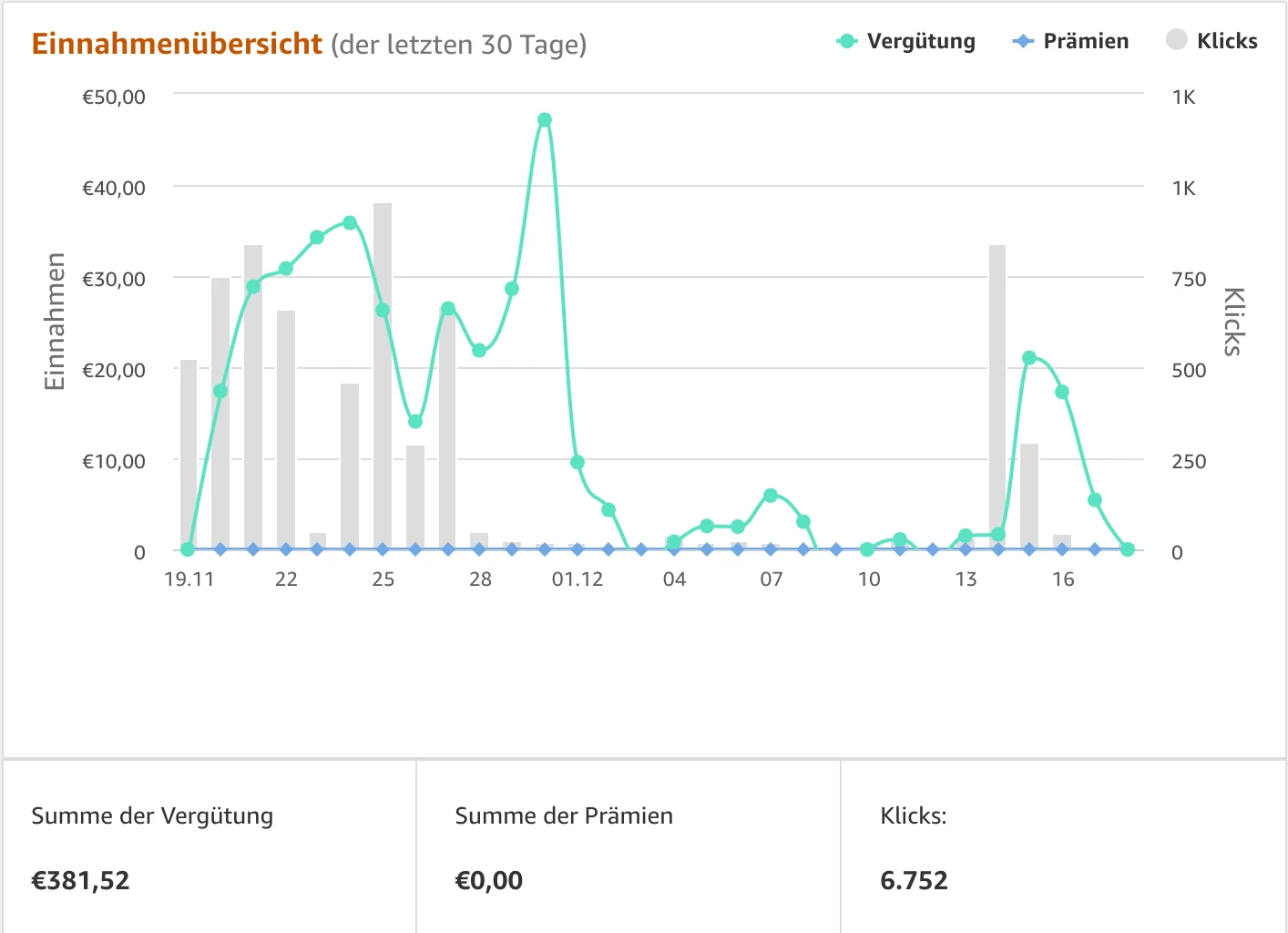
The advantage of Amazon is that almost everyone already has an account and the selection of products is gigantic. Amazon now also has its own influencer program, which offers members more attractive commissions and bonuses:
Affiliate marketing is a great way to make money on Instagram, because you have much more freedom than with sponsored posts or stories:
You can freely decide when you post what. You can also promote as many or as few products as you like, and there's no limit to how much you can earn.
The only downside of affiliate marketing is that you don't earn any money if nobody clicks on your links. So make sure you only share products you're excited about and that you believe your followers will love too.
4. Consulting and coaching
If you have a lot of knowledge and experience in a particular field, you can make money by advising or coaching others.
That can be anything, from advice on starting a company to help with relationship problems. You can promote your services on your Instagram profile and, for example, make funny reels that show which problems people can solve with your help.
So that people take you seriously, it's also useful to set up a professional-looking website where they can find more information about you and your services. You can also use social media platforms like LinkedIn or Twitter to market yourself as a consultant or coach.
Always remember to offer a newsletter that interested people can sign up for.
The advantage for you:
On Instagram, you often only reach a fraction of your followers, while a newsletter isn't subject to an algorithm and lands in the inbox of everyone who has subscribed to it.
You can also use the experience you gain from coaching later to sell an online course or other digital products.
5. Selling physical products
Another popular way to make money on Instagram is selling physical products. If you have your own product, you can promote it on Instagram and send visitors to your website or online store.
We tried this option too and created our own online store in 2021.
Through the store, we sold our craft boxes, which we promoted on Instagram.
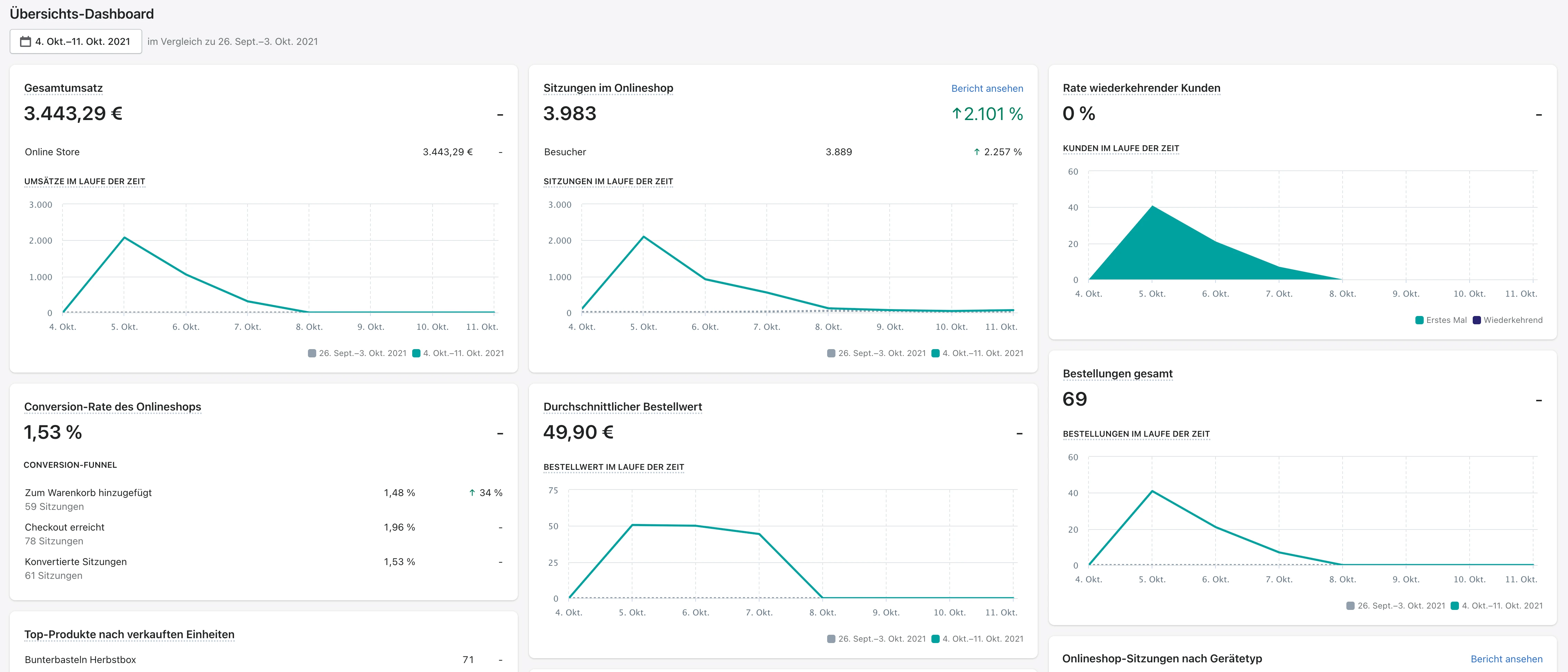
That worked really well, and in just a few days we made over €3,000 in revenue:
Selling physical products does have two big downsides, though:
- There are high upfront costs (for the product itself, packaging, postage, running the store, etc.)
- The effort is extremely high if you ship everything yourself (ordering products, unpacking them, adding them to the store, processing orders while making as few mistakes as possible, packing, taking parcels to the post office, bookkeeping, etc.)
If you sell handmade products, you also need significantly more time to make those products in the first place.
It's hard to grow the revenue of a “handmade business,” and you have to keep checking whether the products really make enough profit.
5.1 Where is the best place to sell physical products?
If you want to sell physical products, you can't avoid the question of where to sell them.
Instagram alone won't do it. You always need an external store or platform. Once you have one, you can connect it to Instagram and use the shopping feature.
There are generally three ways to sell your products:
A self-hosted store
For this option, you need a domain, hosting, and a shop system. The technical effort behind it is not to be underestimated, but in return you have full control and endless design options.
If that's interesting to you, take a look at our shop system comparison, which gives you an overview of many popular providers and software.
If you already have your own WordPress website, it can make sense to create your online store with WordPress as well.
A cloud-based store
Here you don't have to deal with hosting, technology, and the like, because the store is already pre-installed for you and technically maintained by the provider. In return, the design options are somewhat more limited.
We used Shopify for our online store. You'll find a detailed guide on how to create a Shopify store here: Create an online store in 2026: The complete guide
Marketplaces like eBay, Amazon, and others
If you don't feel like building the store yourself, you can fall back on marketplaces like eBay, Amazon, or Etsy. You should be aware, though, that you then have hardly any design options and may have to pay high selling fees. In return, the marketplaces can bring you new customers.
6. Patreon, OnlyFans, and similar platforms
Another popular way to make money on Instagram, or to make money online in general, is platforms like Patreon, OnlyFans, and similar services. These platforms let you set up a subscription-based service where you get paid for exclusive content.
To get started, you simply create an account on one of these platforms and promote it via Instagram. Your subscribers can then sign up on the platform and take out a paid subscription with you to support you.
That way you can earn hundreds or even thousands of euros per month if you have a good community and attractive benefits. What's special about this income:
It generally fluctuates less than other income and is somewhat more predictable.
Here you can see how an income on Patreon developed:
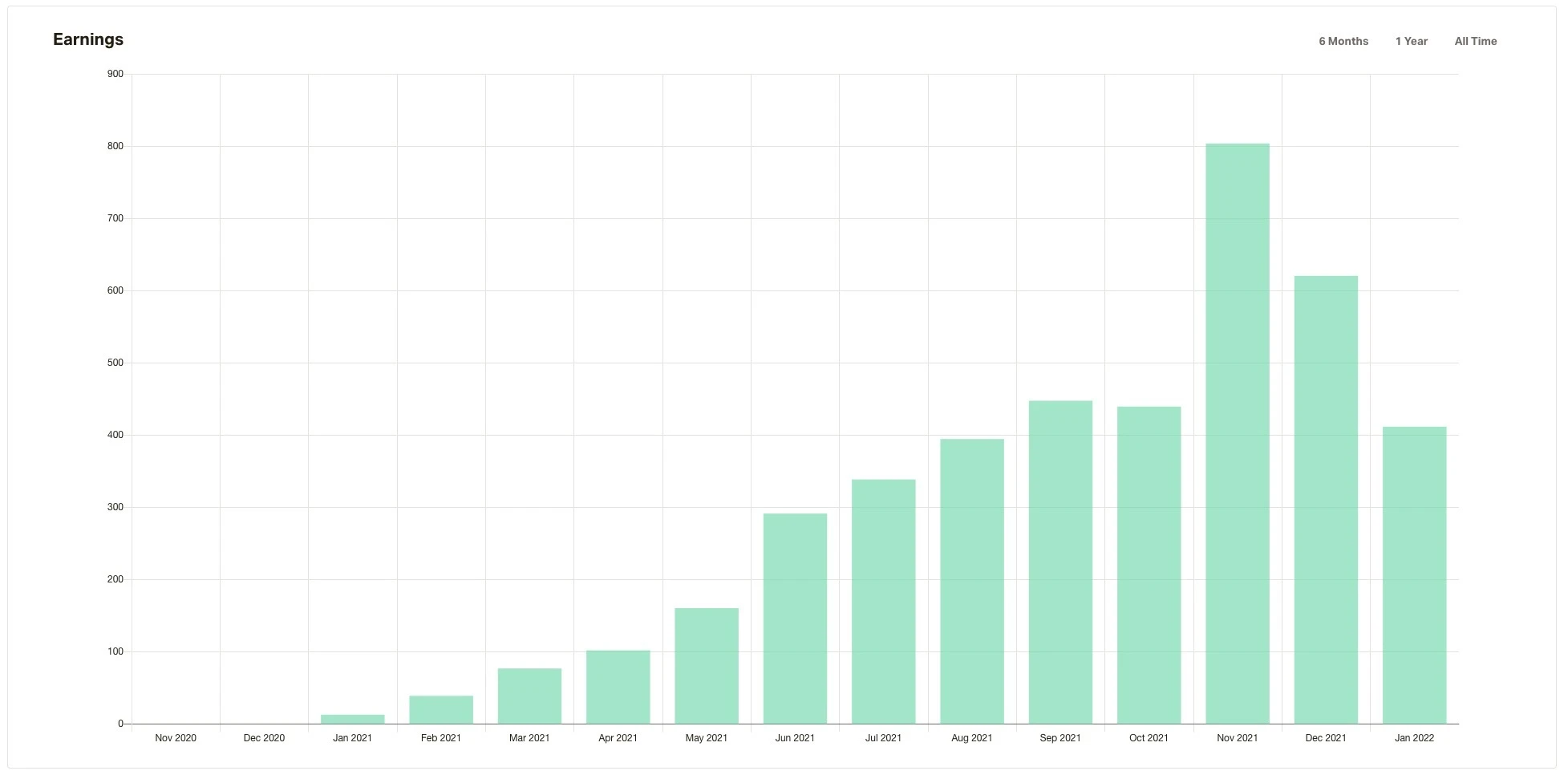
On Patreon, you can create exclusive blog posts, videos, or podcasts that people can pay for. On OnlyFans, you can post exclusive photos and videos that people can pay for.
OnlyFans is mainly known for its erotic and sometimes pornographic content. That's not necessarily the case for all content, but when signing up on this platform you should still consider what impression it gives your followers.
How much money you make depends on how many subscribers you have and how much they pay.
Fans usually pay between $4.99 and $50 per month (on average $7.21) for access to your content, and they get fewer benefits for lower amounts than for higher ones.
If you're creative and have something valuable to offer, these platforms can be a real way to make money on Instagram.
7. Selling digital products
Another good way to make money on Instagram is selling digital products. If you have a skill or knowledge that others are willing to pay for, you can create a digital product and sell it on Instagram.
Some popular examples of digital products are:
- E-books
- Online courses
- PDF guides
- Plugins
- Themes
- Stock photos
- Design templates
- Audio files
Creating a digital product is often very time-consuming, but it's a great way to earn a passive or partly passive income:
Once you've created a product, you can sell it again and again without doing any additional work.
To find ideas for digital products you can make, think about which skills or knowledge you have that others would be willing to pay for.
When creating them, be sure not to violate other people's copyright, e.g., when you use images, graphics, or videos. That could end up costing you dearly.
Once you've finished your digital product, you can promote it on Instagram with posts, stories, ads, or even influencer marketing. If you do it right, selling digital products can be a great way to make money on Instagram.
After our craft boxes, we also sold digital products and made about €300 in revenue with them. That doesn't sound like much now, but here we had no costs for the product, and shipping and packaging costs disappear completely too:
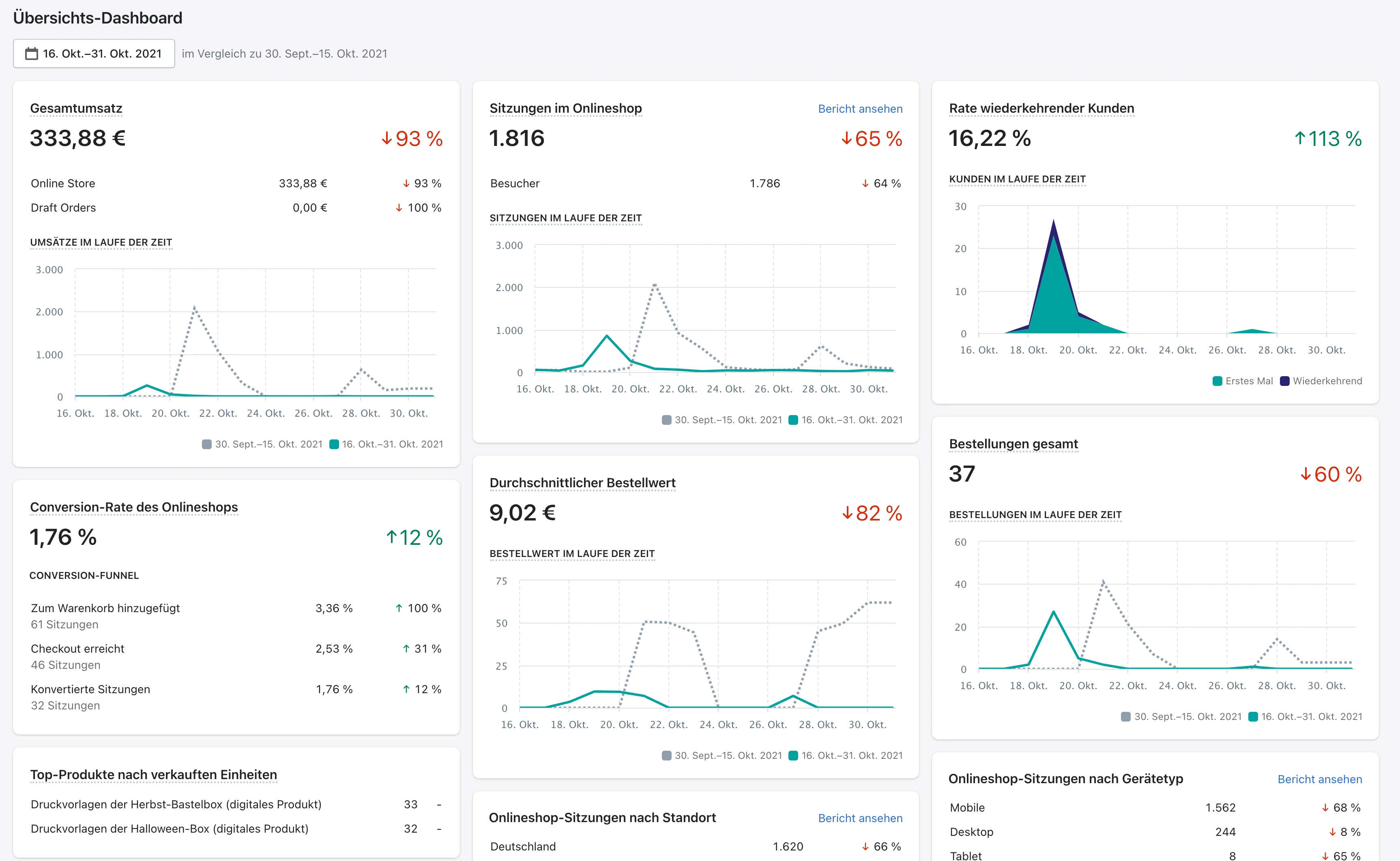
On top of that, we of course have our online courses, which regularly bring in revenue.
If you're just starting out, you should begin with a smaller online course or an e-book (our SEO course took several years to build and is still extremely labor-intensive today).
That way you can first test whether a concept works and whether there are enough interested customers.
FAQ
Here I've put together answers to common questions about how to make money on Instagram:
How many followers do I need to make a living from Instagram?
You don't necessarily need 100,000 followers to make enough money with Instagram to live on it.
What matters much more is finding the income sources that fit you and your community perfectly.
It's quite possible to earn €50,000 or even €100,000 a year with online courses, even if you only have 10,000 or 5,000 followers.
What's the maximum amount of money you can make on Instagram?
There is no upper limit. Some creators and influencers make millions in revenue per year on Instagram, e.g., through sponsored posts or by selling their own products.
Do I have to pay tax on income from Instagram?
Yes, income from Instagram generally has to be taxed, whether it comes from sponsored posts, sponsored stories, affiliate earnings, or the sale of digital products.
It's best to ask a tax advisor what you need to do in your specific case. For example, you may need to register a business or report freelance work to your local tax office in Germany.