Selling digital products is a brilliant way to build an online income, and it comes with many unique advantages.
Once produced, they can be sold in any quantity. That makes a business model based on digital products infinitely scalable, with almost no limits on earnings.
Sounds exciting?
In this article, I've collected 16 digital products for you that have established themselves as bestsellers over the last few years and could certainly bring you a nice income too.
Let's get started!
- Digital products range from online courses, e-books, premium content, and templates to apps, plugins, fonts, and statistics, and almost any expert knowledge can be sold at scale.
- Many channels are available for distribution: your own shops with Wix, Shopify, or WooCommerce, marketplaces like Etsy, social payment platforms, as well as subscription models and providers like ablefy or Digistore24.
- You benefit from unlimited scalability, no shipping and storage costs, and simpler bookkeeping, but still keep an eye on VAT, the right of withdrawal, data protection, and support for satisfied buyers.
1. Online courses
Online courses are the digital product. After all, you can turn really any topic into a course of its own. Whether it's carp fishing, building your own living room table, or teaching your dog to go for walks, there are no limits to your creativity.
Another advantage is that the price range is very wide.
There are online courses for €19 up to €5,000, depending on the scope of the course and the target group it addresses.
So if you have expert knowledge in a specific niche, you should think about turning it into a course.
Putting it into practice is really simple today. Many providers such as ablefy (formerly Elopage) offer all-in-one solutions that let you create not only sales pages but also the course area, and that even handle the entire payment processing for you. All you actually have to do is create and upload the course content. You'll find current prices and fees of the most important providers in my comparison of online course platforms.
I sell my SEO skill system New Level SEO, for example.
And with great success. Between 2020 and 2022, we made €250,000 in revenue with online courses.
Pros
- High selling prices possible
- No technical know-how required
- No website of your own required
- Easiest way to monetize an existing community
- Strengthens your position as an expert
Cons
- Partly high competition
- Without reach, it gets hard
2. E-books
Along with online courses, e-books are also clear winners of digitalization. Even though it's nice to hold a printed book in your hands, many readers have discovered Kindle and the like.
The advantages of e-books are obvious: you carry a library of a thousand books in your pocket and don't even have to leave the house to buy new bestsellers.
You can profit from that too!
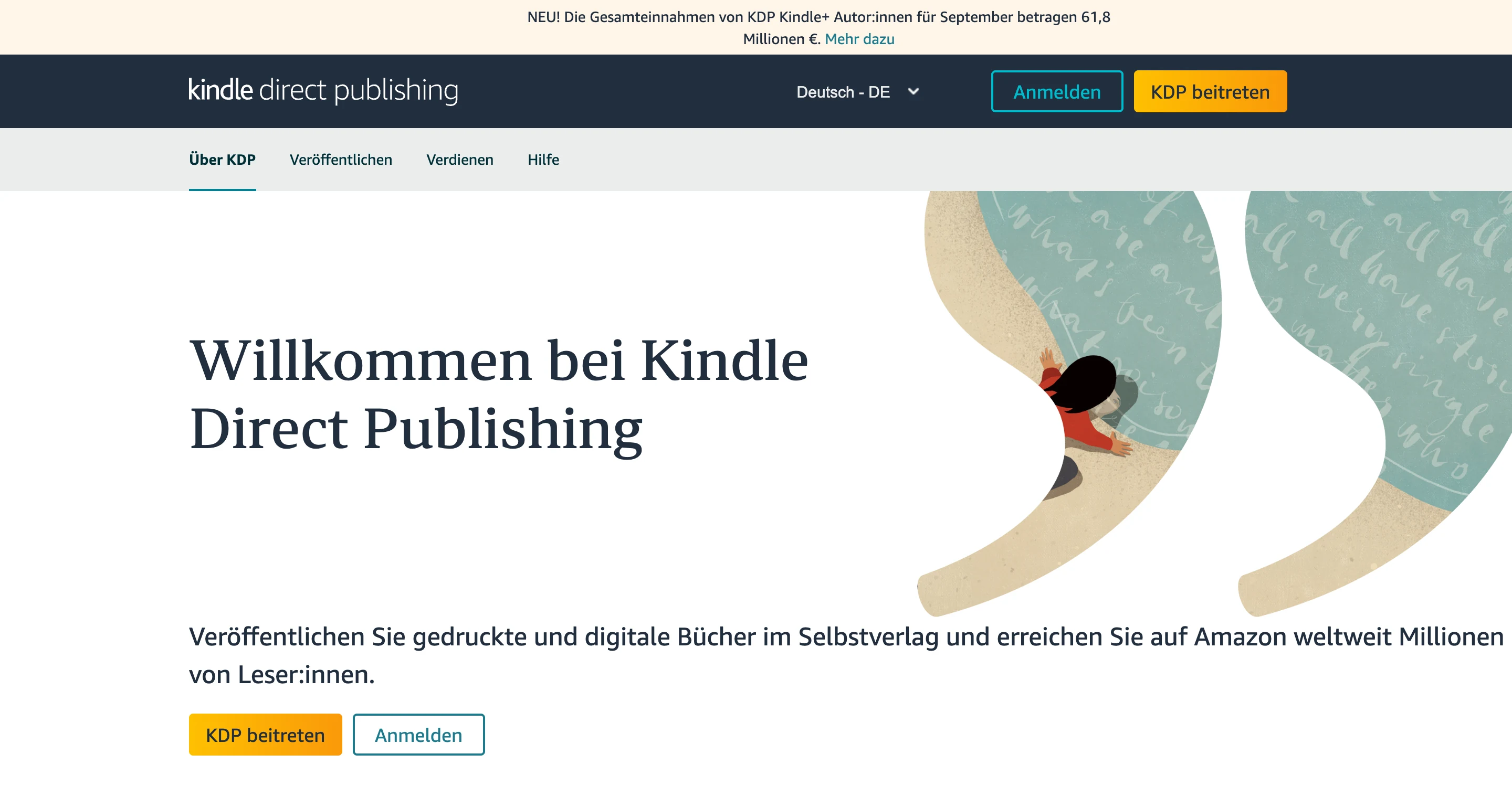
Both novels and nonfiction books can be sold over the internet. Either through your own website or through a retailer like Amazon. Amazon in particular makes it easy to get started with its KDP program (Kindle Direct Publishing), but it keeps a large share of the sales revenue in return. Depending on the option you choose, KDP pays you a royalty of 35% or 70% on the net price. The 70% applies only to certain countries and minus the delivery costs. That's why selling through your own website or your own shop is always better.
By the way, to create an e-book it's actually enough to open a Word document and start writing. AI tools can help you enormously with that, such as AI text generators or AI chatbots.
You don't need to be afraid of the cover design either. For a cool cover image, you can simply use an AI image generator and Canva, or have a freelancer design it for you.
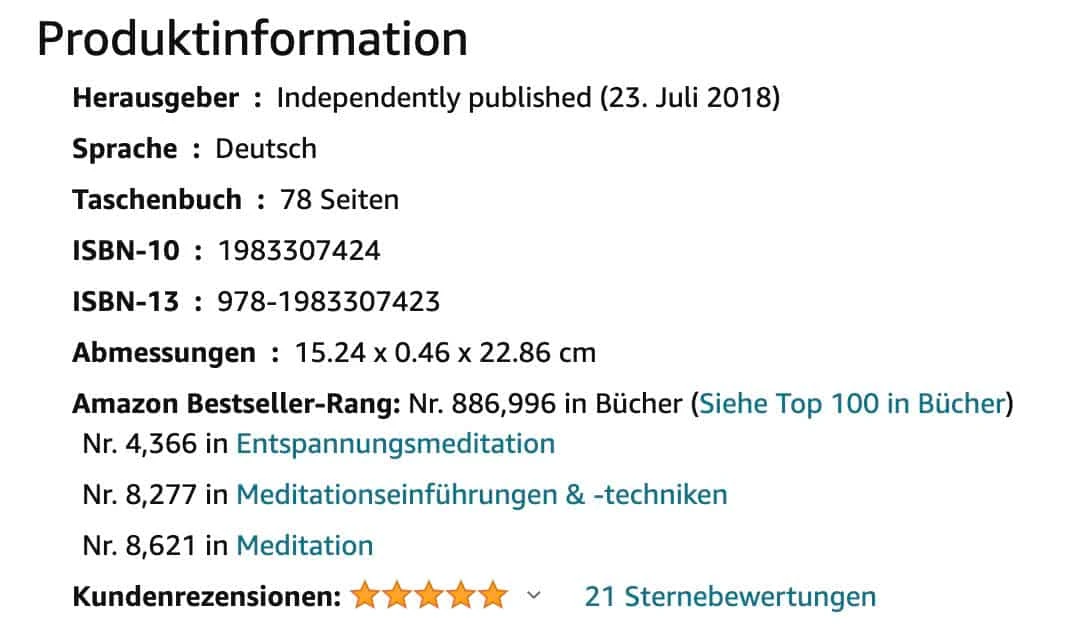
To see whether e-books are still worth it, a look at the Amazon bestseller rank is enough. The rule here: the smaller the number, the more sales.
The publisher description “Independently published” tells you that the book is by an author who used the KDP program.
Pros
- Can be started right away from home
- Any topic can be turned into a book
- No ongoing costs
- Many areas can be outsourced
- Both nonfiction and novels possible
Cons
- Gigantic competition
- Amazon keeps a large share of the revenue
3. Social payment
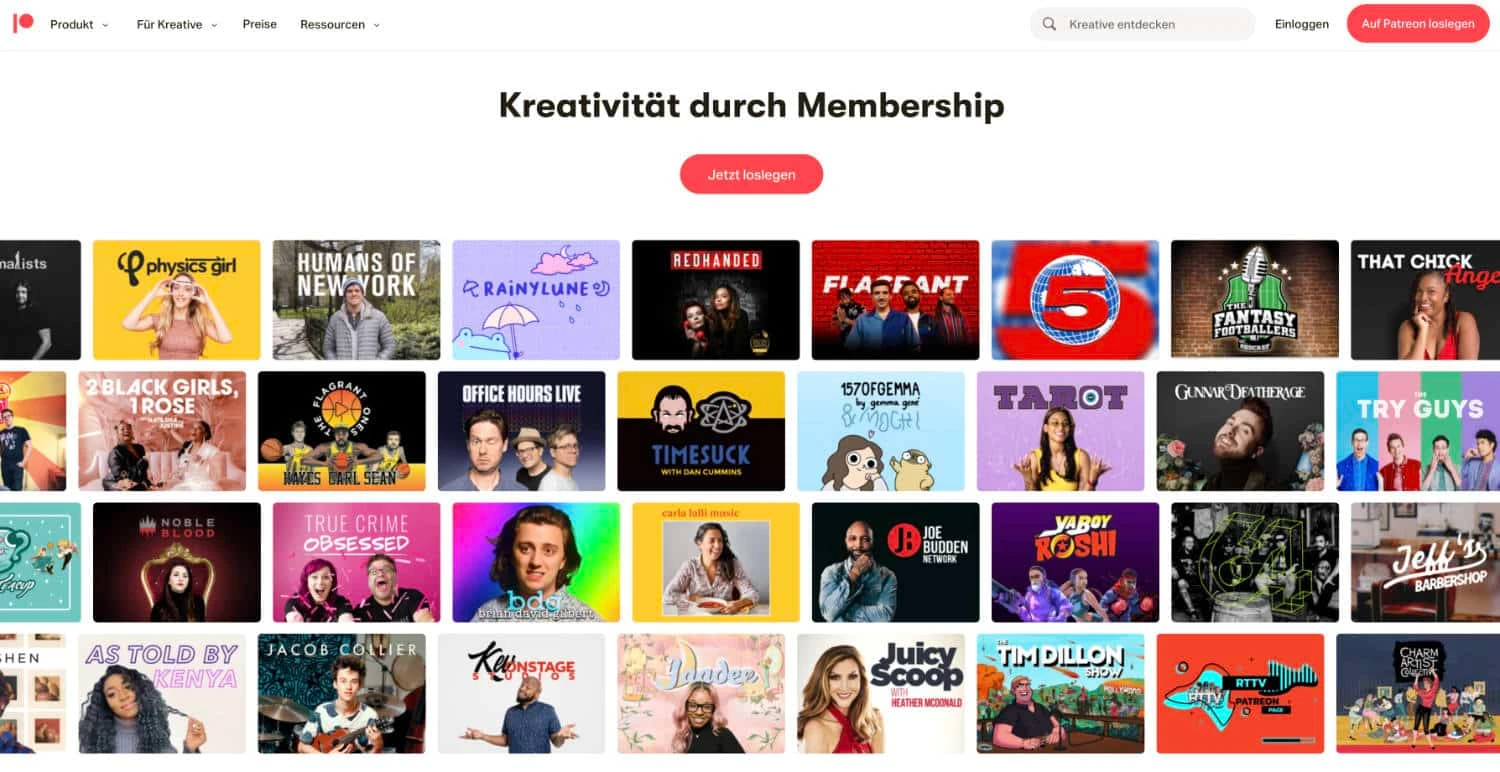
If you like putting yourself in the spotlight and are willing to put photos and videos online, the social payment business model could be the right choice for you.
Platforms like OnlyFans or Patreon let you publish multimedia content that visitors can only access after paying.
If you already have a certain reach through social media like Facebook or Instagram, this route could be exactly the right one for monetizing premium content.
A warning for parents at this point: please check what content your children post of themselves on these platforms. Unfortunately, teenagers are often lured into intimate photos by third parties.
OnlyFans and Patreon work, no doubt about that. To earn really high income, though, you should have a certain level of fame or be ready to post pictures that make people want to click.
Pros
- You can get started immediately
- Any kind of content can be monetized
- A fan base can be built quickly
- No ongoing costs
Cons
- Reach required
4. Premium content
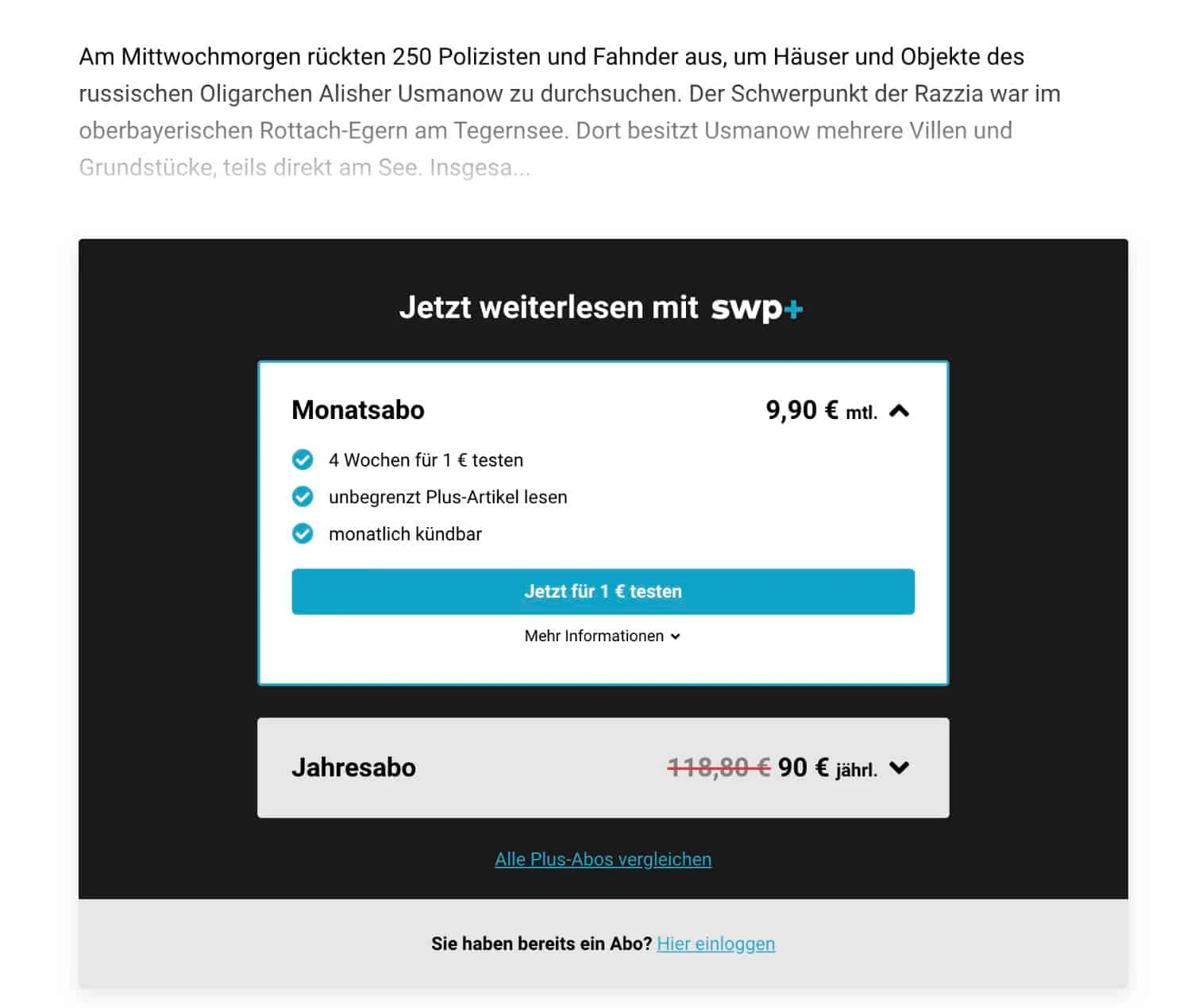
Have you ever stumbled across an online newspaper article or blog post where only the first few sentences were free to read? Reading the whole thing would have required a one-time payment or a subscription.
More and more information providers, such as news agencies or daily newspapers, choose this “premium content” business model.
Why?
Simple: because it works, and it's much more pleasant for the reader than loading the website up with ads.
If you already have a blog of your own, you can think about creating premium content that is only available for payment. In practice, a closed member area similar to that of an online course is all you need for this.
Pros
- Can be applied to existing content
- High conversion rate
- Technically easy to implement
- Much more pleasant than ads
Cons
- May draw criticism from regular readers
5. Themes, plugins, and add-ons
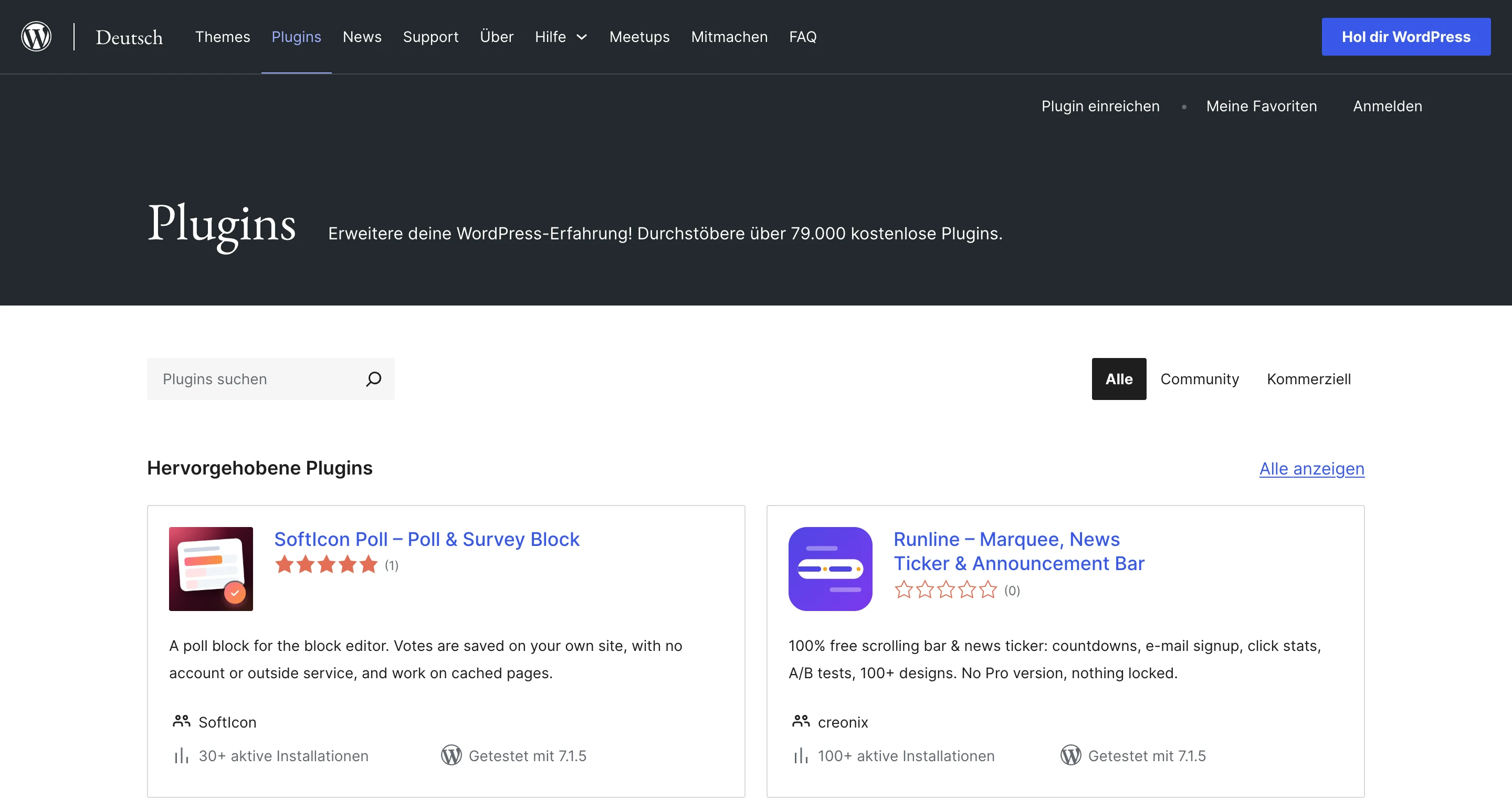
Do you have experience with WordPress or another program, and you're not averse to programming? Then developing plugins, themes, or other add-ons can be a great way for you to sell digital products.
Even though, to stay with WordPress as the example, there are by now tens of thousands of extensions in the marketplace, a lot of potential remains untapped.
The earning potential with this type of product is very high, because besides the classic one-time purchase you can also offer subscription models that secure recurring income.
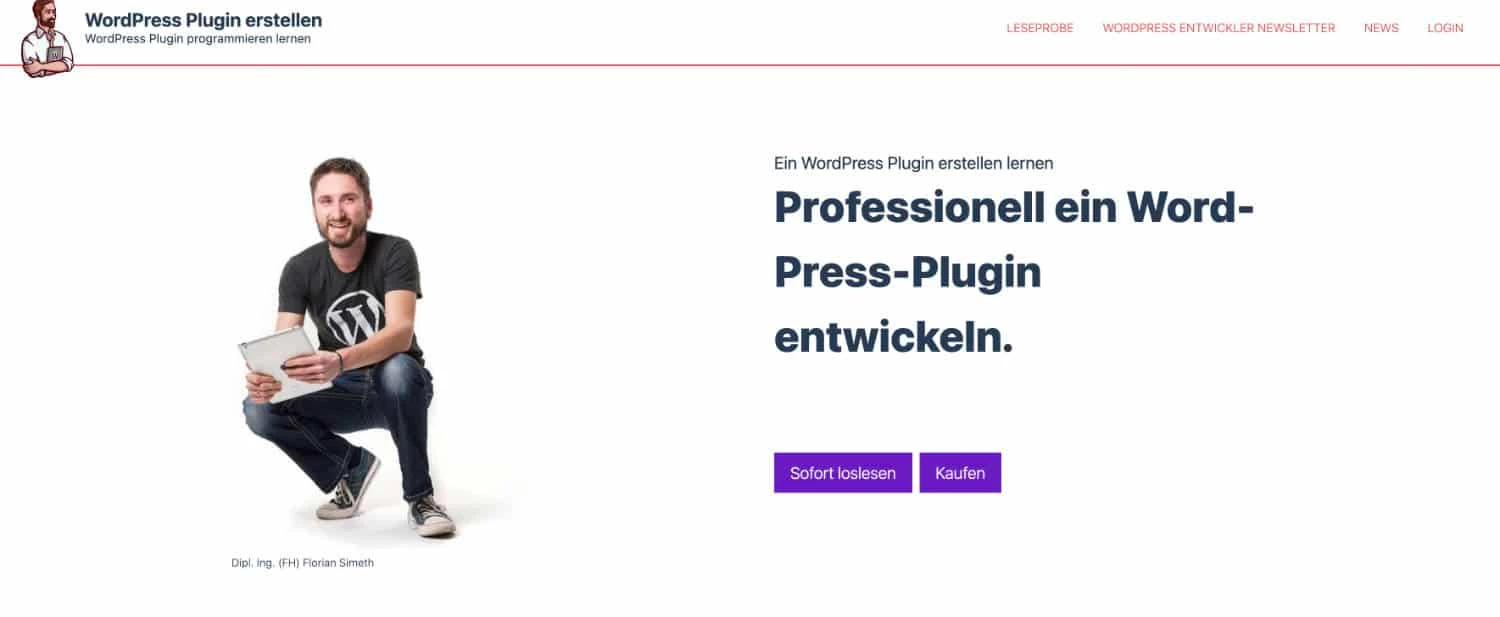
Over the past years, Florian Simeth has not only built numerous plugins, themes, and Gutenberg blocks himself, but now also passes on his knowledge in personal coaching sessions.
Pros
- High earning potential
- Recurring income through a subscription model
- No start-up capital needed
- No limits to creativity
- Large community for questions and problems
Cons
- A lot of technical know-how required
6. Templates
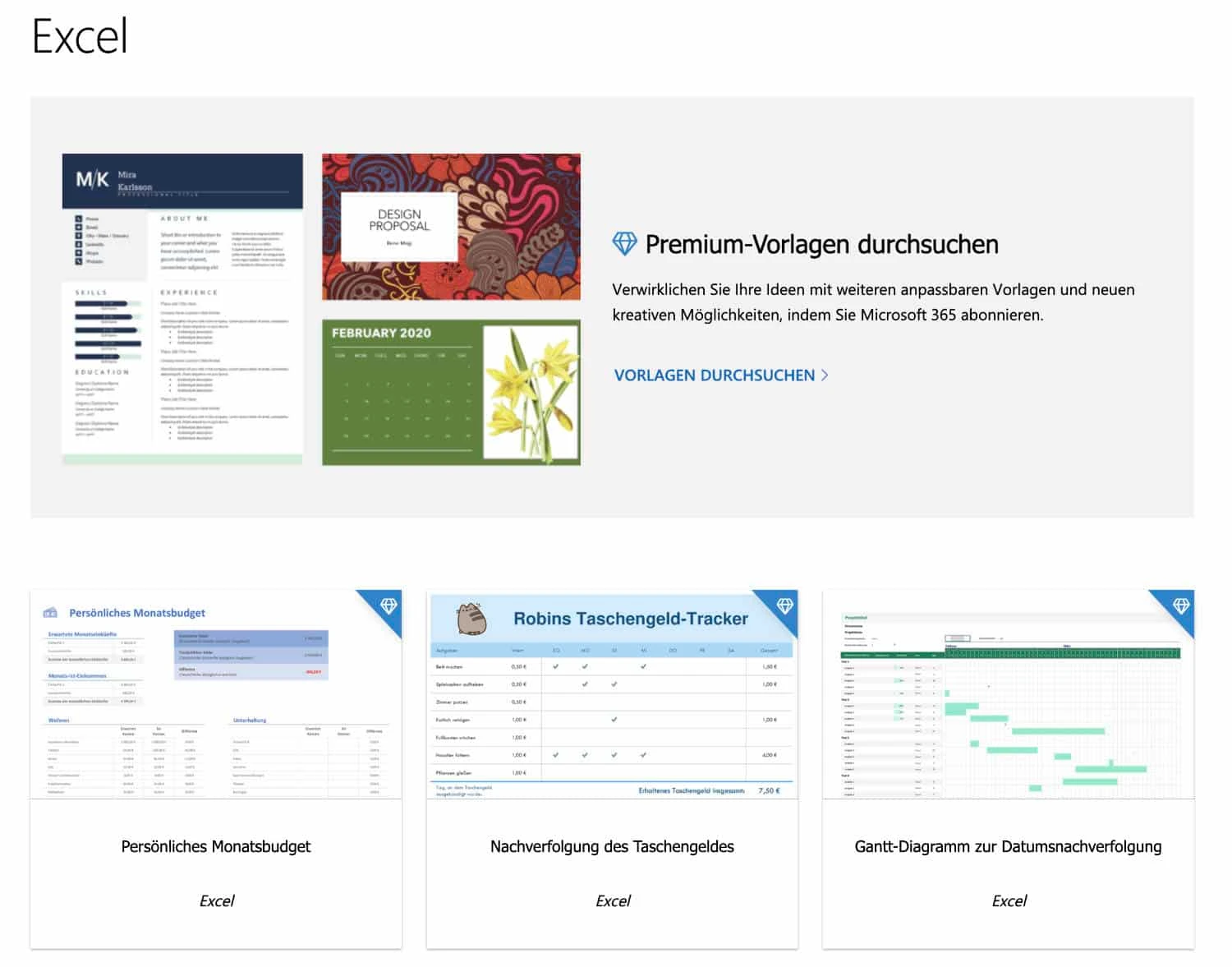
Whether Excel, Word, or another program: templates are needed everywhere, all the time, and they are a great option for you to create and sell digital products.
These templates don't have to be complex at all. They simply contain frequently needed functions or help with creating commonly used documents.
Here are a few examples:
- Accounting template for Excel
- Product presentation in PowerPoint
- Letterhead in Word
As you can see, you don't have to be a pro to create suitable templates.
I picked MS Office as an example because most people know it and use it regularly. That's why templates will have the best chances of success here. Of course, you can also develop templates for various other niche programs.
By the way, you can then sell these templates either on your own website or on a marketplace like Etsy.
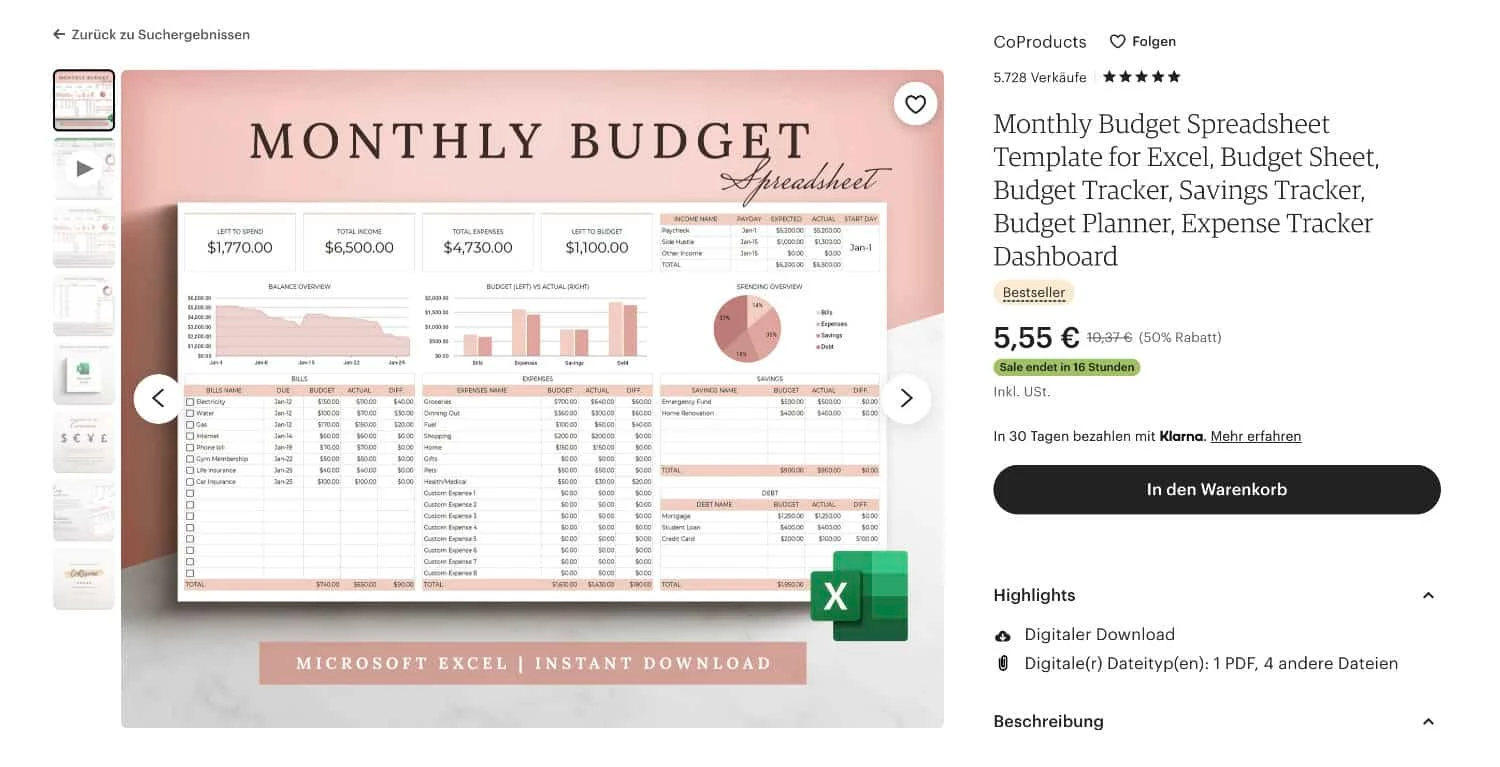
A good example of this is templates for MS Office. They sell like hotcakes. A closer look at individual listings on Etsy shows it.
Besides the rating, these listings also show the number of copies sold.
Who would have thought that a budget template for Excel can sell almost 6,000 times (see the screenshot below)? Extrapolated to the stated price of €5.55, that's impressive revenue of almost €30,000.
Pros
- No high level of expertise required
- You can quickly build a product portfolio
- No website of your own needed
- High revenue potential
Cons
- No high selling prices possible
7. Apps
If you have programming skills, developing apps is a brilliant way to turn that knowledge into a digital product. AI chatbots like ChatGPT make getting started with app development easier than ever before.
The great thing about app development is, without a doubt, the flexibility. From smartphone games to budget planners to current fuel prices at the pump, you can really turn any topic into an app of its own.
Later, you can generate revenue either through premium models (paid apps) or so-called in-app purchases.
By the way, strictly speaking you don't even need to be able to program today to bring your own app to market. Besides hiring freelancers via Fiverr or Upwork, you could also use an app builder. With that, though, you can really only create simple applications.
There are countless success stories in the field of app development. After all, only very few successful applications were actually developed by the big corporations that own them today. Instead, they are usually the work of individuals who later sold their product for a lot of money.
One example is the student Leonard Mehlig, who developed “Structured” and earned $700,000 from selling it.

Pros
- No start-up capital needed
- In theory, no programming skills required (but better to have them!)
- High revenue possible
- Easy access to the iOS and Android marketplaces
- Many different pricing models
Cons
- High competition
- Experience and know-how required
8. Developing your own software
What applies to apps naturally applies to any other software as well: when programming, you're by no means tied to the smartphone market's target group. You can just as well develop software for desktop PCs.
Even though this market is much more complex, it probably offers even more income potential on the other hand.
Pros
- No start-up capital needed
- High revenue possible
- Sales directly through your own website or marketplaces
- Good chances of an exit (acquisition by a large company)
Cons
- A lot of technical know-how required
9. Newsletter
With a newsletter, you can not only stay in touch with your community and earn money by promoting your products or placing affiliate links.
A newsletter can also be a paid premium content product in its own right.
Examples of this kind of product are found primarily in the financial industry in the form of stock market newsletters. These newsletters pass on investment tips and give a rough overview of the current market situation.
With a premium newsletter, though, you aren't tied to that field. In theory, you can set up a paid newsletter in any niche. In marketing, for example, you could publish weekly case studies and combine them with practical tips and your experience. As a successful entrepreneur, you could give career starters important advice and point out problems.
So if you have something to say and would like to get in touch with your community every week, the paid newsletter could be the right format for you! And anyone can manage to create a newsletter.
Pros
- No start-up capital needed
- Lively exchange with the community
- Reach all members at the push of a button
- Crystal-clear statistics (open rate) show which content is popular
Cons
- Ongoing costs depending on list size
- Regular newsletters required
10. Graphic designs and templates
Graphic design templates are similar to the MS Office templates I already mentioned: you create ready-made base graphics that can then be adapted to the buyer's own wishes.
These templates are mostly created in Adobe Photoshop, since the .ai file format is often used here. Templates for Canva are also very popular, especially in the online marketing scene.
The good news is that you can also sell these templates through marketplaces like Etsy, and you don't need a website of your own.
By the way, the print-on-demand field in particular often relies on design templates. This business area alone could therefore bring you plenty of buyers for your work.
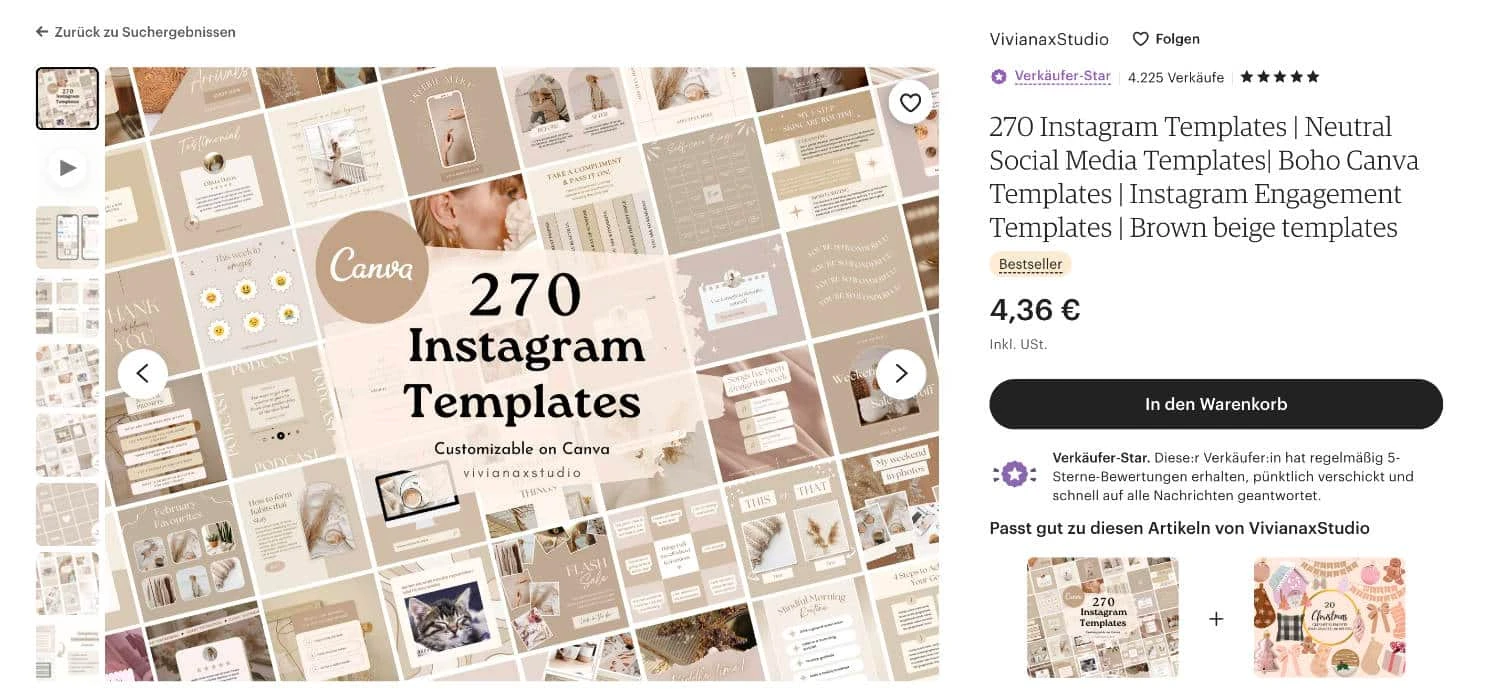
To show you how well design templates sell online, I'd like to take another look at the Etsy marketplace.
The Instagram templates for Canva shown below were not elaborately designed at all, and with a bit of practice you could certainly create them yourself. They have already achieved 4,225 sales at a price of €4.36. The designer thus took in an incredible €18,421 with this template.
Working time?
Probably 6 to 7 hours, if that. If you use an AI image generator to help, probably even less.
Pros
- No experience needed
- High earning potential
- Quick portfolio building
- No website of your own required
Cons
- Only low selling prices
- High competition
11. Video games
You love gaming and you're also a passionate programmer? Why not combine these two traits and create a product that sells extremely well online: video games.
Not only PC games but also smartphone games are excellent for selling.
With tools like Unreal Engine or CryEngine2 the programming work is even reduced to a minimum, so even as an inexperienced designer you can start with an idea and get further help from programmers via Fiverr or Upwork.
Prior experience with game architecture and design should definitely be there, though.
By the way, for PC games it's advisable to sell through your own website. Smartphone games, on the other hand, should be distributed through the respective marketplaces of the operating systems (iOS or Android).
Pros
- Great revenue potential
- Numerous tools available
- Support available via Fiverr and Upwork
Cons
- It doesn't work without prior experience
- High hurdles when selling
- Ongoing support required
12. Code snippets
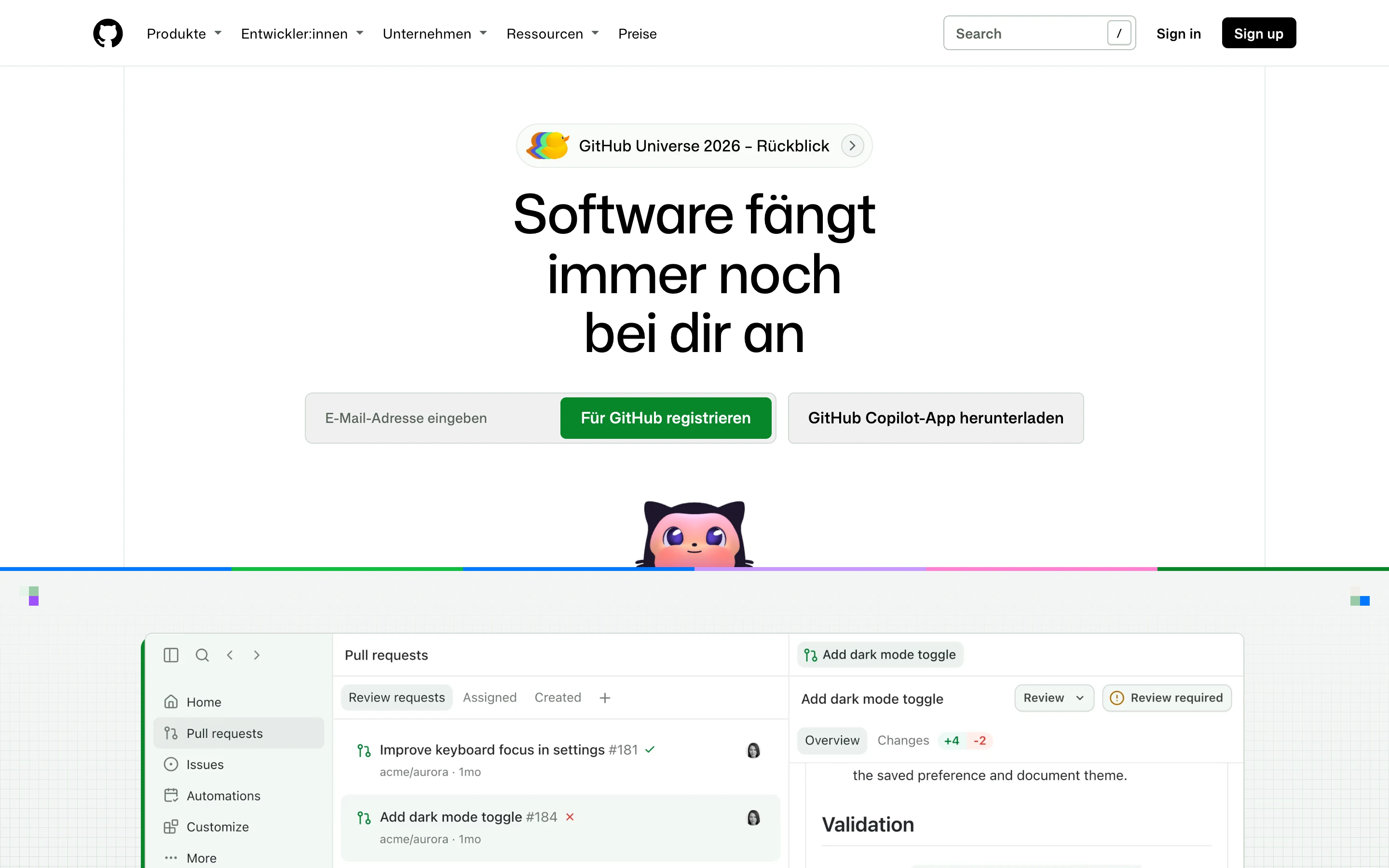
As a programmer, you can sell code snippets and automation scenarios that other programmers can adopt in their own work.
You can choose whether to create generally usable snippets or to program special parts for someone else's work on request.
The great thing is that you don't even need a website of your own.
There are marketplaces for selling code snippets. So all you need to do is upload your work there.
Pros
- No start-up capital needed
- Little competition because of the specialization
- Older work can be monetized too
- Selling snippets is often the entry point to bigger projects
- High earning potential
Cons
- High expertise in a programming language required
- Code can be copied
13. Data collections or statistics
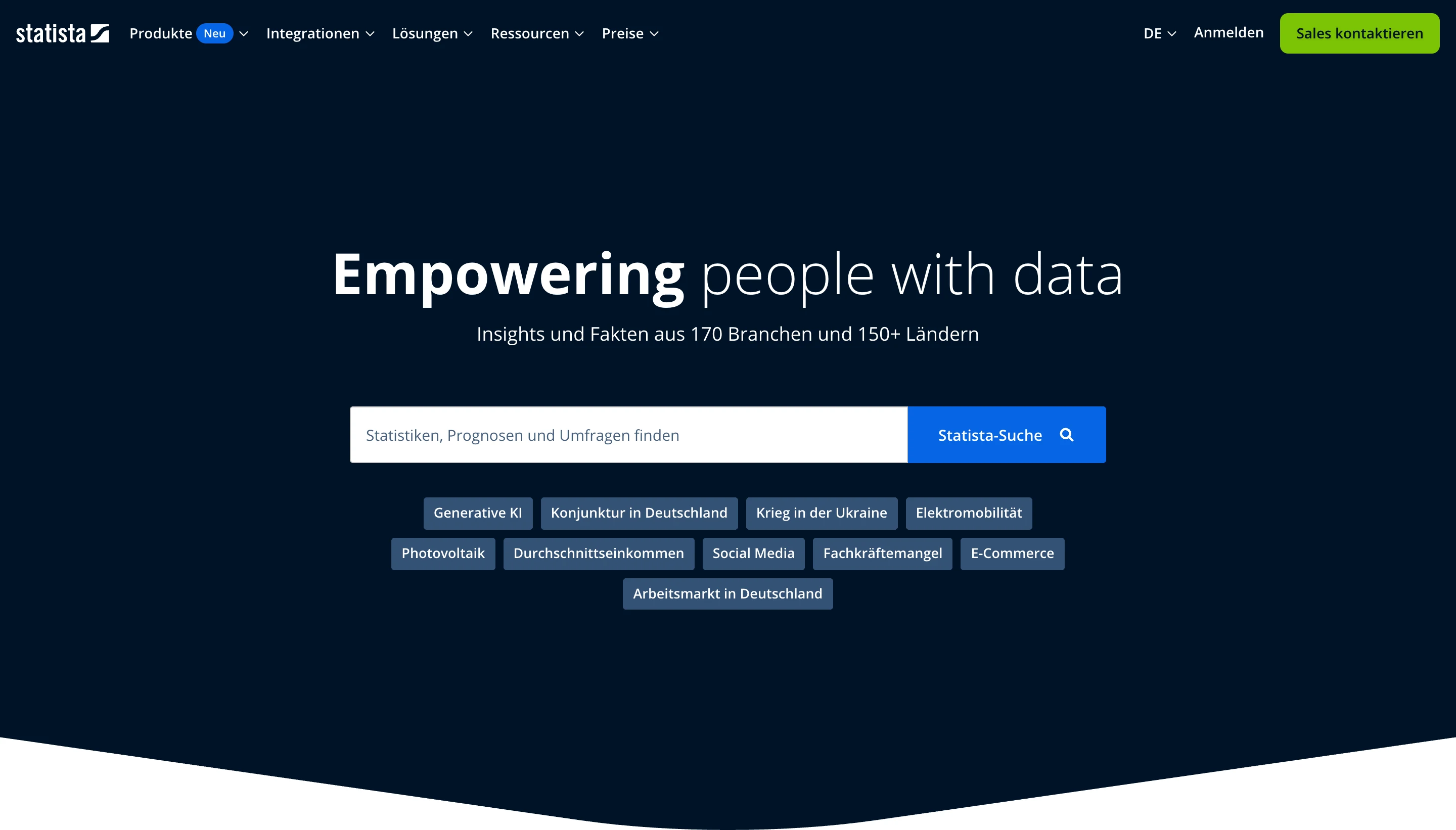
If you have special data collections and statistics gathered through surveys or research, you can sell them to businesses.
An example: you run a dog blog with a newsletter. Among your subscribers, you could start a survey that answers specific questions that can be very valuable to a provider of dog insurance.
The effort required to get hold of such data is certainly large. The earning potential, on the other hand, is all the higher.
Pros
- No costs required
- Very high selling prices possible
- Little technical effort
- Monetize the visitors of your website through data collection
Cons
- Data protection and consent must be observed
14. Fonts
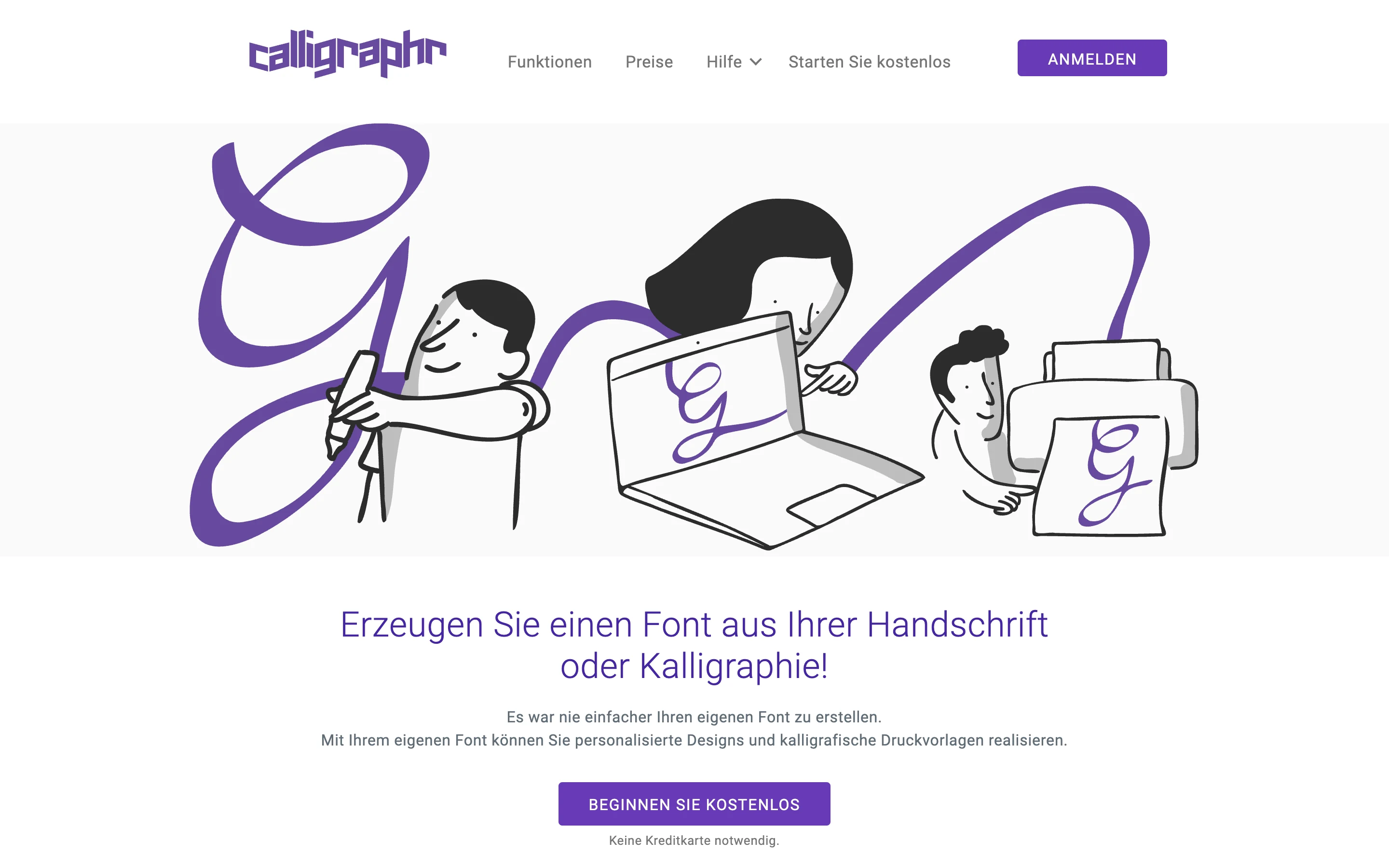
If you have an artistic streak and a sense of aesthetics, selling premium fonts might be the right thing for you.
On platforms like Calligraphr, you can do this without any problem.
Handwriting fonts in particular are very popular and sell extremely well through marketplaces like Etsy or through your own website.
The great thing about this product is that you really need little to no prior experience and can theoretically start developing your own font right away.
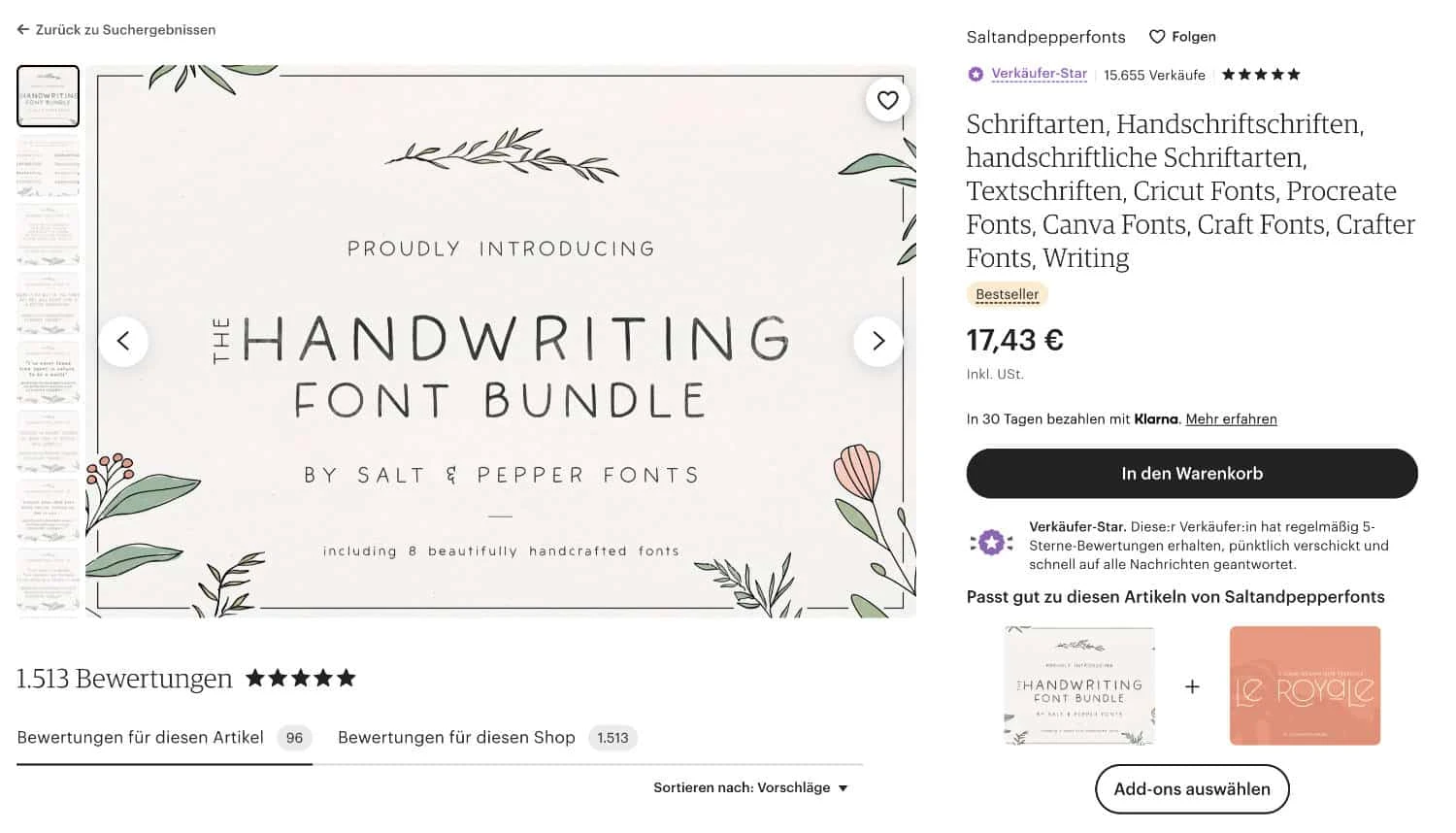
I'd like to use Etsy once again to show you how successful selling fonts can be.
The “Handwriting Bundle” shown below generated a total of 15,655 sales at a price of €17.43. That's proud revenue of almost €280,000.
Pros
- No start-up capital required
- Online tools help with creation
- Selling through Etsy is possible
- High revenue possible
Cons
- Large competition
15. Recipes
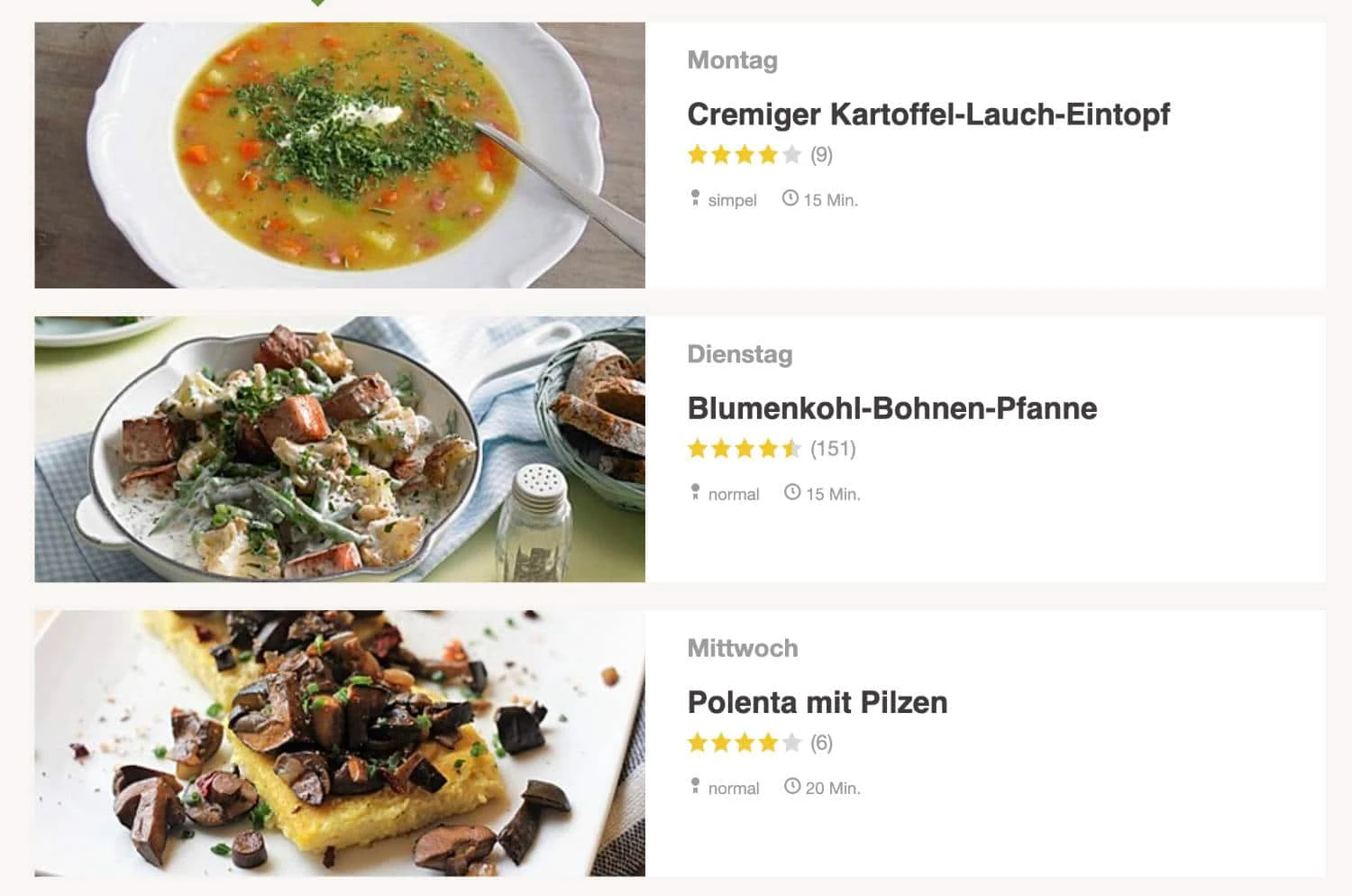
Home cooks, take note: recipes are a brilliantly simple but incredibly well-suited product to sell online.
Recipes can be distributed in numerous different ways. For example, in a paid offering you could deliver new recipes by email every day, provide a premium member area on your website, or collect the most popular recipes in an e-book.
No prior experience is really needed here.
Anyone who can cook can also sell recipes online!
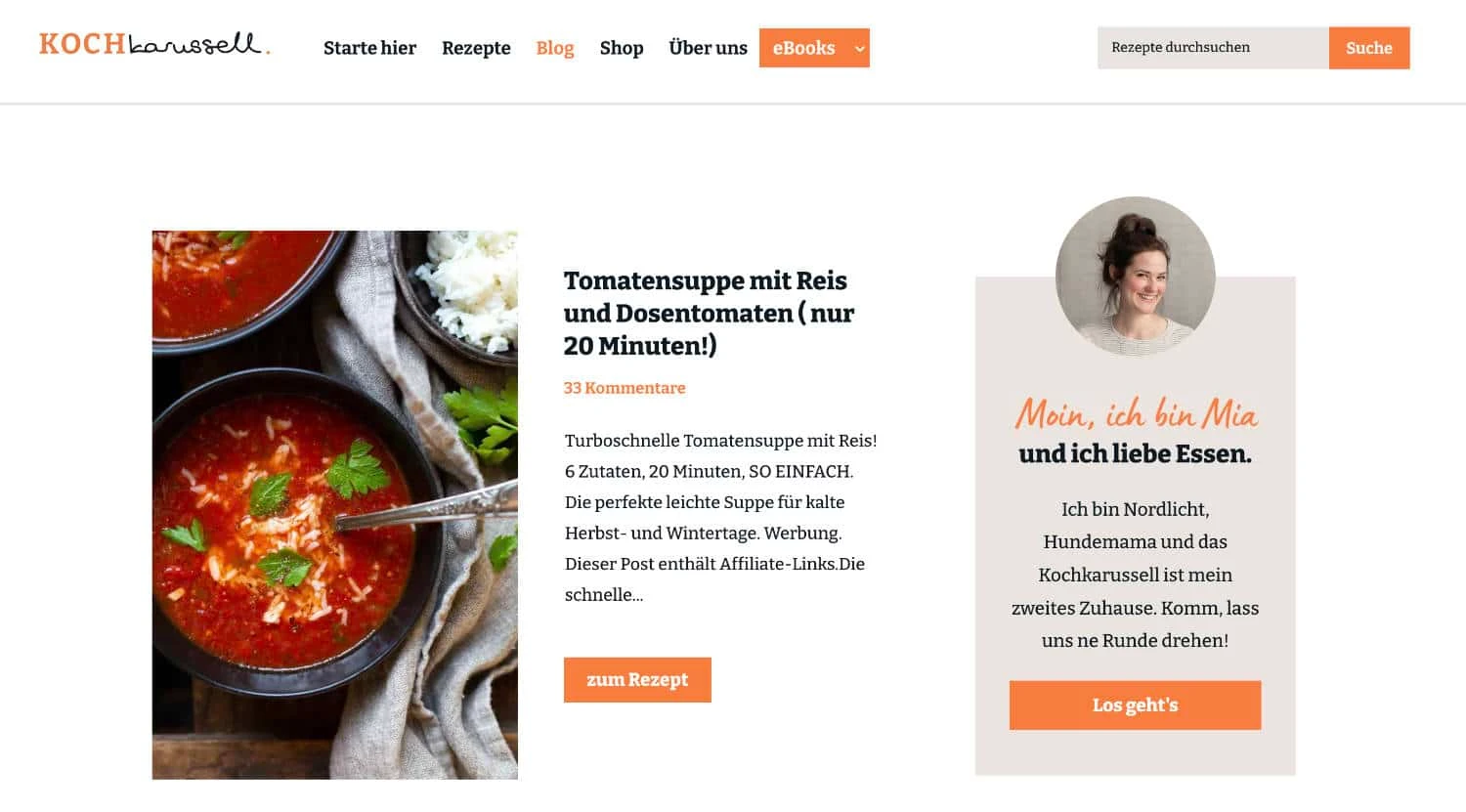
Mia from kochkarusell.de is the best proof of how successful you can be with selling recipes. Today she generates a six-figure income per year with her delicious dishes.
Pros
- No prior experience needed
- No start-up capital required
- Recipe ideas never run out (unlimited growth potential)
- Many different distribution channels
Cons
- Gigantic competition
16. AI products
Anyone who uses AI assistants every day knows the problem: the result depends heavily on how good the instruction is. This is exactly where AI products come in. You don't sell the AI, you sell your knowledge of how to use it for a specific task.
There are several formats for this:
- Prompt packs for a specialist field, such as accounting, recruiting, or social media
- Instructions and templates for your own AI assistants
- Automations with ready-made workflows
- Skills, that is, reusable work instructions for AI assistants like Claude Code
My New Level SEO is an example of this: a package of skills that makes my SEO processes usable for an AI assistant. I sell it as a download with a course area, not as a software subscription.
Pros
- Quick to create if you master the task yourself well
- No start-up capital needed
- Can be combined with a course, newsletter, or community
Cons
- Tools and models change quickly, products go out of date
- A lot of free competition
- Buyers have to see the added value compared to trying it out themselves
More ideas for digital products
None of the 15 ideas appealed to you?
No problem. Here are 30+ more ideas for your next digital product:
- Coloring pages
- Puzzles
- (Motivational) quotes to print
- Designs for stationery, etc.
- Games for kids (on paper, e.g. along the lines of Battleship, Stadt Land Fluss (a German word game similar to Scattergories), etc.)
- Instructions
- Meal plans
- Organization plans
- Lists (templates for to-do lists, etc.)
- Conversion tables
- Tables of dimensions for specific things
- Packing lists
- Materials lists
- Calendars
- Craft templates (e.g. knotting instructions, knitting patterns, sewing patterns, etc.)
- Organizing aids (labels, etc.)
- Layouts (for example for photo albums, cards, etc.)
- Tarot cards
- City maps with specific markings (for example a city map with 10 places to visit with children, etc.)
- Folding templates (for example for gift wrapping, etc.)
- Posters, postcards, etc. to print
- Habit trackers (with which you can track sports activities, for example, etc.)
- E-books
- Recipes
- Sheet music
- Workbooks
- Development trackers (e.g. for pets: forms in which you can record how an animal develops, which skills it learns, etc.)
- Memory aids (for example for school or university)
- Design paper patterns to print yourself (for your own design paper, wrapping paper, etc.)
- Design templates for online courses and other coaching products
- Comparison tables
- Flashcards / grammar aids for learning a language
- Presets for photo editing
Advantages of digital products over physical products
1. You can make them yourself
Digital products are usually easy to design yourself. In my field, they are mostly coloring pages, design templates, learning exercises, etc.
I can create all these documents myself on the computer. All I need are the necessary programs, like Canva (I also used it to create all the worksheets here in the course).
2. They are infinitely scalable
Digital products are basically infinitely scalable, since you can duplicate them as often as you like without needing new raw materials.
With physical products, costs rise with the number of products, whereas with digital products we only have to invest at the start (mostly time).
3. You don't have to ship them by mail
Postage costs are a factor not to be underestimated when selling physical products online.
On top of that come the costs for packaging and shipping labels. You also have to take the parcels to the post office (many parcel services also offer pickup for business customers, but at first you take them to the post office yourself).
4. You can sell them all over the world without any problem
While selling physical products to other countries isn't quite so easy, it's super easy with digital products.
You don't have to worry about postage costs and customs. You only have to take taxes into account, which many shop systems can handle automatically.
5. Bookkeeping effort is lower
If you sell only digital products, you can use additional sales platforms (for example Digistore24 or ablefy).
The advantage of such sales platforms is that under some circumstances they take over the entire sales processing for you, and at the end of the month you get just a single invoice for all your sales.
Of course, such a service costs a bit more, but it can still be worth it, because it simplifies bookkeeping enormously.
Five steps to your first digital product
- Check the idea: Search for the topic on Google, Etsy, Amazon, or in forums. Are there similar products, and do people buy them? Then there is demand. If there's nothing at all, that's more of a warning sign than a gap.
- Start small: Build a simple version first, for example a template or a short e-book, instead of working for months on a big course.
- Choose a sales channel: A marketplace for a quick start, a sales platform for easy processing, your own shop for full control (see the next section).
- Sort out the legal side: Impressum (the legal notice German websites must carry), privacy policy, withdrawal notice, and VAT have to be right from the start.
- Get feedback and improve: Ask your first buyers what was missing, and build your next product on that.
How can I sell digital products?
In this section, I'd like to give you five different ways you can sell your digital products.
1. Wix
Wix.com is one of the leading platforms for online shops.
That's quite justified: the user interface is intuitive and therefore ideal for beginners. On top of that, a Wix.com shop adapts to the growing requirements of its owner. A modest specialty shop can easily grow into a comprehensive e-commerce platform, and setting up your shop is just as uncomplicated.
Interestingly, Wix.com is designed not only for selling physical items but also supports selling digital products. For example, after a successful sale, a download link can be generated through which the digital product is made available.
2. Shopify
Shopify is one of the most popular online shop solutions.
There's a reason for that: the system is simple and therefore perfect for beginners. A Shopify store also grows with the needs of its owner. A small niche shop can easily become a large e-commerce platform, and creating your shop isn't hard either.
Shopify is suitable not only for selling physical products but also lets you deliver digital products, for example via a download link that is generated after a sale.
3. WooCommerce (with your own WordPress website)
If you run your own WordPress-based website and want to offer digital products as an addition, WooCommerce is certainly the ideal solution.
With the WooCommerce plugin, you integrate an online shop directly into your site and give your customers a very comfortable shopping experience.
The technical implementation is especially easy, because the WooCommerce plugin fits seamlessly into the WordPress environment. New products are created much like a blog post and can then be downloaded from a protected download area that only becomes accessible once the purchase is complete.
4. Sales platforms
If you don't have a website of your own so far and don't want to create one to sell your digital products, you can use a sales platform like ablefy or Digistore24.
These are so-called vendors that act as a kind of middleman.
The advantage: you don't have to deal with the technical implementation, invoicing, or delivering the products. You just set up a digital product, and the sales platform takes care of the rest.
By the way, with ablefy you can even create the course area for an online course of your own. With Digistore24 and, optionally, ablefy, the platform handles the sale in its own name, including invoices and VAT, but that costs additional fees.
4. Marketplaces
I've already mentioned the Etsy marketplace several times in the previous chapters.
There are many other representatives on the web, for example eBay, that make it possible to sell digital products.
On Etsy, according to its fee overview, you pay a $0.20 listing fee per listing, a 6.5% transaction fee on the order value, and additional fees for payment processing.
The advantage of such a marketplace is that you don't have to think about the technical implementation at all. You also benefit from the fact that they usually have excellent visitor numbers. So you don't need to worry about traffic.
Marketplaces also earn money from the sale of your products. So it's in the marketplace's interest that you make high revenue. That's why your products are actively promoted, for example in newsletters or on the sales pages of other listings (e.g. through boxes like “You might also be interested in”).
5. Subscription software
If you run your digital products as part of a subscription model, you can use subscription software like Paddle or FastSpring for that. They take care of both the registration and the later billing and invoicing.
An example: you run a premium newsletter. Prospective subscribers sign up via a landing page provided by the subscription software provider. After registration, the provider transfers the email address to your mailing list and takes care of everything else. That way you can focus fully on creating your newsletter.
Taxes and legal matters when selling digital products
Digital products are not a gray area when it comes to taxes and the law. These are the two points beginners overlook most often. This is not legal or tax advice. Have your individual case clarified by the tax office or a tax advisor.
VAT on sales to other EU countries
If you sell digital products to consumers in other EU countries, then once you pass €10,000 net in revenue per year, the VAT of the country where your customer is based applies EU-wide. Below this threshold, you stay taxed in Germany. Processing runs through the One-Stop Shop (OSS) procedure. Small-business owners (Kleinunternehmer) should check this too.
It gets easier when the sales platform takes over the sale. With Digistore24 and, optionally, ablefy, the platform is itself the contracting party of your buyers and takes care of invoices and VAT. In return, you pay higher fees.
Right of withdrawal for downloads
In the EU, consumers generally have a 14-day right of withdrawal for online purchases. For digital content, it can expire early. For that, the buyer must actively agree that you deliver immediately and confirm that they lose their right of withdrawal as a result. You also have to send them a confirmation on a durable medium, for example by email. A pre-checked box is not enough. If one of these requirements is missing, the buyer can still withdraw even after the download.
FAQ
Here I've put together answers to common questions about selling digital products:
Which digital products can be sold?
When it comes to selling digital products, your imagination is the only limit. From online courses and e-books to Excel templates, code snippets, or AI prompt packs, you can really sell any digital creation on the internet.
How and where can I offer download products?
That depends on the product you offer. Besides your own website, online shops (e.g. Shopify), marketplaces like Etsy, or subscription software like Paddle are mainly suitable.
Do I have to pay VAT on digital products?
Yes, in principle you do, unless you're a small-business owner. For sales to consumers in other EU countries, the VAT of the customer's country applies EU-wide once you pass €10,000 in revenue per year. You'll find more on this in the section on taxes and legal matters. If in doubt, get tax advice.
Does the right of withdrawal apply to digital products?
Yes, consumers can in principle withdraw within 14 days. For digital content, the right only expires if the buyer expressly agrees that you deliver immediately, confirms that they lose their right of withdrawal as a result, and you send them a confirmation on a durable medium.
What are digital services?
Digital services are individual consultations over the internet. That can be weight-loss coaching or career counseling, for example.
How much money can I earn by selling digital products?
That depends on the product. Especially with high-priced products like online courses, the earning potential is very high, while with an Excel template or a small guide in the form of an e-book you should certainly expect less.